


تحسين النتائح
ترتيب حسب
من
الى


This book reveals, next to monetary policy and financial crisis, less well known topics such as insolvency, collective action clauses, international mediation and management of central banks.
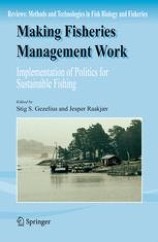
This book seeks to widen the perspective taken on implementation in fisheries management. The cases presented in this volume addresses legal, administrative, and political challenges regarding implementation of resource conservation policies. The book addresses problems relating to goal achievement, but also causes of deliberate change of political goals during implementation. Fisheries management systems are embedded in inert social structures and natural conditions that vary among different states. Consequently, the book takes a historical and comparative approach, describing the historical developments of national implementation systems and the conditions that shaped their development. It thus seeks to explain why national fisheries management systems have evolved differently, focusing on Norwegian, Faeroese, and EU/Danish management systems. The descriptive and explanatory outlines are accompanied by qualitative assessments of the systems effectiveness as tools for collective action.

Explores interdependencies between knowledge, action, and space from different interdisciplinary perspectives. Some of the contributors discuss knowledge as a social construct based on collective action, while others look at knowledge as an individual capacity for action. The chapters contain theoretical frameworks as well as experimental outcomes.
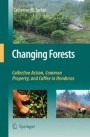
It merges political ecology, collective-action theories, and institutional analysis to study how the people and forests have changed through socioeconomic and political transitions. It studies the complex, often contradictory relationships between the people and their natural resources to understand why forest cover endures."Changing Forests" therefore encompasses three broad phases: (1) the premodern period, which considers historic perturbations in western Honduras from the period of colonialism into the middle of the twentieth century; (2) the period of state-led logging and intervention in La Campa, which caused major degradation in forest cover; and (3) the recent period in which export coffee production transformed property rights, and people’s perceptions of the forest gained new conservationist and economic dimensions. Each phase entails perspectives and experiences that influenced human use of forests, and shaped subsequent transformations.

سوريا - اتستراد درعا - غباغب
+963-15 2050 - 15 860 380 /1/2/3 - 11 662 3900