


تحسين النتائح
ترتيب حسب
من
الى

This monograph presents state of the art applications and new developments of isotopes in hydrology, environmental disciplines and climate change studies. Coverage ranges from the assessment of groundwater resources in terms of recharge and flow regime to studies of the past and present global environmental and climate changes.
This thorough reference shows how stable isotopes can be applied to understanding the palaeoenvironment, with chapters on the interpretation of isotopes in water, tree rings, bones and teeth, lake sediments, speleothems and marine sediments.
Improved adaptation of food production, particularly in areas where climate variability is large, holds the key to improving food security for human populations. Increasing climate knowledge and improved prediction capabilities facilitate the development of relevant climate information and prediction products for applications in agriculture to reduce the negative impacts due to climate variations and to enhance planning activities based on the developing capacity of climate science. This book, based on an International Workshop held in Geneva in 2005, reviews the advances made so far in seasonal climate predictions and their applications for management and decision-making in agriculture and identifies the challenges to be addressed in the next 5 to 10 years to further enhance operational applications of climate predictions in agriculture, especially in the developing countries.
Discusses the impact of human-induced global climate change on the Indian subcontinent and regional monsoon, the adjoining Indian Ocean and the Himalayas. It also examines the regional climate change projections based on the climate models used by the IPCC Fifth Assessment Report (AR5) and national climate change modeling studies using the IITM Earth System Model (ESM) and CORDEX South Asia datasets
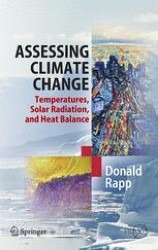
The chapters of the book attempt to answer a number of essential questions in relation to global warming and climate change. He begins by showing how the earth’s climate has varied in the past, discussing ice ages, the Holocene period since the end of the last ice age, particularly during the past 1000 years. He investigates the reliability of "proxies" for historical temperatures and assesses the hockey stick version of global temperatures for the past millennium. To do this effectively he looks carefully at how well near surface temperatures of land and ocean on earth have been monitored during the past 100 years or more, and looks at the utility and significance of a single global average temperature
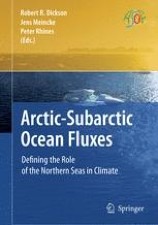
The two-way oceanic exchanges that connect the Arctic and Atlantic oceans through subarctic seas are of fundamental importance to climate. Change may certainly be imposed on the Arctic Ocean from subarctic seas, including a changing poleward ocean heat flux that is central to determining the present state and future fate of the perennial sea-ice. And the signal of Arctic change is expected to have its major climatic impact by reaching south through subarctic seas, either side of Greenland, to modulate the Atlantic thermohaline ‘conveyor’. Developing the predictive skills of climate models is seen to be the most direct way of extending the ability of society to mitigate for or adapt to 'global change' and is the main justification for continuing an intense observational effort in these waters. As records have lengthened, they have shown that important aspects of oceanic exchange through subarctic seas are currently at a long-term extreme state, providing further motivation for their study.

سوريا - اتستراد درعا - غباغب
+963-15 2050 - 15 860 380 /1/2/3 - 11 662 3900