


تحسين النتائح
ترتيب حسب
من
الى


Offers solutions to the problems of security, outlining the concepts behind allowing computers to learn from experience and understand the world in terms of a hierarchy of concepts, with each concept defined through its relation to simpler concepts. provides state of the art approaches of artificial intelligence and data mining in these areas. It includes areas of detection, prediction, as well as future framework identification, development, building service systems and analytical aspects. In all these topics, applications of AI and data mining, such as artificial neural networks, fuzzy logic, genetic algorithm and hybrid mechanisms, are explained and explored. This book is aimed at the modeling and performance prediction of efficient security framework systems, bringing to light a new dimension in the theory and practice. This groundbreaking new volume presents these topics and trends, bridging the research gap on AI and data mining to enable wide-scale implementation. Whether for the veteran engineer or the student, this is a must-have for any library. This groundbreaking new volume: Clarifies the understanding of certain key mechanisms of technology helpful in the use of artificial intelligence and data mining in security frameworks ; Covers practical approaches to the problems engineers face in working in this field, focusing on the applications used every day ; Contains numerous examples, offering critical solutions to engineers and scientists ; Presents these new applications of AI and data mining that are of prime importance to human civilization as a whole
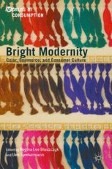
Color is a visible technology that invisibly connects so many puzzling aspects of modern Western consumer societies research and development, making and selling, predicting fashion trends, and more. Building on Regina Lee Blaszczyk’s go-to history of the “color revolution” in the United States, This book explores further transatlantic and multidisciplinary dimensions of the topic. Covering history from the mid nineteenth century into the immediate past, it examines the relationship between color, commerce, and consumer societies in unfamiliar settings and in the company of new kinds of experts. Readers will learn about the early dye industry, the dynamic nomenclature for color, and efforts to standardize, understand, and educate the public about color.
Looks at what exactly artificial intelligence is, how it can be classified, how it differentiates from other concepts such as machine learning, big data, blockchain, or the Internet-of-Things, and how it has evolved and might evolve over time.

It begins with the earliest styles of the ancient civilizations – Egypt, Greece and Rome – before travelling through Medieval, Renaissance and Baroque and into the modern world via the panoply of 19th century revivalist styles. Also covered is the traditional architecture of China, India, Japan and Pre-Columbian America. A final section gathers together key architectural elements from different periods – columns, towers, doorways, windows.
Presents the town of Kavala in Northern Greece as an example of Ottoman urban and residential development, covering the long period of Kavala’s expansion over five centuries under Ottoman rule. Kavala was part of the Ottoman Empire from 1387 to 1912. In the middle of the sixteenth century, Ibrahim Pasha, grand vizier of Suleiman the Magnificent, contributed to the town's prosperity and growth by the construction of an aqueduct. The Ottomans also rebuilt and extended the existing Byzantine fortress.

Journeys to a Graveyard examines the descriptions provided by eight Russian writers of journeys made to western European countries between 1697 and 1880. The descriptions reveal the mentality and preoccupations of the Russian social and intellectual elites during this period. The travellers' perceptions of western European countries are treated here as an ambivalent response to a civilization with which Russia was belatedly coming into close contact as a result of the imperial ambition of the Russian state and the westernization of the Russian elites. The travellers perceived the most advanced European countries as superior to Russia in terms of material achievement and the maturity and refinement of their cultures, but they also promoted a view of Russia as in other respects superior to the western nations. Heavily influenced from the late eighteenth century by Romanticism and by the rise of nationalism in the west, they tended to depict European civilization as moribund. By this means they managed to define their own emergent nation in a contrastive way as having youth and promising futurity.

When the ?rst edition of this book was published in 2004, the following year 2005 has happened to have been the warmest year since 1880, when the ?rst reliable worldwide instrumental records came into existance. Claiming no li- age between the publication of our book and the temperature record, yet this record demonstrates the trend of increase in the global surface temperatures during thepast20years,reinforcedbyevidenceofriseofatmosphere’sand oceans’ temperatures, and increased melting of ice and snow in the arctic and antarctic regions as well as on mountain tops. All these observations are par- leled by the increase in the quantity of heat trapping gases in the atmosphere, causing most probably, the global greenhouse effect. In order to try and predict, what might be the impact of this effect on the on the natural and human environments of the Near East, (Figs. 1–1d) the authors adopted the saying that the past is the key for the future. The practical conclusion of this principle says that the acquiring knowledge of the impact of past climate changes on the nature and human societies, may allow conclusions with regard to future possible impact of climate changes. By correlating proxy data of all types, paleo-sea and lake levels, paleo-hydrology, pollen pro?les, environmental isotopes as well as archaeological and historical documents, the authors tried to collect as much as possible of this knowledge.
Use of medicinal plants is as old as human civilization and continuous efforts are being made to improve medicinal plants or produce their products in high amounts through various technologies. About 200,000 natural products of plant origin are known and many more are being identifed from higher plants and microorganisms. Some plant-based drugs have been used for centuries and there is no alternative medicine for many drugs, such as cardiac glycosides. However, natural products research was sidelined to pave the way for com- natorial chemistry, which was expected to produce large numbers of synthetic compounds for high-throughput screening (HTS). This line of work has failed to deliver desirable results. Moreover, it is not possible for all pharmaceutical companies and institutions to adopt costly HTS technology. Therefore, medi- nal plants and their bioactive molecules are always in demand and are a central point of research. While planning this book, we endeavored to incorporate - ticles that cover the entire gamut of current medicinal plants research.

سوريا - اتستراد درعا - غباغب
+963-15 2050 - 15 860 380 /1/2/3 - 11 662 3900