


تحسين النتائح
ترتيب حسب
من
الى

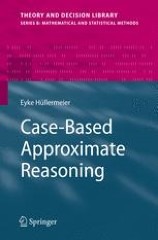
Case-based reasoning (CBR) has received a great deal of attention in recent years and has established itself as a core methodology in the field of artificial intelligence. The key idea of CBR is to tackle new problems by referring to similar problems that have already been solved in the past. More precisely, CBR proceeds from individual experiences in the form of cases. The generalization beyond these experiences typically relies on a kind of regularity assumption demanding that 'similar problems have similar solutions'. Making use of different frameworks of approximate reasoning and reasoning under uncertainty, notably probabilistic and fuzzy set-based techniques, this book develops formal models of the above inference principle, which is fundamental to CBR. The case-based approximate reasoning methods thus obtained especially emphasize the heuristic nature of case-based inference and aspects of uncertainty in CBR. This way, the book contributes to a solid foundation of CBR which is grounded on formal concepts and techniques from the aforementioned fields. Besides, it establishes interesting relationships between CBR and approximate reasoning, which not only cast new light on existing methods but also enhance the development of novel approaches and hybrid systems.
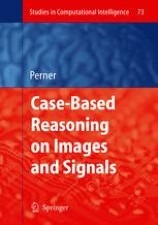
This book is the first edited book that deals with the special topic of signals and images within Case-Based Reasoning (CBR). It offers different learning capabilities, for all phases of a signal-interpreting system, that satisfy different needs during the development process of a signal-interpreting system.
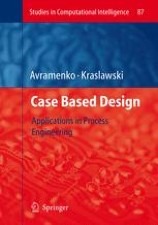
The book by Professors is an impressive and in-depth treatment of the essence of the case–based reasoning strategy and case-based design dwelling upon the algorithmic facet of the paradigm, the authors provided an excellent applied research framework by showing how this development can be effectively utilized in real word complicated environment of process engineering.
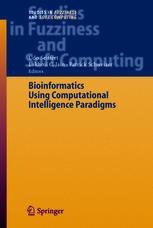
Bioinformatics as well as Computational Intelligence are undoubtedly remarkably fast growing fields of research and real-world applications with enormous potential for current and future developments. "Bioinformatics using Computational Intelligence Paradigms" contains recent theoretical approaches and guiding applications of biologically inspired information processing systems(Computational Intelligence) against the background of bioinformatics. This carefully edited monograph combines the latest results of Bioinformatics and Computational Intelligence and offers a promising cross-fertilisation and interdisciplinary work between these growing fields.
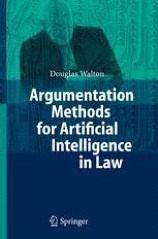
In this book, Walton presents his perspective on argumentation methods for artificial intelligence and law. … the different tools are combined in a way that makes them potentially useful for understanding legal reasoning. … this book offers a valuable perspective on the current state and future research directions of argumentation methods for artificial intelligence and law." (Jelle van Veenen, Artificial Intelligence and Law,
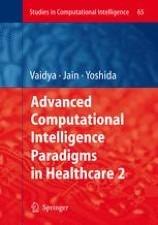
Computational intelligence paradigms offer many advantages in maintaining and enhancing the field of healthcare. This volume presents seven chapters selected from the rapidly growing application areas of computational intelligence to healthcare systems, including intelligent synthetic characters, man-machine interface, menu generators, analysis of user acceptance, pictures archiving and communication systems.This book will serve as a useful resource for the health professionals, professors, students, and the computer scientists, who are working on or interested in learning healthcare systems, to overview the current stat-of-the-art of diverse applications of computational intelligence to healthcare practice.
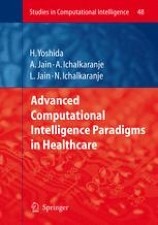
This book presents some of the most recent research results on the applications of computational intelligence in healthcare. The contents include: Information model for management of clinical content State-based model for management of type II diabetes Case-based reasoning in medicine Assessing the quality of care in artificial intelligence environment Electronic medical record to examine physician decisions Multi-agent systems for the management of community healthcare Assistive wheelchair navigation Modelling treatment processes using information extraction Neonatal pain detection using face classification techniques Medical education interfaces using virtual patients The book is directed to the computer scientists, medical practitioners, scientists, professors and students of health science, computer science and related disciplines.

سوريا - اتستراد درعا - غباغب
+963-15 2050 - 15 860 380 /1/2/3 - 11 662 3900