



الصفحة 1
الصفحة 1

Vitamin D
There has been a growing interest in vitamin D during the last decades, which has boosted an increasing number of scientific papers on this topic. Vitamin D has a significant role in calcium homeostasis and metabolism, vitamin D deficiency is a worldwide health problem that affects not only musculoskeletal health but also a wide range of acute and chronic diseases, There is potentially a great upside to increasing the vitamin D status of children and adults worldwide for improving musculoskeletal health and reducing the risk of chronic illnesses, including some cancers, autoimmune diseases, infectious diseases, type 2 diabetes mellitus, neurocognitive disorders, and mortality. In addition, there are many evidences about the correlation between the vit.D and the levels of quality of life. Recently, taking of vit.D3 become in the guideline for cure and help the treatment of COVID-19 epidemic.

Transient Receptor Potential (TRP) Channels
The main goal of this volume is to provide up-to-date information on the molecular and functional properties and pharmacology of mammalian TRP channels.

Parathyroid Allotransplantation
The parathyroid glands are four nodular structures, typically located on the dorsum of the thyroid at each of its four poles. These glands monitor the serum calcium level and secrete parathyroid hormone (PTH) when it is low.[81] PTH is essential for maintaining calcium homeostasis. Thus, dysregulation of this hormone can lead to various pathologies
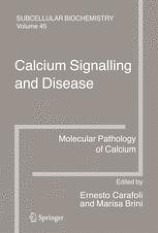
Calcium Signalling and Disease : Molecular Pathology of Calcium
This topic is a new entry in the area of cellular calcium signaling: yet, it now spans the entire area, with discoveries that cover both genetic and acquired pathologies, even offering glimpses in the direction of therapy.Cellular calcium homeostasis, and thus calcium signalling, is mainly regulated by membrane intrinsic proteins and calcium sensor proteins. Both classes may be involved in pathological processes that affect both human and animals, ranging from common and important diseases (e.g. migraine, diabetes, epilepsia, manic depression, infertility, various types of cancer, Alzheimer’s disease, muscular dystrophy) to rare genetic conditions (e.g., a number of genetic heart conditions, autoimmune retinopathies, night blindness, hereditary amyloid polyneuropathy, malignant hyperthermia, cerebellar ataxia, atherothrombotic disease).
