


تحسين النتائح
ترتيب حسب
من
الى

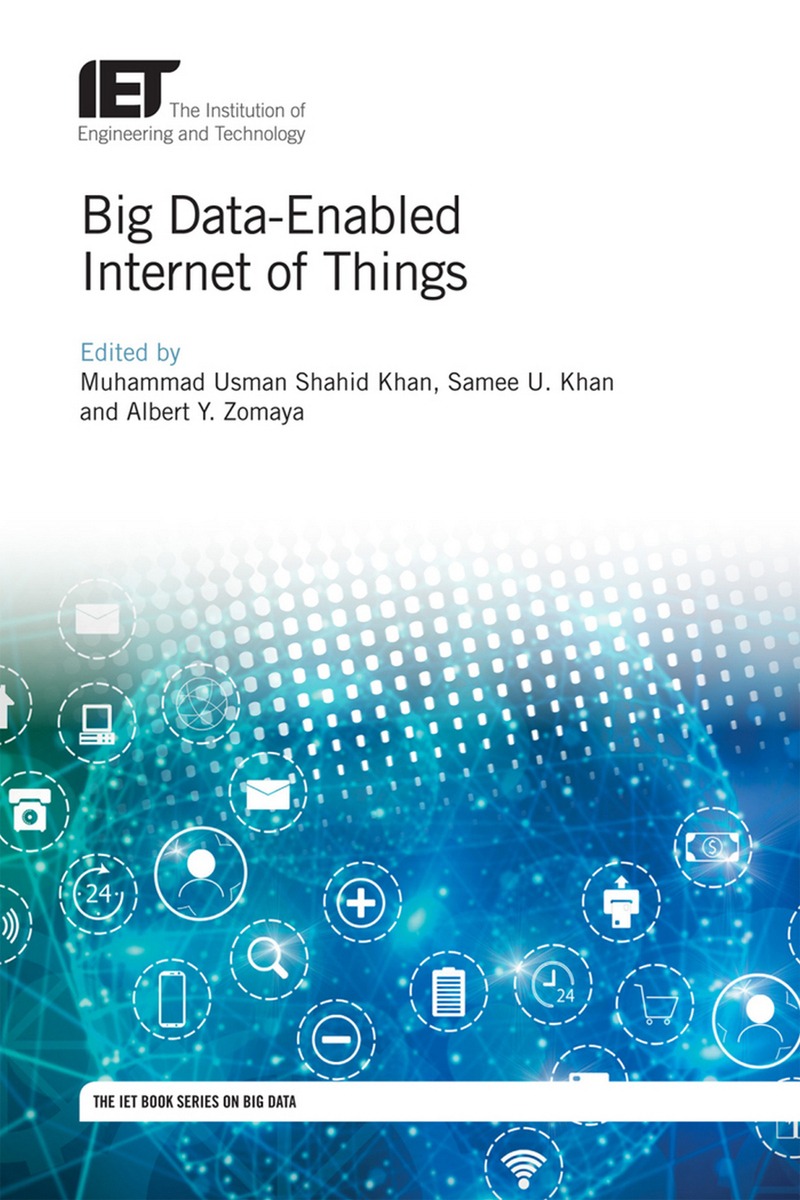
Covers analytical techniques for handling the huge amount of data generated by the Internet of Things, from architectures and platforms to security and privacy issues, applications, and challenges as well as future directions. The fields of Big Data and the Internet of Things (IoT) have seen tremendous advances, developments, and growth in recent years. The IoT is the inter-networking of connected smart devices, buildings, vehicles and other items which are embedded with electronics, software, sensors and actuators, and network connectivity that enable these objects to collect and exchange data. The IoT produces a lot of data. Big data describes very large and complex data sets that traditional data processing application software is inadequate to deal with, and the use of analytical methods to extract value from data. This edited book covers analytical techniques for handling the huge amount of data generated by the Internet of Things, from architectures and platforms to security and privacy issues, applications, and challenges as well as future directions.
This book presents theoretical and practical research relating to the vast, publicly financed program for the construction of new schools and the reorganization of existing educational buildings in Italy.
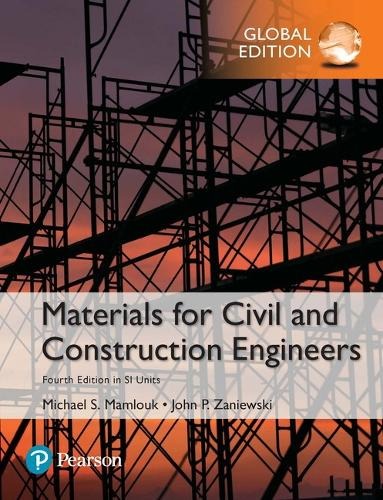
For courses in Civil Engineering Materials, Construction Materials, and Construction Methods & Materials offered in Civil, Environmental, or Construction engineering departments. Civil and Construction Engineering Materials: Properties, Uses, and Evaluations Materials for Civil and Construction Engineers helps students understand and select the materials involved in supporting the infrastructure needs of society--from buildings, to water and treatment distribution systems, to dams, highways, and airport pavements. By gaining a deep understanding of material behavior and the material selectio
Pesents buildings developed using modular assembly approaches based on lightweight and corrosion-resistant fiber reinforced polymer (FRP) composites. Construction methods and the choice of building materials offer great opportunities for more productive and environmentally friendly solutions. This book includes valuable experimental data on large-scale structural components (beams, slabs, amd columns), connections (shear connections, wall stud connections, beam-column connections, column-column connections) and structures (composite floor system, structural sandwich assemblies, and full-scale structural demonstrations), supported with detailed numerical modelling and analytical methods.
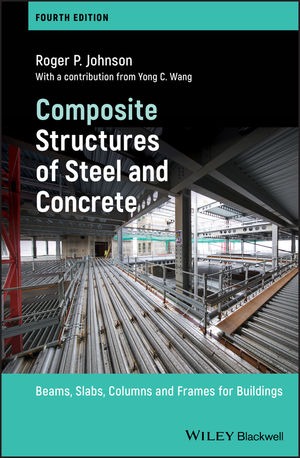
Provides an introduction to the theory and design of composite structures of steel and concrete. Material applicable to both buildings and bridges is included, with more detailed information relating to structures for buildings. Throughout, the design methods are illustrated by calculations in accordance with the Eurocode for composite structures, EN 1994, Part 1-1, 'General rules and rules for buildings' and Part 1-2, 'Structural fire design', and their cross-references to ENs 1990 to 1993.
For specialist contractors, large consultants and owners of corrosion damaged structures, and looks at international experience with this technique. It examines why corrosion is occurring, the differences in the application of CP with the stark dichotomy in its success and failure, and finally ways in which its performance can be improved on future installations.
Provides complete coverage of the Building Services Engineering for Construction qualification's core units and will equip you with the skills you need to shape your career. - Break down complex topics with summary tables and hundreds of images and artworks - Apply your knowledge in real-world case studies and discover some of the dilemmas you can.
Presents the theoretical background of building physics, dealing with the evaluation of physical phenomena related to heat transfer and energy use in buildings, water and water vapour transfer in building structures, daylighting and electric lighting of buildings, sound transmission in building structures and protection against noise, the occurrence and spread of fires in buildings and the thermal response of cities. It contains numerical and computational evaluation methods, numerous computational case studies and examples of experimental analyses. The book demonstrates that the considered physical processes affect the quality of living and working comfort in indoor and outdoor environment.
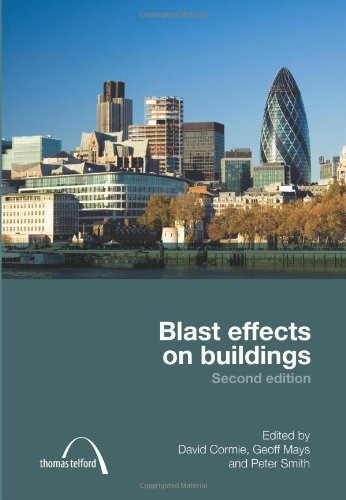
Provides the latest practical guidance on designing buildings to optimise their resilience to blast loading. Focused specifically on the design of commercial buildings, it is an indispensible guide to help engineers reduce the risks posed to building occupants and businesses from terrorist and other explosions. This book provides the engineer with a single and comprehensive source of reference for all the main elements of blast engineering design in modern practice. Industry-accepted methods for the design of glazing to resist blast loading are published for the first time, as well as a new chapter on hostile vehicle mitigation techniques. Guidance on structural steelwork and reinforced concrete design is extended and enhanced, supplemented with material on design in new materials such as steel-concrete-steel composites, this latter addition being published for the first time.
This book provides a compendium of material properties, demonstrates several successful examples of bio-based materials’ application in building facades, and offers ideas for new designs and novel solutions. It features a state-of-the-art review, addresses the latest trends in material selection, assembling systems, and innovative functions of facades in detail. Selected case studies on buildings from diverse locations are subsequently presented to demonstrate the successful implementation of various biomaterial solutions, which defines unique architectural styles and building functions. The structures, morphologies and aesthetic impressions related to bio-based building facades are discussed from the perspective of art and innovation; essential factors influencing the performance of materials with respect to functionality and safety are also presented. Special emphasis is placed on assessing the performance of a given facade throughout the service life of a building, and after its end.
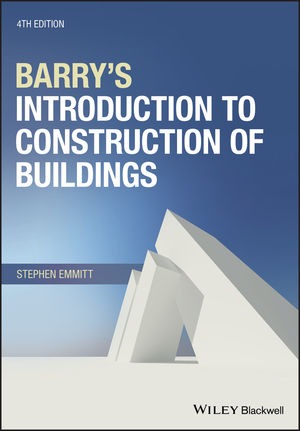
Based mainly on domestic and residential buildings—and filled with extensive illustrations throughout—this concise text is the ideal introduction to the subject of building construction. It provides the basic material that readers need in order to understand the construction process for the majority of low rise buildings. The book explains construction technology through the key functional and performance requirements for the main elements common to all buildings. With a strong focus on building efficiency and meeting the challenges posed by limiting the environmental impact of buildings, and new “at a glance” summaries allowing you to grasp the salient points of each chapter, readers will find the text fully up to date with the latest building regulations and construction technology. Deals with design, technology, site assembly, and environmental issues of domestic and residential buildings. Thoroughly updated, with particular attention paid to the concept of building efficiency and improved integration of the topics covered to match current student needs. New “at a glance” summaries at the beginning of each chapter.
Presents all aspects of automation in construction pertaining to the use of information technologies in design, engineering, construction technologies, and maintenance and management of constructed facilities. The broad scope encompasses all stages of the construction life cycle from initial planning and design, through the construction of the facility, its operation, and maintenance, to the eventual dismantling and recycling of buildings and engineering structures
Presents a methodology for the assessment of structural building details, taking into account the contemporary guidelines for earthquake-resistant and energy-efficient buildings. A review of structural details for energy-efficient buildings revealed that in some cases the structural system is interrupted, leading to solutions which are not suitable for earthquake-prone regions. Such typical examples would be the use of thermal insulation under the building foundation and reduction of the load-bearing elements’ dimensions – also at the potential locations of plastic hinges which are crucial for the dissipation of seismic energy.

This book is a practical guide to the detection and remedy of faults in claddings and fixings on buildings. It sets out the problems involved in common cladding systems for buildings, and relates these problems to all the materials used: stone, masonry, concrete and glass-reinforced composites.
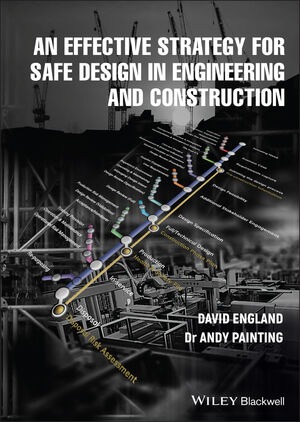
Achieves three primary goals: To improve the understanding and implementation of the Construction (Design and Management) Regulations 2015 To reduce errors during the design process via the effective implementation of design management strategy To embed the concept of safety in design
Presents the most recent advances on testing and experimentation in civil engineering, especially in the branches of materials, structures, and buildings, complementing the authors’ publication Advances on Testing and Experimentation in Civil Engineering - Geotechnics, Transportation, Hydraulics and Natural Resources. It includes advances in physical modelling, monitoring techniques, data acquisition and analysis, and provides an invaluable contribution to the installation of new civil engineering experimental facilities.
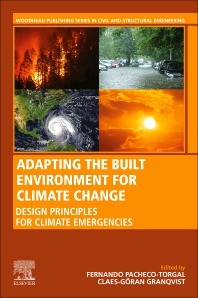
Adapting the Built Environment for Climate Change: Design Principles for Climate Emergencies analyzes several scenarios and proposes various adaptation strategies for climate emergencies (heat waves, wildfires, floods, and storms). Divided into three themes, the book offers an organized vision of a complex and multi-factor challenge. It covers climatic resilience and building refurbishment, implications for service life prediction and maintainability, and climate adaptation in the maintenance and management of buildings. Sections cover infrastructure materials, climate emergency adaptation and building adaptation to heat waves, wildfires, floods and storms.
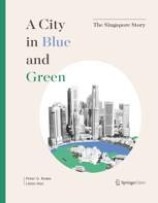
Highlights Singapore’s development into a city in which water and greenery, along with associated environmental, technical, social and political aspects have been harnessed and cultivated into a liveable sustainable way of life. It is also a story about a unique and thoroughgoing approach to large-scale and potentially transferable water sustainability, within largely urbanized circumstances, which can be achieved, along with complementary roles of environmental conservation, ecology, public open-space management and the greening of buildings, together with infrastructural improvements.
This book demonstrates how bounded rational decision models can be standardized and parameterized by socio-economic data. Focusing on private energy technology investment decisions, the author shows how different representative agents can be constructed using search rules, analysis tools and decision strategies. Diffusion curves for energy technologies such as solar collectors, boilers and efficiency upgrades for buildings are calculated. Further, the model is extended to study the impact of firms’ competition on technology diffusion. The modeling approach presented in this book may serve as a template for applications in other domain.
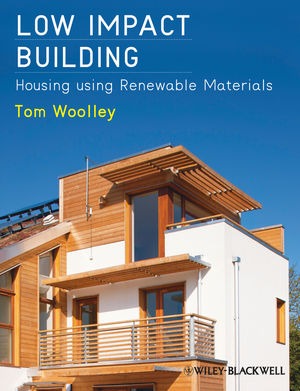
Guides to the designs, technologies and materials that really make green buildings work will help architects, specifiers and clients make informed choices, based on reliable technical information. Low Impact Building: Housing using Renewable Materials is about changing the way we build houses to reduce their 'carbon' footprint and to minimise environmental damage. One of the ways this can be done is by reducing the energy and environmental impact of the materials and resources used to construct buildings by choosing alternative products and systems. In particular, we need to recognise the potential for using natural and renewable construction materials as a way to reduce both carbon emissions but also build in a more benign and healthy way.

سوريا - اتستراد درعا - غباغب
+963-15 2050 - 15 860 380 /1/2/3 - 11 662 3900