


تحسين النتائح
ترتيب حسب
من
الى

Provides basic concepts and deep knowledge about various security mechanisms that can be implemented in IoT through Blockchain technology. This book aids readers in gaining insight and knowledge about providing security and solutions to different challenges in IoT using Blockchain technology. This book primarily focuses on challenges to addressing the integration of the IoT with Blockchain with respect to potential benefits for IoT. This book gives descriptive analysis of Blockchain integrated with IoT applications and platforms for the development of IoT solutions along with possible topologies to that integration. Several application examples are included in a variety of industries / Provides the latest on secure IIoT communication using Blockchain technology for Industry 4.0 / Includes updates on using Blockchain technology in secure vehicular communication (VANET), healthcare, retail, and gaming / Provides the latest on secure IIoT communication using Blockchain technology for Industry 4.0
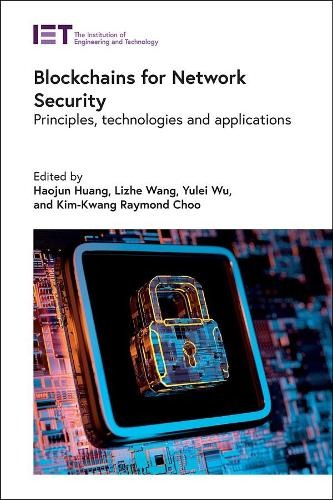
Blockchain technology is a powerful, cost-effective method for network security. Essentially, it is a decentralized ledger for storing all committed transactions in trustless environments by integrating several core technologies such as cryptographic hash, digital signature and distributed consensus mechanisms. Over the past few years, blockchain technology has been used in a variety of network interaction systems such as smart contracts, public services, Internet of Things (IoT), social networks, reputation systems and security and financial services. With its widespread adoption, there has been increased focus on utilizing blockchain technologies to address network security concerns and vulnerabilities as well as understanding real-world security implications.
The book explains the security architecture model and the practice of building data sharing from the blockchain infrastructure, allowing readers to understand the importance of data sharing security based on the blockchain framework, as well as the threats to security and privacy. Further, by presenting specific data sharing case studies, it offers insights into solving data security sharing problems in more practical fields. The book is intended for readers with a basic understanding of the blockchain infrastructure, consensus mechanisms, smart contracts, secure multiparty computing, homomorphic encryption and image retrieval technologies.
This book presents how cutting-edge digital technologies like Machine Learning, Artificial Intelligence (AI), and Blockchain are set to disrupt the financial sector. The book illustrates how recent advances in these technologies facilitate banks, FinTechs, and financial institutions to collect, process, analyze, and fully leverage the very large amounts of data that are nowadays produced and exchanged in the sector. To this end, the book also introduces some of the most popular Big Data, AI and Blockchain applications in the sector, including novel applications in the areas of Know Your Customer (KYC), Personalized Wealth Management and Asset Management, Portfolio Risk Assessment, as well as variety of novel Usage-based Insurance applications based on Internet-of-Things data.
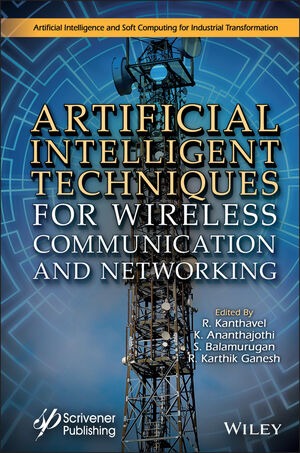
Wireless communication and networking based on AI concepts and techniques are explored in this book, specifically focusing on the current research in the field by highlighting empirical results along with theoretical concepts. The possibility of applying AI mechanisms towards security aspects in the communication domain is elaborated; also explored is the application side of integrated technologies that enhance AI-based innovations, insights, intelligent predictions, cost optimization, inventory management, identification processes, classification mechanisms, cooperative spectrum sensing techniques, ad-hoc network architecture, and protocol and simulation-based environments.
Discusses the future possibilities of AI with cloud computing and edge computing. Aims to conduct analyses, implementation and discussion of many tools (of artificial intelligence, machine learning and deep learning and cloud computing, fog computing, and edge computing including concepts of cyber security) for understanding integration of these technologies. Readers can quickly get an overview of these emerging topics and get many ideas of the future of AI with cloud, edge, and in many other areas. Topics include machine and deep learning techniques for Internet of Things based cloud systems; security, privacy and trust issues in AI based cloud and IoT based cloud systems; AI for smart data storage in cloud-based IoT; blockchain based solutions for AI based cloud and IoT based cloud systems.This book is relevent to researchers, academics, students, and professionals. Presents fusion of cloud computing services and AI technology for bringing a significant change in the technology industry; Includes self-assessment problems for increasing knowledge of real world problems, i.e., how AI and cloud/edge computing can change business for the better; Provides innovative results of integrations of AI in other applications such as healthcare, finance, manufacturing, transportation, agriculture, etc.

The automotive industry has made steady progress in technological innovations under the names of Connected Autonomous-Shared-Electric (CASE) and Mobility as a Service (MaaS). Needless to say, mathematics and informatics are important to support such innovations. As the concept of cars and movement itself is diversifying, they are indispensable for grasping the essence of the future mobility society and building the foundation for the next generation. This book contains three main contents. 1. Mathematical models of flow 2. Mathematical methodsfor huge data and network analysis 3. Algorithm for mobility society The first one discusses mathematical models of pedestrian and traffic flow, as they are important for preventing accidents and achieving efficient transportation.
Specifically, this book covers the following topics: 6G Use Cases, Requirements, Metrics and Enabling Technologies, PHY Technologies for 6G Wireless, Reconfigurable Intelligent Surface for 6G Wireless Networks, Millimeter-wave and Terahertz Spectrum for 6G Wireless, Challenges in Transport Layer for Tbit/s Communications, High-capacity Backhaul Connectivity for 6G Wireless, Cloud Native Approach for 6G Wireless Networks, Machine Type Communications in 6G, Edge Intelligence and Pervasive AI in 6G, Blockchain: Foundations and Role in 6G, Role of Open-source Platforms in 6G, and Quantum Computing and 6G Wireless.

Highlights various aspects of building construction industry based on data from field studies. It discusses the challenges, methodologies, technological applications in building construction, technology, and management. The book presents new approaches to effective building construction and an understanding of the impact of applications of latest technologies.
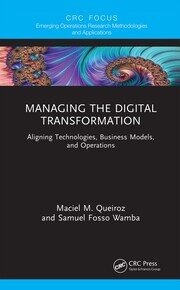
Provides the key technologies involved in an organization’s digital transformation. It offers a deep understanding of the key technologies (Blockchain, AI, Big Data, IoT, etc.) involved and details the impact, the decision-making process, and the interplay between technologies, business models, and operations.

This book addresses four standard business school subjects: microeconomics, macroeconomics, finance and information systems as they relate to trading, liquidity, and market structure. It provides a detailed examination of the impact of trading costs and other impediments of trading that the authors call “frictions”. It also presents an interactive simulation model of equity market trading, TraderEx, that enables students to implement trading decisions in different market scenarios and structures. Addressing these topics shines a bright light on how a real-world financial market operates, and the simulation provides students with an experiential learning opportunity that is informative and fun.
Blockchain technology and artificial intelligence (AI) have the potential to transform how the accounting and financial services industries engage with the business, stakeholder and consumer communities. Presenting a blend of technical analysis with current and future applications, this book provides professionals with an action plan to embrace and move forward with these new technologies in financial and accounting organizations.
Aims to explore the aspects of strategic leadership in a digital context together with the cyber-physical relationships whilst performing business activities. Furthermore, this book looks to investigate the interactions from both the organization strategy including the cross-functional actors/stakeholders whom are operating within the organization and the various characteristics of operating in a cyber secure ecosystem.

This book contributes to the creation of a cyber ecosystem supported by blockchain technology in which technology and people can coexist in harmony. Blockchains have shown that trusted records, or ledgers, of permanent data can be stored on the Internet in a decentralized manner.
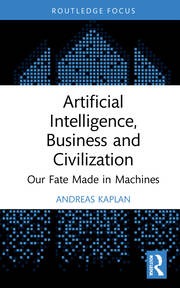
Looks at what exactly artificial intelligence is, how it can be classified, how it differentiates from other concepts such as machine learning, big data, blockchain, or the Internet-of-Things, and how it has evolved and might evolve over time.

سوريا - اتستراد درعا - غباغب
+963-15 2050 - 15 860 380 /1/2/3 - 11 662 3900