


تحسين النتائح
ترتيب حسب
من
الى

Biotechnological Applications of Photosynthetic Proteins: Biochips, Biosensors and Biodevices provides an overview of the recent photosystem II research and the systems available for the bioassay of pollutants using biosensors that are based on the photochemical activity. The data presented in this book serves as a basis for the development of a commercial biosensor for use in rapid pre-screening analyses of photosystem II pollutants, minimising costly and time-consuming laboratory analyses.
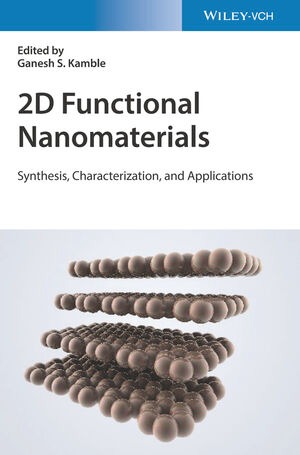
In 2D Functional Nanomaterials: Synthesis, Characterization, and Applications, Dr. Ganesh S. Kamble presents an authoritative overview of the most recent progress in the rational design and synthesis of 2D nanomaterials and their applications in semiconducting catalysts, biosensors, electrolysis, batteries, and solar cells. This interdisciplinary volume is a valuable resource for materials scientists, electrical engineers, nanoscientists, and solid-state physicists looking for up-to-date information on 2D heterojunction nanomaterials.
The goal of this book is to disseminate information on the worldwide status and trends in biosensing R&D to government decisionmakers and the research community. The contributors critically analyze and compare biosensing research in the United States with that being pursued in Japan, Europe and other major industrialized countries.
More profound understanding of the nature of light and light-matter interactions in biology has enabled many applications in the biology and medical fields. So a new discipline is born, namely biophotonics. The aim of this book is to review the current state-of-the-art of the field by means of authoritative chapters written by the world leaders of the respective fields. Biosensors, biochips, optical tomography, optical microsurgery, photodynamics therapy, bioactivation of gene, photobiology of skin, and nanobiophotonics are each introduced and recent advances presented. This book will be useful not only to physicians, biologists, physicists, chemists, materials scientists, and engineers but also to graduate students who are interested in these rapidly developing fields.
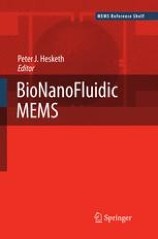
BioNanoFluidic MEMS explains nanofabrication and nanomaterials synthesis suitable for the development of biosensors. The fundamentals initiate an awareness for engineers and scientists who would like to develop and implement novel biosensors for various applications. In addition, the material covered includes: BioNanoFluidic MEMS connection between the interdisciplinary nature of BioNanoFluidics and MEMS BioNanoFluidics and sensor technology including Micro-Mechanical Sensors and Chemical Sensor Technologies ands-on steps for implementation of biosensor fabrication including a discussion of the clean room lithography process and etching, microsensor systems lamination, PDMS moulding, parylene deposition, and others Interconnection between the interdisciplinary nature of BioNanoFluidics and MEMS BioNanoFluidics and sensor technology including Micro-Mechanical Sensors and Chemical Sensor Technologies
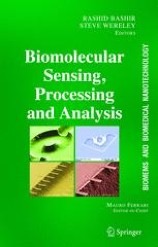
This volume contains 18 chapters focused on ‘Biomolecular Sensing, Processing and Analysis’, written by experts in the field of BioMEMS and biomedical nanotechnology. The chapters are groups into three broad categories of Sensors and Materials, Processing and Integrated Systems, and Microfluidics.Prof. Taun Vo-Dinh from Oakridge National Labs begins the Sensors and Materials section by providing a review of biosensors and biochips. This review is followed by an example of mechanical cantilever sensor work described by Prof. Arun Majumdar’s group at UC Berkeley and Prof. Tom Thundat at Oakridge National Laboratory.
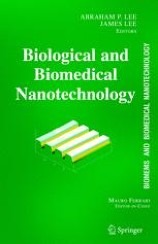
Abe Lee has been working on micro/ and nanotechnology for biomedical and biotech applications since 1992. His recent research focuses on the development of integrated micro and nano fluidic chip processors for the following applications: point-of-care diagnostics, "smart" nanomedicine for early detection and treatment, stem cell biology and therapeutics, the synthesis of novel and pure materials, and biosensors to detect environmental and terrorism threats. Jim Lee's research interest includes BioMEMS/NEMS, and polymer micro/nanotechnology. In the last 4 years, he has over 20 refereed journal publications, 2 book chapters, and 5 patents in these areas. He is now leading an NSF Nanoscale Science and Engineering Center for Affordable Nanoengineering of Polymer Biomedical Devices at OSU.

سوريا - اتستراد درعا - غباغب
+963-15 2050 - 15 860 380 /1/2/3 - 11 662 3900