


تحسين النتائح
ترتيب حسب
من
الى

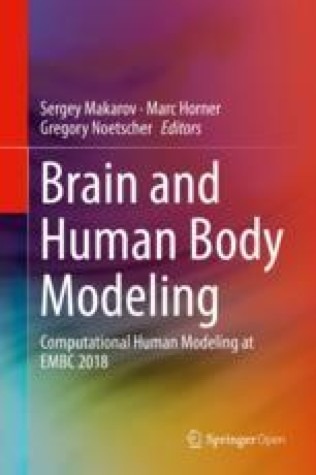
This book describes modern applications of computational human modeling with specific emphasis in the areas of neurology and neuroelectromagnetics, depression and cancer treatments, radio-frequency studies and wireless communications. Special consideration is also given to the use of human modeling to the computational assessment of relevant regulatory and safety requirements. Readers working on applications that may expose human subjects to electromagnetic radiation will benefit from this book’s coverage of the latest developments in computational modelling and human phantom development to assess a given technology’s safety and efficacy in a timely manner.
This book provides a timely and first-of-its-kind collection of contributed chapters on anatomy ontologies. It is interdisciplinary in its approach, bringing together relevant expertise from computing and biomedical studies, and covering both theoretical and applied aspects, with an emphasis on newer work relevant to the emerging Semantic Web.
Cell motility is a fascinating example of cell behavior which is fundamentally important to a number of biological and pathological processes. It is based on a complex self-organized mechano-chemical machine consisting of cytoskeletal filaments and molecular motors. In general, the cytoskeleton is responsible for the movement of the entire cell and for movements within the cell. The main challenge in the field of cell motility is to develop a complete physical description on how and why cells move. For this purpose new ways of modeling the properties of biological cells have to be found. This long term goal can only be achieved if new experimental techniques are developed to extract physical information from these living systems and if theoretical models are found which bridge the gap between molecular and mesoscopic length scales. Cell Motility gives an authoritative overview of the fundamental biological facts, theoretical models, and current experimental developments in this fascinating area.
Career Development in Bioengineering and Biotechnology is an indispensable guide to some of the most exciting career and professional growth opportunities in science, engineering, and beyond, and a "must read" for anyone interested in a career related to this burgeoning field.
This WTEC study gathered information on worldwide status and trends in BCI research to disseminate to government decisionmakers and the research community. The study reviewed and assessed the state of the art in sensor technology, the biotic-abiotic interface and biocompatibility, data analysis and modeling, hardware implementation, systems engineering, functional electrical stimulation, noninvasive communication systems, and cognitive and emotional neuroprostheses in academic research and industry.

Biology and Mechanics of Blood Flows presents the basic knowledge and state-of-the-art techniques necessary to carry out investigations of the cardiovascular system using modeling and simulation. Part II of this two-volume sequence, Mechanics and Medical Aspects, refers to the extraction of input data at the macroscopic scale for modeling the cardiovascular system, and complements Part I, which focuses on nanoscopic and microscopic components and processes. This volume contains chapters on anatomy, physiology, continuum mechanics, as well as pathological changes in the vasculature walls including the heart and their treatments. Methods of numerical simulations are given and illustrated in particular by application to wall diseases. This authoritative book will appeal to any biologist, chemist, physicist, or applied mathematician interested in the functioning of the cardiovascular system.

Biology and Mechanics of Blood Flows presents the basic knowledge and state-of-the-art techniques necessary to carry out investigations of the cardiovascular system using modeling and simulation. Part I of this two-volume sequence, Biology, addresses the nanoscopic and microscopic scales. The nanoscale corresponds to the scale of biochemical reaction cascades involved in cell adaptation to mechanical stresses among other stimuli. The microscale is the scale of stress-induced tissue remodeling associated with acute or chronic loadings. The cardiovascular system, like any physiological system, has a complicated three-dimensional structure and composition. Its time dependent behavior is regulated, and this complex system has many components.
Artificial sight is a frontier area of modern ophthalmology combining the multidisciplinary skills of surgical ophthalmology, biomedical engineering, biological physics, and psychophysical testing. Many scientific, engineering, and surgical challenges must be surmounted before widespread practical applications can be realized. The goal of Artificial Sight is to summarize the state-of-the-art research in this exciting area, and to describe some of the current approaches and initiatives that may help patients in a clinical setting.

When one listens to music at home, one would like to have an acoustic impression close to that of being in the concert hall. Until recently this meant elaborate multi-channelled sound systems with 5 or more speakers. But head-related stereophony achieves the surround-sound effect in living rooms with only two loudspeakers. By virtue of their slight directivity as well as an electronic filter the limitations previously common to two-speaker systems can be overcome and this holds for any arbitrary two-channel recording. The book also investigates the question of how a wide and diffuse sound image can arise in concert halls and shows that the quality of concert halls decisively depends on diffuse sound images arising in the onset of reverberation. For this purpose a strong onset of reverberation is modified in an anechoic chamber by electroacoustic means.
The topics covered in the conference proceedings include: Artificial organs, bioengineering education, bionanotechnology, biosignal processing, bioinformatics, biomaterials, biomechanics, biomedical imaging, biomedical instrumentation, bioMEMS, clinical engineering, prosthetics.

سوريا - اتستراد درعا - غباغب
+963-15 2050 - 15 860 380 /1/2/3 - 11 662 3900