


تحسين النتائح
ترتيب حسب
من
الى

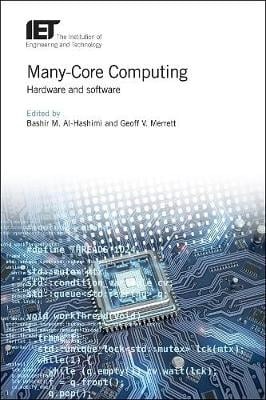
Provides a timely and coherent account of the recent advances in many-core computing research. Starting with programming models, operating systems and their applications; it presents runtime management techniques, followed by system modelling, verification and testing methods, and architectures and systems. Computing has moved away from a focus on performance-centric serial computation, instead towards energy-efficient parallel computation. This provides continued performance increases without increasing clock frequencies, and overcomes the thermal and power limitations of the dark-silicon era. As the number of parallel cores increases, we transition into the many-core computing era. There is considerable interest in developing methods, tools, architectures and applications to support many-core computing.
The book starts by introducing you to the world of Linux. Then, it outlines Ubuntu installation in illustrated steps, after which you'll learn how to configure every piece of everyday tech hardware such as your Internet connection, printers, 3D graphics cards, Bluetooth devices, and much more. Then you'll learn fun tasks such as listening to audio CDs and MP3s, watching movies, performing office tasks, and even image editing.
The book begins by discussing the background of Linux and open source software, then proceeds to guide you through the SUSE installation process. You'll learn how to use the basic functions, and modify the look and feel according to your tastes. This book is packed with troubleshooting tips, so even the most cautious beginner will feel right at home. Next, the book covers the daily usage tasks that are enjoyable and interesting to learn. You'll learn how to configure your system to listen to audio CDs and MP3s, burn CDs, watch movies, connect to the Internet, and reproduce common Windows tasks.
Discusses the evolution of future generation technologies through Internet of Things (IoT) in the scope of Artificial Intelligence (AI). The main focus of this volume is to bring all the related technologies in a single platform, so that undergraduate and postgraduate students, researchers, academicians, and industry people can easily understand the AI algorithms, machine learning algorithms, and learning analytics in IoT-enabled technologies. This book uses data and network engineering and intelligent decision support system-by-design principles to design a reliable AI-enabled IoT ecosystem and to implement cyber-physical pervasive infrastructure solutions. This book brings together some of the top IoT-enabled AI experts throughout the world who contribute their knowledge regarding different IoT-based technology aspects. Addresses the complete functional framework workflow in AI-enabled IoT ecosystem; Presents intelligent object identification and object discovery through the IoT ecosystem and its implications to the real world ;Explores security and privacy issues and trustworthy machine learning related to data-intensive technologies in AI-based IoT ecosystems.
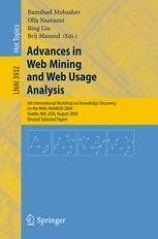
The Webisaliveenvironmentthatmanagesanddrivesawidespectrumofapp- cations in which a user may interact with a company, a governmental authority, a non-governmental organization or other non-pro?t institution or other users. User preferences and expectations, together with usage patterns, form the basis for personalized, user-friendly and business-optimal services. Key Web business metrics enabled by proper data capture and processing are essential to run an e?ective business or service. Enabling technologies include data mining, sc- able warehousing and preprocessing, sequence discovery, real time processing, document classi?cation, user modeling and quality evaluation models for them. Recipient technologies required for user pro?ling and usage patterns include recommendation systems, Web analytics applications, and application servers, coupled with content management systems and fraud detectors.

سوريا - اتستراد درعا - غباغب
+963-15 2050 - 15 860 380 /1/2/3 - 11 662 3900