



الصفحة 1
الصفحة 1

Undocumented Migrants and their Everyday Lives : The Case of Finland
Provides an overview of the everyday lives of undocumented migrants, thereby focusing on housing, employment, social networks, healthcare, migration trajectories as well as their use of the internet and social media.

Trauma and Resilience Among Displaced Populations : A Sociocultural Exploration
This book provides an enriched understanding of historical, collective, cultural, and identity-related trauma, emphasising the social and political location of human subjects. It therefore presents a socio-ecological perspective on trauma, rather than viewing displaced individuals as traumatised “passive victims”.

The cost of insanity in nineteenth-century Ireland : Public, voluntary and private asylum care
The first comparative study of public, voluntary and private asylums in nineteenth-century Ireland. Examining nine institutions, it explores whether concepts of social class and status and the emergence of a strong middle class informed interactions between gender, religion, identity and insanity. It questions whether medical and lay explanations of mental illness and its causes, and patient experiences, were influenced by these concepts. The strong emphasis on land and its interconnectedness with notions of class identity and respectability in Ireland lends a particularly interesting dimension. The book interrogates the popular notion that relatives were routinely locked away to be deprived of land or inheritance, querying how often “land grabbing” Irish families really abused the asylum system for their personal economic gain. The book will be of interest to scholars of nineteenth-century Ireland and the history of psychiatry and medicine in Britain and Ireland.

Solidarity in Europe : Citizens' Responses in Times of Crisis
Provides evidence-based knowledge on European solidarity and citizen responses in times of crisis. Does the crisis of European integration translate into a crisis of European solidarity, and if yes, what are the manifestations at the level of individual citizens? How strongly is solidarity rooted at the individual level, both in terms of attitudes and practices? And which driving factors and mechanisms contribute to the reproduction and/or corrosion of solidarity in times of crisis? Using findings from the EU Horizon 2020 funded research project “European paths to transnational solidarity at times of crisis: Conditions, forms, role-models and policy responses” (TransSOL), the books addresses these questions and provides cross-national comparisons of eight European countries – Denmark, France, Germany, Greece, Italy, Poland, Switzerland, and the UK. It will appeal to students, scholars and policymakers interested in the Eurocrisis, politics and sociology.

Rule of law and human mobility in the age of the global compacts
Hosts nine contributions that critically dive in the normative, administrative, and judicial obstacles and potential standing of the legal framework and implementation setting of the Global Compact for Safe, Orderly, and Regular Migration (GCM) and the Global Compact for Refugees (GCR). By inquiring into human rights protection at the boundaries of the political commitments under the Global Compacts, this reprint engages in a conversation about the confinements that migrants and refugees encounter when accessing their substantive and procedural rights.

Protest Movements in Asylum and Deportation
Deals with contestations “from below” of legal policies and implementation practices in asylum and deportation. Consequently, it covers three types of mobilization: solidarity protests against the deportation of refused asylum seekers, refugee activism campaigning for residence rights and inclusion, and restrictive protests against the reception of asylum seekers. By applying both a longitudinal analysis of protest events and a series of in-depth case studies in three immigration countries, this edited volume provides comparative insights into these three types of movement in Austria, Germany, and Switzerland over a time span of twenty-five years. Embedded in concepts of political change, limited state sovereignty, and migration control, the findings shed light on actors, repertoires, and the effects of protest activities. The contributions illustrate how local contexts, national political settings, issue specifics, and social ties lead to distinctly different forms of protest emergence, dynamics, and strategies.

Migration and Pandemics : Spaces of Solidarity and Spaces of Exception
This book discusses the socio-political context of the COVID-19 crisis and questions the management of the pandemic emergency with special reference to how this affected the governance of migration and asylum. The book offers critical insights on the impact of the pandemic on migrant workers in different world regions including North America, Europe and Asia.

Migrants, Refugees and Asylum Seekers’ Integration in European Labour Markets : A Comparative Approach on Legal Barriers and Enablers
This book discusses how, and to what extent, the legal and institutional regimes and the socio-cultural environments of a range of European countries (the Czech Republic, Denmark, Finland Greece, Italy, Switzerland and the UK), in the framework of EU laws and policies, have a beneficial or negative impact on the effective capacity of these countries to integrate migrants, refugees and asylum seekers into their labour markets.

Migrants with Irregular Status in Europe : Evolving Conceptual and Policy Challenges
This book explores the conceptual challenges posed by the presence of migrants with irregular immigration status in Europe and the evolving policy responses at European, national and municipal level. It addresses the conceptual and policy issues raised, post-entry, by this particular section of the migrant population.

Investigating the Body in the Victorian Asylum : Doctors, Patients, and Practices
This book explores how the body was investigated in the late nineteenth-century asylum in Britain. As more and more Victorian asylum doctors looked to the bodily fabric to reveal the ‘truth’ of mental disease, a whole host of techniques and technologies were brought to bear upon the patient's body. These practices encompassed the clinical and the pathological, from testing the patient's reflexes to dissecting the brain.

Inside asylum bureaucracy : Organizing refugee status determination in Austria
Provides sociological insight into governmental action on the administration of asylum in the European context. It offers an in-depth understanding of how decision-making officials encounter and respond to structural contradictions in the asylum procedure produced by diverging legal, political, and administrative objectives.The study focuses on structural aspects on the one hand, such as legal and organisational elements, and aspects of agency on the other hand, examining the social practices and processes going on at the frontside and the backside of the administrative asylum system.

Healthy Minds in the Twentieth Century : In and Beyond the Asylum
This book contributes a new dimension to the study of mental health and psychiatry in the twentieth century. It takes the present literature beyond the ‘asylum and after’ paradigm to explore the multitude of spaces that have been permeated by concerns about mental well-being and illness.

Geographies of Asylum in Europe and the Role of European Localities
This book describes how the numerous arrivals of asylum seekers since 2015 shaped reception and integration processes in Europe. It addresses the structuration of asylum and reception systems, and spaces and places of reception on European, national, regional and local level.

From Melancholia to Depression : Disordered Mood in Nineteenth-Century Psychiatry
This book maps a crucial but neglected chapter in the history of psychiatry: how was melancholia transformed in the nineteenth century from traditional melancholy madness into a modern biomedical mood disorder

Forced migration and mental health : Rethinking the care of refugees and displaced persons
In the last half century, the steadily increasing incidence of armed conflict (both within and between nations) has created mounting numbers of asylum seekers, refugees, and displaced persons. The provision of appropriate mental health services for these individuals has become a major focus of concern, but considerable controversy remains as to what kind of care is necessary. The initial assumptions and models that informed the field have recently come under attack, and alternative approaches have arisen. Forced Migration and Mental Health: Rethinking the Care of Refugees and Displaced Persons provides an up-to-date view of the controversies and future directions for the mental health care of those displaced by war or other extreme conditions.

EU-Turkey Relations : Theories, Institutions, and Policies
This book explores the new complexities and ambiguities that epitomize EU-Turkey relations. With a strong focus on the developments in the last decade, the book provides full access to a comprehensive understanding of the multifaceted relationship through three entry points: (1) Theories and Concepts, (2) Institutions, and (3) Policies. Part I brings together complementary and competing analytical approaches to study the evolution of EU-Turkey relations, ranging from traditional integration theories to novel concepts. Part II investigates the institutional machinery of EU-Turkey relations by analyzing the roles and perspectives of the European Council, the European Commission, and the European Parliament. Part III offers analyses of the policies most relevant for the relationship: enlargement policy, trade and macroeconomic policies, foreign and security policy, migration and asylum policies, and energy policy. In Part IV, the volume closes with a systematic survey of the conditions under which cooperative trends in EU-Turkey relations could be (re)invigorated. The systematic setup and the balanced combination of distinguished experts from EU- and Turkey-based institutions make this book a fundamental reading for students, researchers, lecturers, and practitioners of EU-Turkey relations, European integration and Turkish foreign policy.

Cross-Cultural Assessment of Psychological Trauma and PTSD
Recent advances in trauma treatment, coupled with ongoing traumatic world events, point to a critical need for global standards in assessment. But despite the best intentions of Western psychology, one model does not fit all cultures. Cross-Cultural Assessment of Psychological Trauma and PTSD addresses key issues in the field to help fill this knowledge gap. Focusing equally on theoretical concepts, culturally valid assessment methods, and cultural adaptation in trauma and resilience, 29 experts present the cutting edge of research and strategies. Extended case examples (including West Africans in Austria, Hmong in the U.S., and Aboriginal people in Australia) illustrate an informative range of symptom profiles, comorbid conditions, and coping skills, as well as secondary traumas that can occur in asylum seekers.
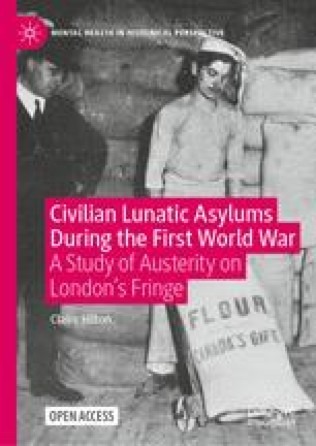
Civilian Lunatic asylums during the First World War : A study of Austerity on London's Fringe
This book explores the history of asylums and their civilian patients during the First World War, focusing on the effects of wartime austerity and deprivation on the provision of care.
Asylum Matters : On the Front Line of Administrative Decision-Making
This book examines everyday practices in an asylum administration. Asylum decisions are often criticised as being ‘subjective’ or ‘arbitrary’. Asylum Matters turns this claim on its head.
Asylum Determination in Europe : Ethnographic Perspectives
The book includes a legal overview of European asylum determination procedures, followed by sections on the diverse actors involved, the means by which they communicate, and the ways in which they make life and death decisions on a daily basis. It offers a contextually rich account that moves beyond doctrinal law to uncover the gaps and variances between formal policy and legislation, and law as actually practiced.
