



الصفحة 1
الصفحة 1

Interferometry and Synthesis in Radio Astronomy
This book is open access under a CC BY-NC 4.0 license.The third edition of this indispensable book in radio interferometry provides extensive updates to the second edition, including results and technical advances from the past decade; discussion of arrays that now span the full range of the radio part of the electromagnetic spectrum observable from the ground, 10 MHz to 1 THz; an analysis of factors that affect array speed; and an expanded discussion of digital signal-processing techniques and of scintillation phenomena and the effects of atmospheric water vapor on image distortion, among many other topics.

Il cielo sopra Roma : I luoghi dell’astronomia = The sky above Rome : The places of astronomy
Astronomy in Rome has always been there, but a little hidden: it was in the palaces, in the churches or, better, above the churches, speculas scattered along a path that few know by now. Intrigued and frightened, the Romans witnessed the burning of Giordano Bruno in a familiar corner of Campo de 'Fiori, but they probably didn't quite understand what guilt he was accused of. They certainly did not think that he was a philosopher and a scientist who had tried to imagine what the world was like.

How Apollo flew to the moon
Out of the technological battlefield of World War II came a team of gifted German engineers and designers who developed the vengeance weapon, the V-2, which evolved into the peaceful, powerful Saturn V rocket to take men to the Moon. David Woods tells the exciting story, starting from America’s post war astronautical research facilities, that used the V-2 for the development of the robust, resilient and reliable Saturn V launcher. He describes the initial launches through manned orbital spaceflights, comprehensively detailing each step, including computer configuration, the role of ground control, trajectory planning, lunar orbiting, separation of the lander, walking and working on the Moon, retrieval of the lunar astronauts and returning to Earth in this massive technical accomplishment.

High Time Resolution Astrophysics
High Time Resolution Astrophysics (HTRA) is an important new window to the universe and a vital tool in understanding a range of phenomena from diverse objects and radiative processes. This importance is demonstrated in this volume with the description of a number of topics in astrophysics, including quantum optics, cataclysmic variables, pulsars, X-ray binaries and stellar pulsations to name a few. Underlining this science foundation, technological developments in both instrumentation and detectors are described. These instruments and detectors combined cover a wide range of timescales and can measure fluxes, spectra and polarisation. These advances make it possible for HTRA to make a big contribution to our understanding of the Universe in the next decade.

Guide to Observing Deep-Sky Objects : A Complete Global Resource for Astronomers
Guide to Observing Deep-Sky Objects is an invaluable reference for all amateur astronomers. The book contains, for each constellation, (1) a star chart showing the Bayer labels, (2) a table for many of the stars in the constellation, along with their positions and magnitudes, and (3) a table of the major deep-sky objects in the constellation, with relevant observational data. Facing pages provide unique year-long graphs that show when the constellation is visible in the sky, which allows the user to quickly determine whether a given constellation can be seen, and when the best time to see it will be.

Galaxy Formation
This second edition of Galaxy Formation is an up-to-date text on astrophysical cosmology, expounding the structure of the classical cosmological models from a contemporary viewpoint. This forms the background to a detailed study of the origin of structure and galaxies in the Universe. The derivations of many of the most important results are derived by simple physical arguments which illuminate the results of more advanced treatments. A very wide range of observational data is brought to bear upon these problems, including the most recent results from WMAP, the Hubble Space Telescope, galaxy surveys like the Sloan Digital Sky Survey and the 2dF Galaxy Redshift Survey, studies of Type 1a supernovae, and many other observations.

Galaxies in the Local Vol.
Studies of Nearby Galaxies are currently the focus of many observations and numerical simulations. This book presents an overview of the galaxies within the Local Volume (D < 10 Mpc), including the Local Group (D < 1 Mpc) and our closest neighbours, the Andromeda Galaxy and the Magellanic Clouds. Presented are the latest results from radio, infrared and optical surveys as well as detailed multi-wavelength studies of individual galaxies. Accurate distances are now available for the majority of Local Volume galaxies providing a true 3-dimensional view of their distribution and flow pattern as well as their star formation.

Fisica solare = Solar physics
An introduction to Solar Physics, intended to illustrate to those who intend to approach this discipline (students, PhDs, researchers) the physical mechanisms underlying the complex phenomena observed on our closest star. It does not claim to be exhaustive (suffice it to say that solar physics spans a wide range of disciplines, such as nuclear physics, thermodynamics, electrodynamics, atomic and molecular physics, spectroscopy across all bands of the electromagnetic spectrum, magnetohydrodynamics, plasma physics, the development of new instrumentation, optics, etc.). Rather, a number of topics of fundamental relevance to the current study of the Sun have been selected (especially with regard to ground-based observations with large telescopes), and an attempt has been made to provide a general overview of these topics, including their historical evolution, without going into excessive detail. Since Solar Physics can rightfully be considered the "Rosetta Stone" of all Astrophysics, the volume can also be considered a valid introduction to this subject.

Field Guide to Meteors and Meteorites
Imagine the unique experience of being the very first person to hold a newly-found meteorite in your hand – a rock from space, older than Earth! "Weekend meteorite hunting" with magnets and metal detectors is becoming ever more popular as a pastime, but of course you can’t just walk around and pick up meteorites in the same way that you can pick up seashells on the beach. Those fragments that survived the intense heat of re-entry tend to disguise themselves as natural rocks over time, and it takes a trained eye – along with the information in this book – to recognize them.

Fare astronomia con piccoli telescopi = Are astronomy with small telescopes
Giant tools are not necessarily required to produce scientifically valid results in the field of astronomy. Even the amateur with a small telescope, with a diameter of only 8-9 cm, can contribute to the science of the sky by making useful observations of the Sun, the Moon, planets, comets, asteroids, double or variable stars, nebulae and star clusters. The manual of M.K. Gainer explains what the minimum equipment is (a small telescope, a computer, a simple digital camera), how to use it, and what are the appropriate techniques to be adopted in the observations. It also offers schemes for interpreting and reducing the collected data, as well as forms to be filled in and sent to international collection centers.

Exoplanets : Detection, Formation, Properties, Habitability
This edited, multi-author volume will be an invaluable introduction and reference to all key aspects in the field of exoplanet research. The reviews cover: Detection methods and properties of known exoplanets, Detection of extrasolar planets by gravitational microlensing. The formation and evolution of terrestrial planets in protoplanetary and debris disks. The brown dwarf-exoplanet connection. Formation, migration mechanisms and properties of hot Jupiters. Dynamics of multiple exoplanet systems. Doppler exoplanet surveys. Searching for exoplanets in the stellar graveyard. Formation and habitability of extra solar planets in multiple star systems. Exoplanet habitats and the possibilities for life. Moons of exoplanets: habitats for life.
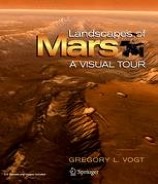
Landscapes of Mars : A Visual Tour
Landscapes of Mars is essentially a picture book that provides a visual tour of Mars. All the major regions and topographical features will be shown and supplemented with chapter introductions and extended captions. In a way, think of it as a visual tourist guide. Other topics covered are Martian uplands on the order of the elevation of Mt. Everest, Giant volcanoes and a rift system, the Grand Canyon of Mars, craters and the absence of craters over large regions (erosion), and wind shadows around craters, sand dunes, and dust devils.
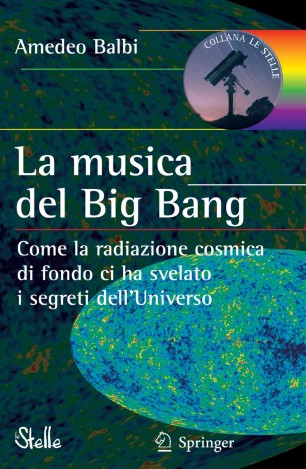
La musica del Big Bang : Come la radiazione cosmica di fondo ci ha svelato i segreti dell’Universo = The music of the Big Bang : How the cosmic background radiation revealed the secrets of the Universe to us
Cosmic microwave background radiation is the residue of the great heat following the Big Bang. A tenuous sign, over 13 billion years old, in which the answers to many of the questions about the nature of our Universe are hidden. Discovered by chance in 1964, in the last forty years this fossil trace of the origins of the Cosmos has been explored with every available means. Two Nobel Prizes in physics have already been awarded for research involving it, the last in 2006 for the results of the COBE satellite. Much of the information encoded in the cosmic background radiation was impressed by the superimposition of acoustic waves present in the early Universe: a "music" of the Big Bang, which cosmologists have tried for years to reconstruct, using techniques similar to those that allow to distinguish the sound of different musical instruments. Only recently have the first notes of this extraordinary cosmic symphony finally been revealed, but the investigation is not over yet. This book illustrates, with a language suitable even for non-specialists, the theories, observations and discoveries that have brought cosmology into a new era.
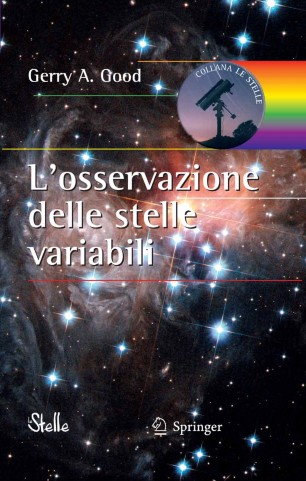
L’osservazione delle stelle variabili = The observation of variable stars
The observation of variable stars is one of the main contributions that amateur astronomers can offer to science and this book provides all the information necessary to pursue it profitably. In the first part the different classes of variables are presented in detail, with examples, light curves and physical descriptions. The second section, on the other hand, covers all the practical aspects of observation: from preparation and planning, to observation techniques, up to the management and processing of data.
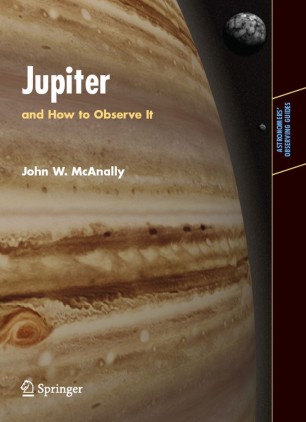
Jupiter : and How to Observe It
Jupiter is one of the most spectacular observing targets for amateur astronomers. There are various books about observing the planets, and several about Jupiter itself, but this is the only book to deal with the giant planet - its formation, structure, and incredible physics - as well as with the practical aspects of observation of the planet and its moons.
Jets from Young Stars II : Clues from High Angular Resolution Observations
This volume contains the edited lecture notes of the Second JETSET School on Jets from Young Stars: Clues from High Angular Resolution Observations organised by the Marie Curie Research Training Network JETSET: Jet Simulations, Experiments and Theory. After the opening two chapters on jet emission, readers can learn the fundamental background of modern high-spatial-resolution techniques, and how such methods have impacted on our understanding of young stars.
African Cultural Astronomy : Current Archaeoastronomy and Ethnoastronomy research in Africa
Astronomy is the science of studying the sky using telescopes and light collectors such as photographic plates or CCD detectors. However, people have always studied the sky and continue to study the sky without the aid of instruments this is the realm of cultural astronomy. This is the first scholarly collection of articles focused on the cultural astronomy of Africans. It weaves together astronomy, anthropology, and Africa. The volume includes African myths and legends about the sky, alignments to celestial bodies found at archaeological sites and at places of worship, rock art with celestial imagery, and scientific thinking revealed in local astronomy traditions including ethnomathematics and the creation of calendars. Authors include astronomers Kim Malville, Johnson Urama, and Thebe Medupe; archaeologist Felix Chami, and geographer Michael Bonine, and many new authors.
Advances in Meteoroid and Meteor Science
This volume is a compilation of articles that summarize the most recent results in meteor, meteoroid and related fields presented at the Meteoroids 2007 conference held at the impressive CosmoCaixa Science Museum in Barcelona, Spain. The conference took place between the 11th and the 15th of June and was organized by the Institute of Space Sciences (Consejo Superior de Investigaciones Científicas, CSIC) and the Institut d'Estudis Espacials de Catalunya (IEEC). Researchers in meteor science and supporting fields representing more than 20 countries participated at this international conference.
