



الصفحة 1
الصفحة 1

Nebulae and How to Observe Them
This book is a mine of information for all levels of amateur astronomy, from relative beginners to experienced observers. In one book, here is all you need to understand and observe those diverse and beautiful objects that fall under the heading of ‘nebulae’.

Natural Fullerenes and Related Structures of Elemental Carbon
This book provides an up-to-date summary of the state of knowledge on natural fullerenes occurrences and the laboratory techniques used to determine their presence at low concentration in rock samples. It demonstrates that natural fullerenes exist and should be searched for in places not yet considered such as carbon-containing deep-seated crustal rocks.Natural Fullerenes and Related Structures of Elemental Carbon is written for professional astronomers, meteoriticists, earth and planetary scientists, biologists and chemists interested in carbon and hydrocarbon vapor condensation. It is an invaluable resource for practicing research scientists and science teachers in Earth and Planetary Science, Astronomy and Carbon Science.

Multiwavelength Mapping of Galaxy Formation and Evolution ; Proceedings of the ESO Workshop Held at Venice, Italy, 13-16 October 2003
The possibilities of astronomical observation have dramatically increased over the last decade. Major satellites, like the Hubble Space Telescope, Chandra and XMM Newton, are complemented by numerous large ground-based observatories, from 8m-10m optical telescopes to sub-mm and radio facilities. As a result, observational astronomy has access to virtually the whole electromagnetic spectrum of galaxies, even at high redshifts. Theoretical models of galaxy formation and cosmological evolution now face a serious challenge to match the plethora of observational data. In October 2003, over 170 astronomers from 15 countries met for a 4-day workshop to extensively illustrate and discuss all major observational projects and ongoing theoretical efforts to model galaxy formation and evolution. This volume contains the complete proceedings of this meeting and is therefore a unique and timely overview of the current state of research in this rapidly evolving field.

Ice, Rock, and Beauty : A Visual Tour of the New Solar System
Ice, Rock, and Beauty is a book for anybody who lives in the solar neighborhood, and takes an interest in its significance to us as residents.The book gathers images from a rich pool, many from national and international organizations such as NASA and ESA, some directly from academic astronomers, and a few from private individuals. Together they tell a story of the Solar System, and of its beauty, that has not been told before.

Human vision and the night sky : How to improve your observing skills
This book is not for beginners. Nor is it for experts – instead it addresses the needs of practical amateur astronomers who want to make the jump to the new challenges of serious visual observing. Second Steps in Observational Astronomy begins by teaching you, as an amateur astronomer, to use the most important tool you have: your eyes. Visual observing is very definitely a skill that can be learned. Of course it is important to have your other optical equipment – telescope and accessories – set up and operating as perfectly as possible. This book describes how. After these vital preliminaries, subsequent chapters include a series of observing challenges that will entertain you and push your observing skills to continually higher levels of excellence for years to come. Take a tour of the solar-system as you never viewed it before, then beyond into the realm of deep space – using just your own eyes to reveal more detail than you ever thought possible.

Guide to Observing Deep-Sky Objects : A Complete Global Resource for Astronomers
Guide to Observing Deep-Sky Objects is an invaluable reference for all amateur astronomers. The book contains, for each constellation, (1) a star chart showing the Bayer labels, (2) a table for many of the stars in the constellation, along with their positions and magnitudes, and (3) a table of the major deep-sky objects in the constellation, with relevant observational data. Facing pages provide unique year-long graphs that show when the constellation is visible in the sky, which allows the user to quickly determine whether a given constellation can be seen, and when the best time to see it will be.

Galaxies in Turmoil : The Active and Starburst Galaxies and the Black Holes That Drive Them
Active galaxies involve some of the most extreme conditions and some of the most intriguing phenomena found anywhere in the universe. Research students - and even established research astronomers - will also find this book invaluable as a quick reference to the properties of, and phenomena within, those types of active galaxies that may be outside their specialisms.

From Suns to Life: : A Chronological Approach to the History of Life on Earth
This review emerged from several interdisciplinary meetings and schools gathering a group of astronomers, geologists, biologists, and chemists, attempting to share their specialized knowledge around a common question: how did life emerge on Earth? Their ultimate goal was to provide some kind of answer as a prerequisite to an even more demanding question: is life universal? The main chapters of this review present the formation and evolution of the solar system (3); the building of a habitable planet (4); prebiotic chemistry, biochemistry, and the emergence of life (5); the environmental context of the early Earth (6); and the ancient fossil record and early evolution (7). The concluding chapter (9) provides the highlights of the review and presents the different points of view about the universality of life. Two pedagogical chapters are included; one on chronometers (2), another in the form of a "frieze" (8) which summarizes in graphical form the present state of knowledge about the chronology of the emergence of life on Earth, before the Cambrian explosion.

Electronic Imaging in Astronomy : Detectors and Instrumentation
The second edition of Electronic Imaging in Astronomy: Detectors and Instrumentation describes the remarkable developments that have taken place in astronomical detectors and instrumentation in recent years – from the invention of the charge-coupled device (CCD) in 1970 to the current era of very large telescopes, such as the Keck 10-meter telescopes in Hawaii with their laser guide-star adaptive optics which rival the image quality of the Hubble Space Telescope. Authored by one of the world’s foremost experts on the design and development of electronic imaging systems for astronomy, this book has been written on several levels to appeal to a broad readership. Mathematical expositions are designed to encourage a wider audience, especially among the growing community of amateur astronomers with small telescopes with CCD cameras.

Double & Multiple Stars, and How to Observe Them
The first part of Jim Mullaney’s book provides a comprehensive review of the different classes of double and multiple systems, along with a look at the astrophysics of these objects. This is followed by a detailed guide for amateur astronomers, describing how to observe them – using a variety of different techniques – and outlining how to record the observations.In one book, here is all you need to observe double and multiple stars, and to understand the systems you are looking at.

Dense Molecular Gas around Protostars and in Galactic Nuclei : European Workshop on Astronomical Molecules 2004
The European Workshop on Astronomical Molecules was held at ‘The Conference Building’ in Zwolle, the Netherlands, on 18–20 February 2004. The idea behind the workshop was to bring together astronomers studying similar processes in different astrophysical environments; masers and dense molecular gas around young stars and galactic nuclei. There is considerable overlap in physical and chemical phenomena between these environments, with scales ranging from circumstellar to central regions of galaxies. This issue includes 12 reviews and 27 contributed papers presented in this Wo- shop, all of them were refereed by invited speakers or the editors. The quality of the papers is outstanding. The projects discussed here are often in an early stage and undoubtedly their progress has bene?ted greatly from the opportunity to discuss results with the experts in a wide range of areas. Similarly,

Creating and Enhancing Digital Astro Images
Digital imaging is now available to all amateur astronomers at a reasonable price. The advent of CCDs, DSLRs and – perhaps most significantly – webcams mean today’s astronomers can make colorful planetary or deep-sky images of breathtaking beauty. The results obtained with even modest equipment can be spectacular, but of course they depend crucially on the computer processing of the images after they have been captured. Enhancing Digital Images is not just an introduction to image processing, it is a deeply practical, comprehensive and fully illustrated in-depth guide to using a digital camera, performing image reduction and undertaking image enhancement – all without jargon or math. Here is everything you need to know about processing digital astronomical images, regardless of whether you are experienced or a relative beginner!

Construction of Mappings for Hamiltonian Systems and Their Applications
Based on the method of canonical transformation of variables and the classical perturbation theory, this innovative book treats the systematic theory of symplectic mappings for Hamiltonian systems and its application to the study of the dynamics and chaos of various physical problems described by Hamiltonian systems. It develops a new, mathematically-rigorous method to construct symplectic mappings which replaces the dynamics of continuous Hamiltonian systems by the discrete ones. Applications of the mapping methods encompass the chaos theory in non-twist and non-smooth dynamical systems, the structure and chaotic transport in the stochastic layer, the magnetic field lines in magnetically confinement devices of plasmas, ray dynamics in waveguides, etc. The book is intended for postgraduate students and researches, physicists and astronomers working in the areas of plasma physics, hydrodynamics, celestial mechanics, dynamical astronomy, and accelerator physics. It should also be useful for applied mathematicians involved in analytical and numerical studies of dynamical systems.
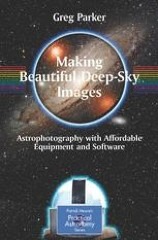
Making Beautiful Deep-Sky Images : Astrophotography with Affordable Equipment and Software
Professor Greg Parker's astronomical photographs are widely known for their excellence, and a selection of them has recently been shown as a public exhibition in the UK. In Making Beautiful Deep-Sky Images, he provides a detailed account of how spectacular deep-sky images can be taken by amateur astronomers using CCD cameras, and how they can subsequently be processed and enhanced in the "electronic darkroom" for maximum beauty and impact. Quite simply, this is a "how to do it" book for people who want to make stunning astronomical pictures.
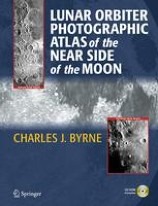
Lunar Orbiter Photographic Atlas of the Near Side of the Moon
Organized to make it easy for astronomers to use, enabling ground-based images and views to be compared with the Orbiter photographs. The photographs are striking for their consistent Sun angles (for uniform appearance). All features are identified with their current IAU-approved names, and each photograph is located in terms of latitude and longitude. To help practical astronomers, all the photographs are systematically related to an Earth-based view.

L'astrofilo moderno = The modern amateur astronomer
In less than two decades, amateur astronomy has changed its face. The reason, of course, is technological progress. Cheap but high-quality telescopes, computer-controlled "go-to" mounts, autoguiders, CCD cameras, video cameras and (as always) computers and the Internet are just some of the elements that revolutionized 21st century astronomy. Not only have they made amateur astronomy more "friendly" and fun, but they have also greatly expanded the potential of the amateur astronomer. Martin Mobberley first tackles the basic issues and then analyzes in depth what tools are available on the market. From here he starts to review the revolutionary possibilities that open up for amateur astronomers, from imaging, to spectroscopy, to photometry, to the surveillance of Near-Earth objects - comets and asteroids that can come dangerously close to the Earth.
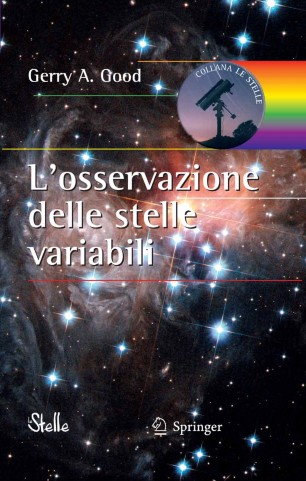
L’osservazione delle stelle variabili = The observation of variable stars
The observation of variable stars is one of the main contributions that amateur astronomers can offer to science and this book provides all the information necessary to pursue it profitably. In the first part the different classes of variables are presented in detail, with examples, light curves and physical descriptions. The second section, on the other hand, covers all the practical aspects of observation: from preparation and planning, to observation techniques, up to the management and processing of data.
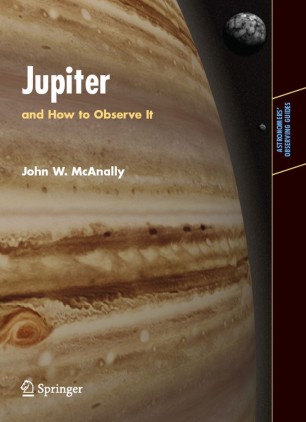
Jupiter : and How to Observe It
Jupiter is one of the most spectacular observing targets for amateur astronomers. There are various books about observing the planets, and several about Jupiter itself, but this is the only book to deal with the giant planet - its formation, structure, and incredible physics - as well as with the practical aspects of observation of the planet and its moons.
CCD Astrophotography : High-Quality Imaging from the Suburbs
This is a reference book for amateur astronomers who have become interested in CCD imaging. Those glorious astronomical images found in astronomy magazines might seem out of reach to newcomers to CCD imaging, but this is not the case. Great pictures are attainable with modest equipment. Adam Stuart’s many beautiful images, reproduced in this book, attest to the quality of – initially – a beginner’s efforts. Chilled-chip astronomical CCD-cameras and software are also wonderful tools for cutting through seemingly impenetrable light-pollution. CCD Astrophotography from the Suburbs describes one man’s successful approach to the problem of getting high-quality astronomical images under some of the most light-polluted conditions.
Astrophysics Update 2
"Astrophysics Updates" is intended to serve the information needs of professional astronomers and postgraduate students about areas of astronomy, astrophysics and cosmology that are rich and active research spheres. Observational methods and the latest results of astronomical research are presented as well as their theoretical foundations and interrelations. The contributed commissioned articles are written by leading exponents in a format that will appeal to professional astronomers and astrophysicists who are interested in topics outside their own specific areas of research. This collection of timely reviews may also attract the interest of advanced amateur astronomers seeking scientifically rigorous coverage.
