



الصفحة 1
الصفحة 1

New advances in audio signal processing
In the era of digitalization, audio signal processing is gaining peculiar relevance as an automation and remote analysis means, also considering its enhancement by novel artificial intelligence (AI) techniques. This Reprint aims to offer an overview of the current developments in all fields that revolve around audio processing: from advancements in the acoustic domain to deep learning architectures for the audio-based analysis of real-world problems such as pitch detection or pathology identification.

Multiagent Engineering : Theory and Applications in Enterprises
1 Multiagent Engineering: A New Software Construction Paradigm Multiagent systems have a long academic tradition. They have their roots in distributed problem solving in Artificial Intelligence (AI) from where they emerged in the mid-eighties as a distinctive discipline. Research in multiagent systems owes much to the work of Rosenschein on rationality and autonomy of intelligent agents, the European MAAMAW workshop series

Mission AI: the new system technology
Offers a strategic perspective on AI and the process of embedding it in society. After decades of research, Artificial Intelligence (AI) is now entering society at large. Due to its general purpose character, AI will change society in multiple, fundamental and unpredictable ways. Therefore, the Netherlands Scientific Council for Government Policy (WRR) characterizes AI as a system technology: a rare type of technologies that have a systemic impact on society. Earlier system technologies include electricity, the combustion engine and the computer. The history of these technologies provides us with useful insights about what it takes to direct the introduction of AI in society.

Methodological Investigations in Agent-Based Modelling : With Applications for the Social Sciences
Examines the methodological complications of using complexity science concepts within the social science domain. The opening chapters take the reader on a tour through the development of simulation methodologies in the fields of artificial life and population biology, then demonstrates the growing popularity and relevance of these methods in the social sciences. Following an in-depth analysis of the potential impact of these methods on social science and social theory, the text provides substantive examples of the application of agent-based models in the field of demography. This work offers a unique combination of applied simulation work and substantive, in-depth philosophical analysis, and as such has potential appeal for specialist social scientists, complex systems scientists, and philosophers of science interested in the methodology of simulation and the practice of interdisciplinary computing research.

Introduction to Intelligent Construction Technology of Transportation Infrastructure
Expounds on the related technologies of intelligent transportation infrastructure construction. Based on the essential characteristics of intelligent construction, "perception, analysis, decision-making, and execution," the basic structure of intelligent construction technology (ICT) is established. With the integration of engineering construction technologies, the analyses of the essence of intelligent algorithms and the feasibility of Artificial Intelligence (AI) are provided. The book introduces the essential characteristics of Big Data and the Internet of Things and their relationship with engineering construction. On this basis, the feasibility and implementation plan of intelligent technology applications in design, construction, and maintenance are analyzed and demonstrated with engineering examples.

Information systems management
Intended for the technical reader who works with large volumes of data. Written by experts in information systems management, the book includes chapters on software development, cloud implementation, networking, and handling large datasets, among other topics. Blockchain and artificial intelligence (AI) are the foundations of automated systems and the authors provide their viewpoints on information management by using these fundamental domains of information technology.
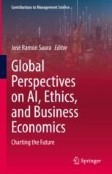
Global perspectives on AI, ethics, and business economics : Charting the future
Offers an in-depth exploration of the complex and rapidly evolving world of artificial intelligence (AI), focusing on its ethical, economic, and business dimensions. it provides a comprehensive analysis that intertwines historical context, philosophical ethics, global economic impacts, regulatory landscapes, workforce dynamics, corporate governance, consumer behavior, data ethics, and the use of AI for the good of society. after reviewing the evolution of AI, it offers insights into its historical milestones and the trajectory it may take in the future. this sets the stage for a broader discussion on how AI is not just a technological phenomenon but also a catalyst for ethical, economic, and societal transformation. the book emphasizes the importance of understanding AI’s historical development in order to gauge its potential impacts on our future.

From Digital Twins to Digital Selves and Beyond : Engineering and Social Models for a Trans-humanist World
This book aims at deepening the understanding of the relation between cyber-physical systems (CPSs) as socio-technical systems and their digital representations with intertwined artificial intelligence (AI). The authors describe why it is crucial for digital selves to be able to develop emotional behavior and why a humanity-inspired AI is necessary so that humans and humanoids can coexist.

Emerging Technologies in Computing ; 3rd EAI International Conference, iCETiC 2020, London, UK, August 19–20, 2020, Proceedings
This book constitutes the refereed conference proceedings of the Third International Conference on Emerging Technologies in Computing, iCEtiC 2020, held in London, UK, in August 2020. Due to VOVID-19 pandemic the conference was helt virtually.The 25 revised full papers were reviewed and selected from 65 submissions and are organized in topical sections covering blockchain and cloud computing; security, wireless sensor networks and IoT; AI, big data and data analytics; emerging technologies in engineering, education and sustainable development.

Digital business strategies in blockchain ecosystems : Transformational design and future of global business
Analyzes the effects of the latest technological advances in blockchain and artificial intelligence (AI) on business operations and strategies. Adopting an interdisciplinary approach, the contributions examine new developments that change the rules of traditional management. The chapters focus mainly on blockchain technologies and digital business in the "Industry 4.0" context, covering such topics as accounting, digitalization and use of AI in business operations and cybercrime.

Designing smart homes : The role of artificial intelligence
The area of smart homes is fast developing as an emergent area which attracts the synergy of several areas of science. This volume offers a collection of contributions addressing how artificial intelligence (AI), one of the core areas of computer science, can bring the growing area of smart homes to a higher level of functionality where homes can truly realize the long standing dream of proactively helping their inhabitants in an intelligent way.

Data-driven BIM for Energy Efficient Building Design
Conceptualises the scale and spectrum of Building Information Modelling (BIM) and Artificial Intelligence (AI) approaches in energy efficient building design and to develop its functional solutions with a focus on four crucial aspects of building envelop, building layout, occupant behaviour and heating, ventilation and air-conditioning (HVAC) systems. Drawn from theoretical development on the sustainability, informatics and optimisation paradigms in built environment, the energy efficient building design will be marked through the power of data and BIM-intelligent agents during the design phase.

Cyber-physical systems : Foundations and techniques
Covers the various aspects associated with Cyber-Physical Systems (CPS) such as algorithms, application areas, and the improvement of existing technology such as machine learning, big data and robotics. The scope of CPS is tremendous. In CPS, one sees the applications of various emerging technologies such as artificial intelligence (AI), Internet of Things (IoT), machine learning (ML), deep learning (DL), big data (BD), robotics, quantum technology, etc. In almost all sectors, whether it is education, health, human resource development, skill improvement, startup strategy, etc., one sees an enhancement in the quality of output because of the emergence of CPS into the field.

Cosmetic and reconstructive facial plastic surgery : A review of medical and biomedical engineering and science concepts
Provides an extensive overview of the most recent technological advancements in facial plastic and reconstructive surgeries and head and neck surgery through a thorough review of the literature in biomedical engineering, technology, and medicine. Coverage includes the most recent engineering and computing techniques, such as robotics, biomechanics, artificial intelligence (AI), deep learning (DL), machine learning (ML), and optimization, as well as the medical and surgical aspects of medical and scientific methods, surgical and non-surgical procedure types, complications, patient care, and psychological factors.

Computational drug discovery : methods and application
Covers a wide range of cutting-edge computational technologies and computational chemistry methods that are transforming drug discovery. The book delves into recent advances, particularly focusing on artificial intelligence (AI) and its application for protein structure prediction, AI-enabled virtual screening, and generative modeling for compound design. Additionally, it covers key technological advancements in computing such as quantum and cloud computing that are driving innovations in drug discovery.
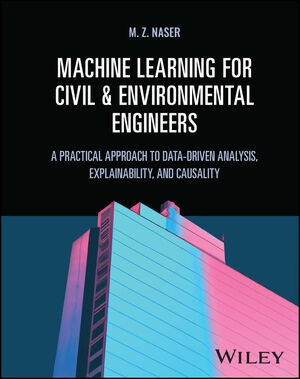
Machine learning for civil and environmental engineers : A practical approach to data-driven analysis, explainability, and causality
Introduces engineers and engineering students to the applications of artificial intelligence (AI), machine learning (ML), and machine intelligence (MI) in relation to civil and environmental engineering projects and problems, presenting state-of-the-art methodologies and techniques to develop and implement algorithms in the engineering domain.
Machine Ethics : From Machine Morals to the Machinery of Morality
Offers the first systematic guide to machine ethics, bridging between computer science, social sciences and philosophy. Based on a dialogue between an AI scientist and a novelist philosopher, the book discusses important findings on which moral values machines can be taught and how. In turn, it investigates what kind of artificial intelligence (AI) people do actually want.

Classification of covid-19 in lung images
The novel coronavirus 2019 (COVID-2019), which first appeared in Wuhan city of China in December 2019, spread rapidly around the world and became a pandemic. It has caused a devastating effect on both daily lives, public health, and the global economy. It is critical to detect the positive cases as early as possible so as to prevent the further spread of this epidemic and to quickly treat affected patients. The need for auxiliary diagnostic tools has increased as there are no accurate automated toolkits available. Recent findings obtained using radiology imaging techniques suggest that such images contain salient information about the COVID-19 virus. Application of advanced artificial intelligence (AI) techniques coupled with radiological imaging can be helpful for the accurate detection of this disease, and can also be assistive to overcome the problem of a lack of specialized physicians in remote villages.

Car deal : The ultimate used-cars marketplace
This is an effort to represents the design and implementation of a mobile application that serves as a marketplace for buying and selling used cars. The application is developed using Flutter, a popular cross-platform framework, and integrates an Artificial Intelligence (AI) model to predict the price of used cars based on various parameters, such as the car's model, age, mileage, and condition. The report provides a comprehensive overview of the project's development process, including the use of agile methodology and various technologies, such as Firebase, Python, and TensorFlow. The AI model's accuracy is evaluated using statistical metrics, such as Mean Absolute Error (MAE) and Root Mean Squared Error (RMSE).
Blockchain, artificial intelligence and financial services : Implications and applications for finance and accounting professionals
Blockchain technology and artificial intelligence (AI) have the potential to transform how the accounting and financial services industries engage with the business, stakeholder and consumer communities. Presenting a blend of technical analysis with current and future applications, this book provides professionals with an action plan to embrace and move forward with these new technologies in financial and accounting organizations.
