


تحسين النتائح
ترتيب حسب
من
الى


Features contributions from several Italian research groups that are working on the field of biomedicine. Each chapter in this book deals with a specific subfield, with the aim of providing an overview of the subject and an account of the research results.
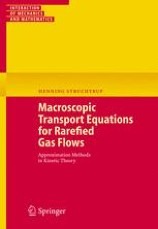
This book discusses classical and modern methods to derive macroscopic transport equations for rarefied gases from the Boltzmann equation, for small and moderate Knudsen numbers, i.e.as well as the new order of magnitude method, which avoids the short-comings of the classical methods, but retains their benefits.
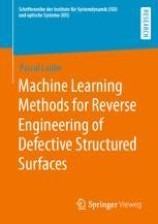
Pascal Laube presents machine learning approaches for three key problems of reverse engineering of defective structured surfaces: parametrization of curves and surfaces, geometric primitive classification and inpainting of high-resolution textures. The proposed methods aim to improve the reconstruction quality while further automating the process. The contributions demonstrate that machine learning can be a viable part of the CAD reverse engineering pipeline.
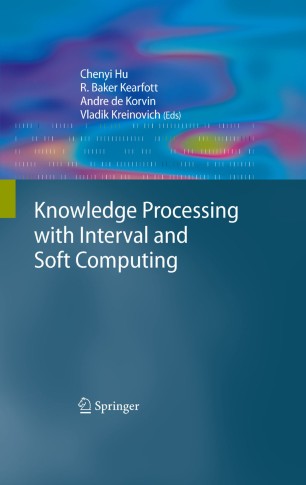
In particular, these chapters cover computing techniques for interval linear systems of equations, interval matrix singular-value decomposition, interval function approximation, and decision making with statistical and graph-based data processing. To enable these applications, the book presents a standards-based object-oriented interval computing environment in C++.
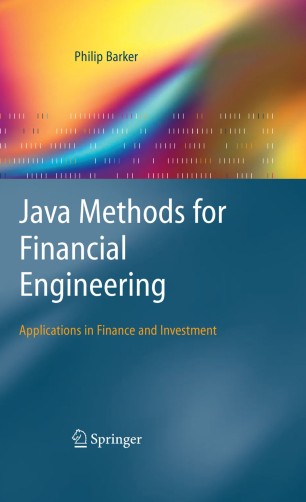
This book is structured around the main theories and models used by practitioners to engineer finance and investment tools. The methods developed and implemented in the text are organized as chapters which cover the core areas.
This state-of-the-art survey contains the papers that were invited by the organizers after conclusion of an International Dagstuhl-Seminar on Complexity of Constraints, held in Dagstuhl Castle, Germany, in October 2006.
This book constitutes the refereed proceedings of the 8th International Workshop on Algorithms in Bioinformatics, WABI 2008, held in Karlsruhe, Germany, in September 2008 as part of the ALGO 2008 meeting.
This book presented submissions in the engineering and applications track. The papers address all current subjects in algorithmics reaching from design and analysis issues of algorithms over to real-world applicat.
This volume contains the 75 contributed papers and the abstracts of the threeinvited lectures presented at the 13th Annual European Symposium on Algo-rithms (ESA 2005), held in Spain, 2005. respectively.Papers were solicited in all areas of algorithmic research, including but notlimited to algorithmic aspects of networks, approximation and on-line algo-rithms, computational biology, computational geometry, computational financeand algorithmic game theory, data structures, database and information re-trieval, external memory algorithms, graph algorithms, graph drawing, machinelearning, mobile computing, pattern matching and data compression, quantumcomputing, and randomized algorithms. The algorithms could be sequential,distributed, or parallel. Submissions were especially encouraged in the area ofmathematical programming and operations research, including combinatorialoptimization, integer programming, polyhedral combinatorics, and semidefiniteprogramming.Each extended abstract was submitted to one of the two tracks.
This new monograph integrates mathematical theory and revealing experimental work. It demonstrates mathematically the validity of the reliability claimed by conformal predictors when they are applied to independent and identically distributed data, and it confirms experimentally that the accuracy is sufficient for many practical problems. Later chapters generalize these results to models called repetitive structures, which originate in the algorithmic theory of randomness and statistical physics. The approach is flexible enough to incorporate most existing methods of machine learning, including newer methods such as boosting and support vector machines and older methods such as nearest neighbors and the bootstrap.
Le champ des algorithmes d'approximation est aujourd'hui l'un des domaines de recherche les plus actifs en informatique. Il allie la profondeur de la théorie mathématique aux promesses d'applications pratiques d'un intérêt considérable. La plupart des problèmes issus d'applications relevant de domaines aussi différents que la conception de circuits VLSI, la conception et la planification de réseaux, l'ordonnancement, la théorie des jeux, la biologie ou la théorie des nombres, sont des problèmes NP-difficiles. Leur résolution exacte demanderait des ressources informatiques inaccessibles et ne peut donc être envisagée. Pour faire face à cette situation, un grand nombre d'algorithmes proposant des solutions approchées à ces problèmes ont été développés.
Fundamental Approximation Methods. Machine Learning -- Deep Neural Nets -- Chebyshev Tensors -- The toolkit - plugging in approximation methods. Introduction: why is a toolkit needed -- Composition techniques -- Tensors in TT format and Tensor Extension Algorithms -- Sliding Technique -- The Jacobian projection technique -- Hybrid solutions - approximation methods and the toolkit.

It has two new sections, a new appendix, and more than half a dozen new figures. A few references have also been added, Much of the new material is based on work , The financial support of the National Science Foundation and the Volvo Foundations Center of Excellence for the Future of Urban Transportation at U. C. Berkeley is also acknowledged. The new appendix presents the logic behind the traveling salesman and vehicle routing results used in Sec. 4. 2 to describe the transportation ope- tion; Chapter 4 is more self-contained as a result. New section 5. 6 int- duces and evaluates a general method that automatically translates the c- tinuum approximation recipes of Chapters 4 and 5 into discrete system designs. This closes a gap in previous editions. Other additions include an explanation of how to develop system designs that can efficiently acc- modate real-time control strategies to manage uncertainty (new section 4. 6. 3), and extensions of the many-to-many design ideas of Chap. 6
This book presents new adaptive solution methods for multiobjective optimization problems based on parameter dependent scalarizations. With the help of sensitivity results an adaptive parameter control is developed so that high-quality approximations of the efficient set are generated. These examinations are based on a general scalarization approach for arbitrary partial orderings defined by a closed pointed convex cone in the objective space. The application of the results to many other well-known scalarization methods is also presented. Background material of multiobjective optimization and scalarization approaches is concisely summarized at the beginning. The effectiveness of these new methods is demonstrated by test problems and a recent problem in intensity-modulated radiotherapy. The book concludes with a further application: a procedure for solving multiobjective bilevel optimization problems.
The aim of this volume is to bring together research directions in theoretical signal and imaging processing developed rather independently in electrical engineering, theoretical physics, mathematics and the computer sciences. In particular, mathematically justified algorithms and methods, the mathematical analysis of these algorithms, and methods as well as the investigation of connections between methods from time series analysis and image processing are reviewed. An interdisciplinary comparison of these methods, drawing upon common sets of test problems from medicine and geophysical/enviromental sciences, is also addressed.

By introducing mathematical objects, it teaches students how to use a computer to perform numerical and symbolic calculations, define a function and calculate its values, plot and explore graphs, and execute simple algorithms. The course is rich in examples, applications, and models, drawn from economics, physics, biology, statistics, and mathematics itself. The analysis of these models constitutes, in a certain sense, the true purpose of the mathematical theory covered. Automatic calculation tools (mathematics software, spreadsheets) are used extensively to explore and illustrate concepts and properties. Mathcad® software, in particular, was used, both as a calculation tool and as a simple yet powerful programming language. Considerable space is devoted to approximation, emphasizing the distinction between numerical and symbolic calculation; to algorithms as a synthesis of the syntactic and semantic aspects of mathematical objects; and to computer simulation, interpreted as a "physical" experiment and a source of conjecture. The ability to use a calculator marks a sort of "democratization" of mathematics: even complex results, which have always required a broad background of knowledge and laborious calculations, are now quickly accessible to anyone who understands the meaning of mathematical objects and knows how to use the syntax.

A fuzzy system is, in a very broad sense, any fuzzy logic-based system where fuzzy logic can be used either asthebasisfor the representation of different forms of system knowledge or the model for the interactions and relationships among the system variables. Fuzzy systems have proven to be an important tool for modeling complex systems for which, due to complexity or imprecision, classical tools are unsuccessful. There have been diverse fields of applications of fuzzy technology from medicine to management, from engineering to behavioral science, from vehicle control to computational linguistics, and so on. Fuzzy modeling is a conjunction to understand the s- tem’s behavior and build useful mathematical models. Different types of fuzzy models have been proposed in the literature, among which the Takagi-Sugeno (T-S) fuzzy model is a rule-based one suitable for the accurate approximation and identi?cation of a wide class of nonlinear systems.
Deals with a particular class of approximation methods in the context of light scattering by small particles. This class of approximations has been termed as eikonal or soft particle approximations. The eikonal approximation was studied extensively in the potential scattering and then adopted in optical scattering problems. In this context, the eikonal and other soft particle approximations pertain to scatterers whose relative refractive index compared to surrounding medium is close to unity. The study of these approximations is very important because soft particles occur abundantly in nature. For example, the particles that occur in ocean optics, biomedical optics, atmospheric optics and in many industrial applications can be classified as soft particles. This book was written in recognition of the long-standing and current interest in the field of scattering approximations for soft particles. It should prove to be a useful addition for researchers in the field of light scattering.
Covers the so-called Bayesian approach to statistical inference and in particular its decision-making aspects. The bases of this axiomatics (choice of the a priori, optimal decisions, tests and regions of confidence) are discussed in detail, as well as more recent openings of Bayesian analysis such as the choice of models, the use of numerical methods. Stochastic approximation (MCMC), the theory of noninformative laws (Berger-Bernardo axioms) and the relation to the classical theory of admissibility. Each chapter is completed by an extensive series of exercises of increasing difficulty and by bibliographical notes on the themes addressed. This book can be used in a Master's program in Applied Mathematics, Biometrics, Econometrics or any other program that uses quantitative information processing techniques. It only requires a basic course in probability theory and mathematical statistics as a preliminary.
The aim of this monograph is to give a unified introductory treatment of the most important iterative methods for constructing fixed points of nonlinear contractive type mappings. It summarizes the most significant contributions in the area by presenting, for each iterative method considered (Picard iteration, Krasnoselskij iteration, Mann iteration, Ishikawa iteration etc.), some of the most relevant, interesting, representative and actual convergence theorems. Applications to the solution of nonlinear operator equations as well as the appropriate error analysis of the main iterative methods, are also presented.

سوريا - اتستراد درعا - غباغب
+963-15 2050 - 15 860 380 /1/2/3 - 11 662 3900