


تحسين النتائح
ترتيب حسب
من
الى

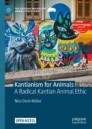
The book gives readers in animal ethics an accessible introduction to Kant’s views on our duties to others, and his view that we have only ‘indirect’ duties regarding animals. It then investigates how one would have to depart from Kant in order to recognise that animals matter morally for their own sake. The result is a deliberately amended version of Kantianism which nevertheless remains faithful to central aspects of Kant’s thought. The book’s final part illustrates the framework’s use in applied contexts, addressing the issues of using animals as mere means, the ethics of veganism and vegetarianism, and environmental protection.
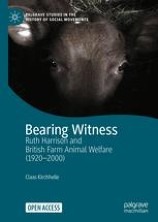
This book is the biography of one of Britain’s foremost animal welfare campaigners and of the world of activism, science, and politics she inhabited. In 1964, Ruth Harrison’s bestseller Animal Machines triggered a gear change in modern animal protection by popularising the term ‘factory farming’ alongside a new way of thinking about animal welfare.
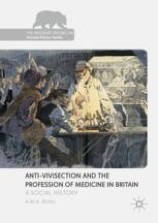
This book explores the social history of the anti-vivisection movement in Britain from its nineteenth-century beginnings until the 1960s. It discusses the ethical principles that inspired the movement and the socio-political background that explains its rise and fall. Opposition to vivisection began when medical practitioners complained it was contrary to the compassionate ethos of their profession. Christian anti-cruelty organizations took up the cause out of concern that callousness among the professional classes would have a demoralizing effect on the rest of society. As the nineteenth century drew to a close, the influence of transcendentalism, Eastern religions and the spiritual revival led new age social reformers to champion a more holistic approach to science, and dismiss reliance on vivisection as a materialistic oversimplification.
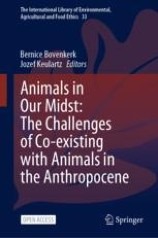
This book brings together authoritative voices in animal and environmental ethics, who address the many different facets of changing human-animal relationships in the Anthropocene. As we are living in complex times, the issue of how to establish meaningful relationships with other animals under Anthropocene conditions needs to be approached from a multitude of angles. This book offers the reader insight into the different discussions that exist around the topics of how we should understand animal agency, how we could take animal agency seriously in farms, urban areas and the wild, and what technologies are appropriate and morally desirable to use regarding animals. This book is of interest to both animal studies scholars and environmental ethics scholars, as well as to practitioners working with animals, such as wildlife managers, zookeepers, and conservation biologists.

سوريا - اتستراد درعا - غباغب
+963-15 2050 - 15 860 380 /1/2/3 - 11 662 3900