



الصفحة 1
الصفحة 1

Nutrigenomics and nutraceuticals
Provides an authoritative and comprehensive overview of the field of nutraceuticals and genomics—also called nutrigenomics, a rapidly growing field. It discusses both nutrigenomic and nutrigenetic techniques to investigate the nutritional basis of several health disorders because scientists have found that diet can affect gene expression. The book covers the nutrigenomic tools for the prevention of disease conditions such as cancer, viral infection, microbial infection, COVID-19, HIV/AIDS, tuberculosis, hypertension, neurodegenerative disease, obesity, baldness, and anemia. Some nutrigenomic tools that can also be used for brain health, weight loss, human nutrition, skin care, and maintaining health during pregnancy are also explored.

Multiple pregnancy
Multiple pregnancy affects 0.9-3.1% of births worldwide. Prevalence rates vary significantly due to differences in dizygotic twinning rates and use of assisted reproduction. Both maternal and fetal/neonatal complications are more common in multiple compared to singleton pregnancies, and there are specific problems for the fetuses related to monochorionicity. Multiple pregnancies require specialised and individualised care. Complicated multiple pregnancies should be managed in a tertiary care centre where there is additional expertise, such as the laser ablation needed to treat monochorionic monozygotic pregnancies with conjoined circulations. Cornerstones of management in pregnancy are the need for accurate fetal measurement to optimise dating of gestational age, and documentation of chorionicity. High-level ultrasound expertise is needed. The mothers need frequent assessment to detect hypertension and anemia, and early identification and management of preterm labour.

Molecular Mechanisms of Fanconi Anemia
Molecular Mechanisms of Fanconi Anemia will give research students a platform for further investigation, and act as a source of information regarding experimental design. Clinicians will find this title useful for its comprehensive description of Fanconi Anemia and information on the latest molecular theories underlying its causes.

Modern treatments for chronic blood diseases
Blood is a body fluid in humans and other animals that delivers necessary substances such as nutrients and oxygen to the cells and transports metabolic waste products away from those same cells. In vertebrates, it is composed of blood cells suspended in blood plasma. Plasma, which constitutes 55% of blood fluid, is mostly water (92% by volume), and contains proteins, glucose, mineral ions, hormones, carbon dioxide (plasma being the main medium for excretory product transportation), and blood cells themselves. Albumin is the main protein in plasma, and it functions to regulate the colloida osmotic pressure of blood. The blood cells are mainly red blood cells (also called RBCs or erythrocytes), white blood cells (also called WBCs or leukocytes) and platelets (also called thrombocytes). Thalassemias are inherited blood disorders characterized by decreased hemoglobin production Symptoms depend on the type and can vary from none to severe. Often there is mild to severe anemia (low red blood cells or hemoglobin). Anemia can result in feeling tired and pale skin. There may also be bone problems, an enlarged spleen, yellowish skin, and dark urine. Slow growth may occur in children.

Modern Hematology : Biology and Clinical Management
The first chapters of this book contain a self-contained introduction to path integrals in Euclidean quantum mechanics and statistical mechanics. The resulting high-dimensional integrals can be estimated with the help of Monte Carlo simulations based on Markov processes. The most commonly used algorithms are presented in detail so as to prepare the reader for the use of high-performance computers as an “experimental” tool for this burgeoning field of theoretical physics. Several chapters are then devoted to an introduction to simple lattice field theories and a variety of spin systems with discrete and continuous spins, where the ubiquitous Ising model serves as an ideal guide for introducing the fascinating area of phase transitions. As an alternative to the lattice formulation of quantum field theories, variants of the flexible renormalization group methods are discussed in detail. Since, according to our present-day knowledge, all fundamental interactions in nature are described by gauge theories, the remaining chapters of the book deal with gauge theories without and with matter.

Immunology and Immunopathogenesis of Malaria
This collection of reviews addresses many of these important issues of malarial immunity and immunopathology. They are of interest not only to malariologists, but hopefully also to the broader immunological community. Strong interactions with, and feedback from immunologists working in other infectious diseases and in basic immunology will help us to move the field of malaria immunology and therapeutic intervention forward more quickly.

Handbook of nutrition and pregnancy
This book discusses relevant topics in the scientific community such as determining to what extent prenatal and perinatal environmental factors are linked to childhood and adult obesity and chronic diseases. This book also examines issues that are common to both the developed and the developing worlds and includes chapters that are specific to nutritional and reproductive factors seen mainly in developing countries. These chapters discuss contemporary issues that impact both the woman and the developing infant. Also covered in several chapters is a review of nutritional as well as physiological factors that either increase or decrease the potential for high risk pregnancies such as gestational diabetes mellitus, Type I and Type II diabetes mellitus, preeclampsia, anemia, and so forth.

Glucose-6-phosphate dehydrogenase deficiency
Glucose-6-phosphate dehydrogenase deficiency, the most common enzyme deficiency worldwide, causes a spectrum of disease including neonatal hyperbilirubinemia, acute hemolysis, and chronic hemolysis. Persons with this condition also may be asymptomatic. This X-linked inherited disorder most commonly affects persons of African, Asian, Mediterranean, or MiddleEastern descent. Because acute hemolysis is caused by exposure to an oxidative stressor in the form of an infection, oxidative drug, or fava beans, treatment is geared toward avoidance of these and other stressors.

Fundamentals of Geriatric Medicine : A Case-Based Approach
This handbook addresses the complexity of disease prevention and presentation in elderly patients, as well as geriatric pharmacology. Medicare and Medicaid, and conditions common to elderly patients, including depression, dementia, and hypertension, are also covered. Numerous graphs and tables are included throughout the book to assist the reader in processing the information presented and incorporating it into clinical practice. This practical guide is an essential resource for all those caring for the elderly.

Erythropoietins and Erythropoiesis : Molecular, Cellular, Preclinical, and Clinical Biology
The book is divided into two sections: Background and Basic Science and Clinical Uses of Recombinant Erythropoietins. To begin, Israels and Israels describe the biology of red cells, the hierarchy of erythropoietic progenitor cells, their development to mature cells, and the effects of endogenous EPO on their development. Foote summarizes the historical interest in, and search for, an erythropoietic factor. Once EPO was identified,cloned,and expressed,the path was set for the study of other aspects of EPO biology both within e- thropoiesis and other cellular systems.
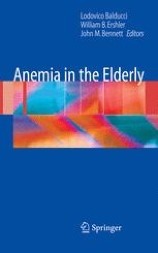
Anemia in the Elderly
Anemia is found in approximately 80% of elderly patients, most often caused by chronic disease and iron deficiency. Hemopoiesis is a crossroad for many aging-related events.Why do older patients become anemic When should a diagnostic work up of anemia be initiated in the older person? What are the clinical consequences of anemia? Can the treatment of anemia delay aging? Have erythropoietic growth factors played a role in age-related anemia? Who should receive an erythropoietin stimulating agent?When should the suspicion for Myelodysplastic Syndrome be ruled out and what are the clues?This book addresses these and many other important questions with a review of the most recent findings.

A Study about Prevalence of Thalassemia Complications in Syrian Patients
Inherited haemoglobin disorders, including thalassemia and sickle-cell disease, are the most common monogenic diseases worldwide. Several clinical forms of α-thalassemia and β-thalassemia, including the co-inheritance of β-thalassemia with haemoglobin E resulting in haemoglobin E/β-thalassemia, have been described. The disease hallmarks include imbalance in the α/β-globin chain ratio, ineffective erythropoiesis, chronic hemolytic anemia, compensatory hemopoietin expansion, hypercoagulability, and increased intestinal iron absorption. The complications of iron overload, arising from transfusions that represent the basis of disease management in most patients with severe thalassemia. The mature Hb molecule is a tetramer composed of 2 a-globin and 2 b-globin polypeptides, which assemble, along with a heme prosthetic group, to form the complete molecule.
