تحسين النتائح
ترتيب حسب
من
الى



الكليات في الجامعة العربية الدولية
الخدمات الطلابية والأكاديمية

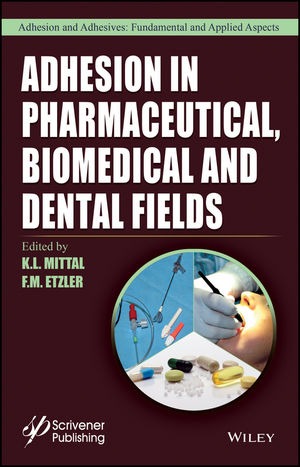
The phenomenon of adhesion is of cardinal importance in the pharmaceutical, biomedical and dental fields. A few eclectic examples will suffice to underscore the importance/relevance of adhesion in these three areas. For example, the adhesion between powdered solids is of crucial importance in tablet manufacture. The interaction between biodevices (e.g., stents, bio-implants) and body environment dictates the performance of such devices, and there is burgeoning research activity in modifying the surfaces of such implements to render them compatible with bodily components. In the field of dentistry, the modern trend is to shift from retaining of restorative materials by mechanical interlocking to adhesive bonding.

Pesents buildings developed using modular assembly approaches based on lightweight and corrosion-resistant fiber reinforced polymer (FRP) composites. Construction methods and the choice of building materials offer great opportunities for more productive and environmentally friendly solutions. This book includes valuable experimental data on large-scale structural components (beams, slabs, amd columns), connections (shear connections, wall stud connections, beam-column connections, column-column connections) and structures (composite floor system, structural sandwich assemblies, and full-scale structural demonstrations), supported with detailed numerical modelling and analytical methods.

This book is under a CC BY 4.0 license. It presents the results of the ComBoNDT European project, which aimed at the development of more secure, time- and cost-saving extended non-destructive inspection tools for carbon fiber reinforced plastics, adhered surfaces and bonded joints. The book reports the optimal use of composite materials to allow weight savings, reduction in fuel consumptions, savings during production and higher cost efficiency for ground operations.
