


تحسين النتائح
ترتيب حسب
من
الى

Brings together the works of radiation biologists and ecologists to provide reliable radioecology data and gives insight into future radioprotection. The book examines the environmental pollution and radiation exposure, and contains valuable data from abandoned livestock in the ex-evacuation zone and from wild animals including invertebrates and vertebrates, aqueous and terrestrial animals, and plants that are subjected to long-term exposure in the area still affected by radiation. It also analyzes dose evaluation, and offers new perspectives gained from the accident, as well as an overview for future studies to promote radioprotection of humans and the ecosystem.
Low back pain is one of the main reasons for consultation, whether in general or specialized medicine. It poses a real public health problem. This "back pain", which can despair patients and doctors by its sometimes rebellious character, explains the multiplicity of examinations sometimes practiced and the treatments implemented. This work is a collection of the most recent developments in terms of physiopathological knowledge of disc involvement, clinical examination and the place of surgery and in particular disc prostheses. An update concerns the indications and contributions of additional examinations; some formidable diagnostic traps are mentioned. Medical treatments such as infiltrations, manipulations, the benefit of restraints and the provision of acupuncture are being developed. Also discussed are the latest scientific data on isokinetic evaluation and retraining, as well as the role of sports activity as a factor in the prevention or aggravation of low back pain. Finally, the medico-legal aspect is dealt with in the context of work accidents, and the assessment after trauma. This book is the result of the collaboration and experience of undisputed specialists in this field.
Cytogenetics is a very important research tool in basic and applied research. The uses of cytogenetics in human-population monitoring, in biological dosimetry in radiation accidents and in astronauts and as a predictive measure of cancer are topics discussed in this book. The book will help the reader to better understand cytogenetics and the intricacies of the methodology. The different methods of fluorescence in situ hybridization are discussed and the results achieved are presented. The book provides a comprehensive review of basic and applied aspects of cytogenetics and therefore will be of interest to all who are interested in chromosomes and their alterations by different types of mutagens, including chemical mutagens and ionizing and nonionizing radiation, with special reference to electromagnetic fields.
The prevention of the most frequent and deadly pathologies (cancers, cardiovascular diseases, accidents) essentially involves modifying risky behavior, a challenge which cannot be resolved by the simple dissemination of information. To be able to modify behavior, it is necessary to take into account, on the one hand, the individuals themselves and what leads them to change their ways of living and, on the other hand, the cultural, social, physical and economic environment. who shapes people and whose modifications are necessary for individual changes. Thus, preventive health actions are effective as long as they strengthen the ability to exercise control over individual and collective health determinants.
Since children are not as capable as adults to perceive the risks involved in many situations of daily life, they are at a high risk of suffering personal injuries, mainly resulting from home, school and traffic accidents. From the tort law perspective, this requires a specific treatment of children as victims. For the last few decades some legal systems have been trying to find new solutions for a better protection of children, while other legal systems still follow more traditional rules. After having tackled the problems concerning the position of children as tortfeasors in a previous book, in this book the same working team deals with the problems related to the position of children as victims. This book analyses both the traditional solutions found in some legal systems and the newer solutions offered by others and devotes specific attention to damage issues, apportionment of damage and insurance problems when the victim is a child.
The automotive industry has made steady progress in technological innovations under the names of Connected Autonomous-Shared-Electric (CASE) and Mobility as a Service (MaaS). Needless to say, mathematics and informatics are important to support such innovations. As the concept of cars and movement itself is diversifying, they are indispensable for grasping the essence of the future mobility society and building the foundation for the next generation. This book contains three main contents. 1. Mathematical models of flow 2. Mathematical methodsfor huge data and network analysis 3. Algorithm for mobility society The first one discusses mathematical models of pedestrian and traffic flow, as they are important for preventing accidents and achieving efficient transportation.
This book introduces readers to a new methodology for assessing the risks to the marine environment following accidental oil spills. The methodology will soon be implemented on the Norwegian Continental Shelf and will be complemented by guidelines for its use in a regulatory framework.
Combines energy economics and big data modeling analysis in energy conversion and management and comprehensively introduces the relevant theories, key technologies, and application examples of the smart energy economy. With the help of time series big data modeling results, energy economy managers develop reasonable and feasible pricing mechanisms of electricity price and improve the absorption capacity of the power grid. In addition, they also carry out scientific power equipment scheduling and cost–benefit analysis according to the results of data mining, so as to avoid the loss caused by accidental damage of equipment. Energy users adjust their power consumption behavior through the modeling results provided and achieve the effect of energy saving and emission reduction while reasonably reducing the electricity expenditure.
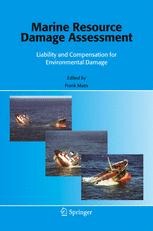
MARE-DASM research focused on: (i) the estimation and distribution of marine contaminants in order to assess their long term effects (ecotoxicology); (ii) the integration of these result into a Biological Effects SubModel and a mathematical model assessing the risks associated with accidental spillage of oil at sea and the damage this can cause (modelling); (iii) the assessment of the willingness to pay for ecological damage, based on the Contingent Valuation Method (economics); (iv) the development and evaluation of measures to be taken in order to guarantee a sustainable use of the Belgian part of the North Sea, taking into account the economic and social interests and values (social economics); (v) the potential to develop technical and legal procedures that allow ecological damage to the marine environment to be evaluated and compensated, taking into account constraints in national and international liability legislation (legal).
The goals of the workshop included a discussion of the state of the science in identification of new research and approaches for water pollution events and communication of the management of water pollution and sustainability of water resources. Critical to management of accidental and intentional pollution events is the assessment of the risk, an understanding of the hazards and lessons learned from events which may lead to preventative management and control strategies. Public health protection will ultimately be improved by the ability to develop management frameworks which are flexible and adaptable to the specific region, country or watershed problems and concerns and allow for prioritization in the decision making. The integration of scientific information regarding the types of hazards the environmental fate of the chemical/biological, exposure pathways and human and ecosystem impacts may be implemented from both a qualitative or descriptive approach or using a more classical quantitative risk assessment paradigm. Thus the frameworks for assessing the risk and managing the risk may be seen as preventive, early warning and responsive.
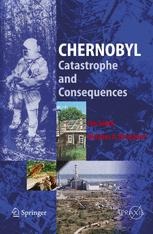
The long-term effects of the Chernobyl incident on the environment are still becoming apparent, twenty years after the event. This book, written by two researchers with frontline experience in this field, provides a detailed review of these over a wide range of ecosystems. It also discusses the responses and countermeasures utilised to combat the effects of the accident, as well as considering the health, social, psychological and economic impacts on the human population. Chernobyl - Catastrophe and Consequences provides a comprehensive assessment of the Chernobyl accident and its long-term consequences draws on the most recent measurements of contamination in the terrestrial and aquatic food chains discusses the sociological consequences of such disasters in detail This book adds valuable weight to the debate about the environmental cost of nuclear power and the issue of nuclear safety.
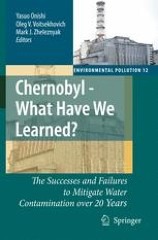
Twenty million people have been exposed to Chernobyl radionuclides through the Dnieper River aquatic pathways. This book presents a 20-year historical overview and comprehensive study results of the aquatic environment affected by the 1986 Chernobyl nuclear accident. During this time, many water quality management practices and countermeasures were enacted. The book presents in-depth analyses of these water remediation actions, using current science and mathematical modeling, and discusses why some were successful, but many others failed. The chapter entitled Where Do We Go From Here? incorporates a comprehensive discussion of the planned New Safe Confinement (NSC) structure to cover the Chernobyl plant. The book closes with a summary and conclusions drawn from these analyses, making it a valuable reference tool for the future. This book will be of interest to engineers, scientists, decision-makers, and those involved in radiation protection and radioecology, environmental protection and risk assessment, water remediation and mitigation measures, and radioactive waste disposal. In addition, the detailed, almost day-to-day, emergency responses to the Chernobyl accident described in this book will also be useful to people developing emergency and long-term responses to accidental or intentional (by terrorists) releases of radionuclides, toxic chemicals and biological agents.
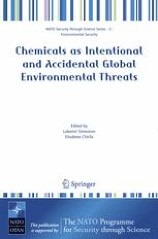
The book contains fields of ecology, chemistry, medicine, epidemiology, public health, toxicology, risk assessment, environmental protection and management, modelling, environmental remediation technologies came together to discuss the chemicals threats for the global environment. The intentional or accidental release of chemicals into environment poses a global threat to public health and security.
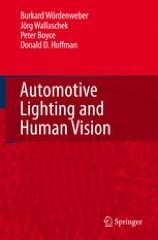
Visual perception is the most important of the human senses. Lack of visual perception is one of the main causes of accidents. The safety of vehicle traffic depends on how well automotive lighting supports the visual perception of the driver. This book explains the fundamentals of visual perception, like e.g. physiology of eye and brain, as well as those of automotive lighting technology, like e.g. design of headlamps and signal lights. It is an interdiciplinary approach to a fastly evolving field of science and technology, answering questions like "How does information enter our brain when driving a car?" and "What are the benefits and dangers of LED signal lighting?"
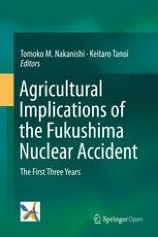
Consists of various topics, including radioactivity inspection of food products; decontamination trials for rice and livestock production; the state of contamination in wild animals and birds, trees, mushrooms, and timber; the dynamics of radioactivity distribution in mountain and paddy fields; damage incurred by the forestry and fishery industries; and the change in consumers’ minds. The last chapter introduces a real-time radioisotope imaging system, the forefront technique to visualize actual movement of cesium in soil and in plants. This is the only book to provide systematic data about the actual change of radioactivity, and thus is of great value for all researchers who wish to understand the effect of radioactive fallout on agriculture.
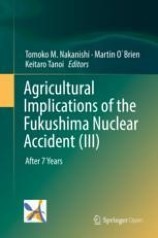
Reports on studies undertaken at contaminated sites such as farmland, forests, and marine and freshwater environments, with a particular focus on livestock, wild plants and mushrooms, crops, and marine products in those environments. It also provides additional data collected in the subsequent years to show how the radioactivity levels in agricultural products and their growing environments have changed with time and the route by which radioactive materials entered agricultural products as well as their movement between different components (e.g., soil, water, and trees) within an environmental system (e.g., forests). The book covers various topics, including radioactivity testing of food products; decontamination trials for rice and livestock production; the state of contamination in, trees, mushrooms, and timber; the dynamics of radioactivity distribution in paddy fields and upland forests; damage incurred by the forestry and fishery industries; and the change in consumers’ attitudes. Chapter 19 introduces a real-time radioisotope imaging system, a pioneering technique to visualize the movement of cesium in soil and in plants.

In this book, research and development trends of physics, engineering, mathematics and computer sciences in biomedical engineering are presented. Contributions from industry, clinics, universities and research labs with foci on medical imaging (CT, MRT, US, PET, SPECT etc.), medical image processing (segmentation, registration, visualization etc.), computer-assisted surgery (medical robotics, navigation), biomechanics (motion analysis, accident research, computer in sports, ergonomics etc.), biomedical optics (OCT, soft-tissue optics, optical monitoring etc.) and laser medicine (tissue ablation, gas analytics, topometry etc.) give insight to recent engineering, clinical and mathematical studies.
With the total number of vehicles steadily increasing and soon approaching one billion, the world is facing serious challenges in terms of both safety of road transport and sustainability. Consequently the two major persistent issues for the automotive industry are improved safety and reduced emissions. The book in hand is a showroom of activities, the International Forum on Advanced Microsystems for Automotive Applications (AMAA) has been known for during the last 12 years.
There is a coincidence of the AMAA objectives and those of EPoSS, the European Technology Platform on Smart Systems Integration, contributing intensively to the development of automotive-specific smart systems. You will find a series of the EPoSS items in the programme of the 11th AMAA, which continues to be a unique exchange forum for companies in the automotive value chain. The publication in hand also reflects these issues. It is a cut-out of new technological priorities in the area of microsystems-based smart devices and opens up a mid-term perspective of future smart systems applications in automobiles
Microsystems in many cases provided the key functions for this progress. Although the issues the event concentrated on didn’t change significantly (safety, powertrain, comfort, etc.), considerable shifts of technological paradigms and approaches can be stated. The future of microsystems will consist of integrated smart systems which are able to diagnose a situation, to describe and to qualify it. They will be able to identify and mutually address each other. They will be predictive and therefore they will be able to decide and help to decide. Smart systems will enable the automobile to interact with the environment, they will perform multiple tasks and assist a variety of activities. Smart systems will be highly reliable, often networked and energy autonomous.

سوريا - اتستراد درعا - غباغب
+963-15 2050 - 15 860 380 /1/2/3 - 11 662 3900