



الصفحة 1
الصفحة 1

Essentials of pharmaceutical analysis
Provides detailed information on the background, basic principles, and components of techniques used for the analysis of pharmaceuticals and biopharmaceuticals. Focusing on those analytical techniques that are most frequently used for pharmaceuticals, it classifies them into three major sections and 19 chapters, each of which discusses a respective technique in detail. Chiefly intended for graduate students in the pharmaceutical sciences, the book will familiarize them with the components, working principles and practical applications of these indispensable analytical techniques.
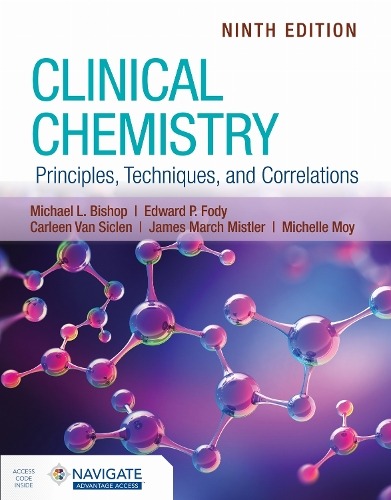
Clinical chemistry : Principles, techniques, and correlations ; 9th ed.
Keeps students at the forefront of what continues to be one of the most rapidly advancing areas of laboratory medicine with clear explanations that balance analytic principles, techniques, and correlation of results with coverage of disease states. The book not only demonstrates the how of clinical testing, but also the what, why, and when of testing correlations to help students develop the knowledge and interpretive and analytic skills they'll need in their future careers.

Burket's oral medicine, 13th ed.
"Detailed discussions on: orofacial pain, temporomandibular disorders, headache and salivary gland disease / oral and oropharyngeal cancers, including the management of oral complications of cancer therapy / genetics, laboratory medicine and transplantation medicine pediatric and geriatric oral medicine / psychiatry and psychology / clinical research / and interpreting the biomedical literature"
Autoformation et aide au diagnostic en hématologie avec le logiciel ADH = Self-study and diagnostic aid in hematology with ADH software
The software includes a rich iconography on blood and marrow cells which will complement the knowledge in cytology of hematologists. Certain cytological abnormalities encountered in certain pathologies are also presented.
100 cases in clinical pathology and laboratory medicine
Presents 100 clinical scenarios commonly seen by medical students and junior doctors in the emergency department, outpatient clinic, operating theatre or in general practice. A succinct summary of the patient's history, examination and initial investigations is followed by questions on each case, with particular emphasis on the interpretation of the results and in which an understanding of the underlying clinical pathology is central to arriving at the correct diagnosis. The answer includes a detailed discussion on each topic, providing an essential revision aid as well as a practical guide for students and junior doctors, especially those preparing for undergraduate and postgraduate examinations.
