



الصفحة 97
الصفحة 97
Biopharmaceutical manufacturing progress, trends and challenges
Source of the latest innovative research and technical development in biomanufacturing systems. It is organised into 2 parts: 1) Manufacturing of recombinant therapeutic proteins (e.g. therapeutic antibodies, biosimilars/biogenerics) and 2) Manufacturing aspects of cell and gene therapy. Each with selected chapters on the following topics for both up- and downstream, such as: Advanced process strategies, especially continuous manufacturing, Advanced culture techniques, especially single-use systems, Process transfer, scale-up/scale-down models, Processing advances/Manufacturing productivity/efficiency, Model-assisted process understanding and development/Digital Twins, Process controls and analytics, Quality control, Quality by design, Facility design and full-scale commercial systems, manufacturing technology innovation.
Biopharmaceutical drug design and development
Biopharmaceutical Drug Design and Development, Second Edition, updates the widely successful first edition, published in 1999. This new, expanded edition investigates the dozens of new biopharmaceutical drugs that have become available since the publication of the first edition. Among the drugs discussed are ones in the categories of monoclonal antibodies for in-vivo use, cytokines, growth factors, enzymes, immunomodulators, thrombolytics, and immonotherapies including vaccines. Additionally, the volume examines new and emerging technologies, such as bioinformatics, DNA microarrays, transgenics, therapeutic gene delivery, stem cells, nucleic acid-based therapeutics, and macromolecular drug delivery. Authors also study pharmacogenetics in the clinic and changes in biologic drug approval at the FDA. Biopharmaceutical Drug Design and Development, Second Edition, is a worthy sequel in the discussion on the dynamic, exciting field of biotechnology.
Bionanotechnology : Proteins to Nanodevices
Bionanotechnology is the key integrative technology of the 21st century and aims to use the knowledge, gathered from the natural construction of cellular systems, for the advancement of science and engineering. Investigating the topology and communication processes of cell parts can lead to invention of novel biological devices with exciting applications. Though microscale to nanoscale research offers an excellent space for the development of futuristic technologies, a number of challenges must be overcome. Due to paucity of a dedicated literature on the protein based nanodevices we bring you this monograph that combines collective research works of scientists probing into this fascinating universe of bionanotechnology. The monograph has been written with an aim of surveying engineering design principles of biomolecular nanodevices, prototype nanodevices based on redox proteins, bacteriorhodopsins and natural fibers, and touching upon the future developments in the field.
Biomimetics for architecture & design : Nature - analogies - technology
Provides the readers with a timely guide to the application of biomimetic principles in architecture and engineering design. As a result of a combined effort by two internationally recognized authorities, the biologist Werner Nachtigall and the architect Göran Pohl, the book describes the principles which can be used to compare nature and technology, and at the same time it presents detailed explanations and examples showing how biology can be used as a source of inspiration and “translated” in building and architectural solutions (biomimicry). Even though nature cannot be directly copied, the living world can provide architects and engineers with a wealth of analogues and inspirations for their own creative designs. But how can analysis of natural entities give rise to advanced and sustainable design? By reporting on the latest bionic design methods and using extensive artwork, the book guides readers through the field of nature-inspired architecture, offering an extraordinary resource for professional architects, engineers, designers and urban planners, as well as for university teachers, researchers and students.
Biometric systems : Technology, design and performance evaluation
The use of computers to recognize humans from physical and behavioral traits dates back to the digital computer evolution of the 1960s. But even after decades of research and hundreds of major deployments, the field of biometrics remains fresh and exciting as new technologies are developed andoldtechnologiesareimprovedandfieldedinnewapplications.Wor- wide over the past few years,there has been a marked increase in both g- ernment and private sector interest in large-scale biometric deployments for accelerating human–machine processes, efficiently delivering human services, fighting identity fraud and even combating terrorism. The p- pose of this book is to explore the current state of the art in biometrics- tems and it is the system aspect that we have wished to emphasize. By their nature, biometric technologies sit at the exact boundary of the human–machineinterface.Butlikealltechnologies,bythemselvestheycan provide no value until deployed in a system with support hardware, n- work connections, computers, policies and procedures, all tuned together to work withpeople to improve some real business process within a social structure.
Biomedical applications and toxicity of nanomaterials
Covers the recent trends on the biological applications of nanomaterials, methods for their preparation, and techniques for their characterization. Further, the book examines the fundamentals of nanotoxicity, methods to assess the toxicity of engineered nanomaterials, approaches to reduce toxicity during synthesis. It also provides an overview of the state of the art in the application of Artificial intelligence-based methodologies for evaluation of toxicity of drugs and nanoparticles. The book further discusses nanocarrier design, routes of various nanoparticle administration, nano based drug delivery systems, and the toxicity challenges associated with each drug delivery method. It presents the latest advances in the interaction of nanoparticles with the cellular environment and assess nanotoxicity of these engineered nanoparticles. The book also explores the comparative and mechanistic genotoxicity assessment of the nanomaterials. This book is useful source of information for industrial practitioners, policy makers, and other professionals in the fields of toxicology, medicine, pharmacology, food, and drugs.
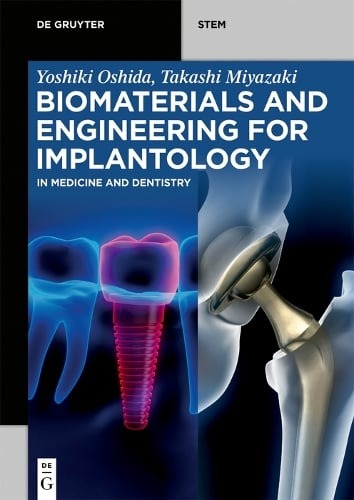
Biomaterials and engineering for implantology: in medicine and dentistry
Biomaterials are composed of metallic materials, ceramics, polymers, composites and hybrid materials. Biomaterials used in human beings require safety regulations, toxicity, allergic reaction, etc. When used as implantable materials their biological compatibility, biomechanical compatibility, and morphological compatibility must be acessed. This book explores the design and requirements of biomaterials for the use in implantology.
Bio-Materials & Prototyping Applications in Medicine
Bio-Materials and Prototyping Applications in Medicine focuses on bio-materials and prototyping applications in medical environments. The applications that ardiscussed integrate bio-materials, CAD, and physical prototyping techniques.

Biomarkers in drug discovery and development : A handbook of practice, application, and strategy
Discusses biomarker characterization and validation and applications throughout drug discovery and development. Explains where proper use of biomarkers can substantively impact drug development timelines and costs, enable selection of better compounds and reduce late stage attrition, and facilitate personalized medicine. Helps readers get a better understanding of biomarkers and how to use them, for example which are accepted by regulators and which still non-validated and exploratory. Updates developments in genomic sequencing, and application of large data sets into pre-clinical and clinical testing; and adds new material on data mining, economics, and decision making, personal genetic tools, and wearable monitoring. Includes case studies of biomarkers that have helped and hindered decision making
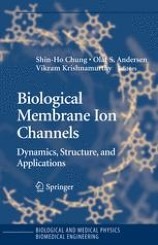
Biological Membrane Ion Channels : Dynamics, Structure, and Applications
Ion channels are biological nanotubes that are formed by membrane proteins. Because ion channels regulate all electrical activities in living cells, understanding their mechanisms at a molecular level is a fundamental problem in biology. This book deals with recent breakthroughs in ion-channel research that have been brought about by the combined effort of experimental biophysicists and computational physicists, who together are beginning to unravel the story of these exquisitely designed biomolecules. With chapters by leading experts.
Bioinspired optimization methods and their applications ; 9th International conference, BIOMA 2020, Brussels, Belgium, November 19–20, 2020, Proceedings
This book constitutes the refereed proceedings of the 9th International Conference on Bioinspired Optimization Methods and Their Applications, BIOMA 2020, held in Brussels, Belgium, in November 2020. The 24 full papers presented in this book were carefully reviewed and selected from 68 submissions. The papers in this BIOMA proceedings specialized in bioinspired algorithms as a means for solving the optimization problems and came in two categories: theoretical studies and methodology advancements on the one hand, and algorithm adjustments and their applications on the other.

Bio-inspired computing and communication ; 1st Workshop on Bio-inspired design of networks, BIOWIRE 2007 Cambridge, UK, April 2-5, 2007 Revised Selected Papers
The book constitutes the thoroughly refereed post-workshop proceedings of the First Workshop on Bio-Inspired Design of Networks, BIOWIRE 2007, held in Cambridge, UK, in April 2007.
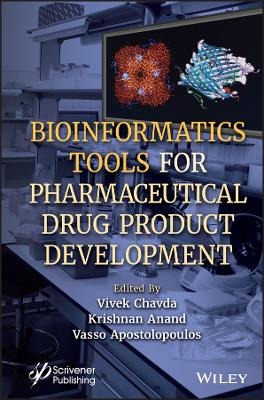
Bioinformatics tools for pharmaceutical drug product development
Presents the latest information on bioinformatics tools, artificial intelligence, machine learning, computational methods, protein interactions, peptide-based drug design, and omics technologies. And include bioinformatics tools for the pharmaceutical sector and the healthcare sector. Bioinformatics brings a new era in research to accelerate drug target and vaccine design development, improving validation approaches as well as facilitating and identifying side effects and predicting drug resistance. As such, this will aid in more successful drug candidates from discovery to clinical trials to the market, and most importantly make it a more cost-effective process overall.
Bioinformatics research and development ; 2nd International Conference, BIRD 2008 Vienna, Austria, July 7-9, 2008 Proceedings
This book constitutes the refereed proceedings of the Second International Bioinformatics Research and Development Conference, BIRD 2008, held in Vienna, Austria in July 2008.
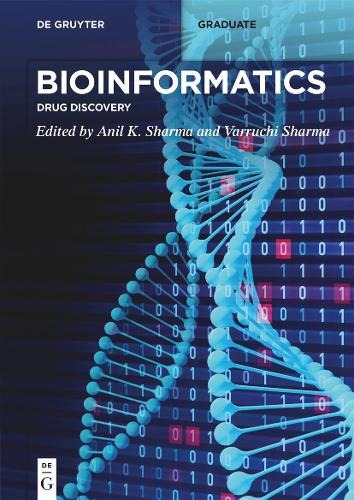
Bioinformatics drug discovery
Quantitative tools are becoming increasingly important in order to understand complex cascade of signal transduction events, pathways or biochemical reactions. The book showcases how computational techniques and algorithms are applied to biological data analysis, interpretation, and modelling. It covers applications in drug design and discovery, immune systems, phylogenetic analysis and protein structures.
Bioinformatics : Problem Solving Paradigms
This book highlights basic paradigms of problem analysis and algorithm design in the context of core bioinformatics problems. Mathematically demanding themes are put across to the reader by properly chosen representations with the aid of lots of illustrations.
Bioinformatics
In this textbook present mathematical models in bioinformatics and they describe the biological problems that inspire the computer science tools used to handle the enormous data sets involved. The first part of the book covers the mathematical and computational methods, while the practical applications are presented in the second part. The mathematical presentation is descriptive and avoids unnecessary formalism, and yet remains clear and precise. Emphasis is laid on motivation through biological problems and cross applications. Each of the four chapters in the first part is accompanied by exercises and problems to support an understanding of the techniques presented. Each of the six chapters of the second part is devoted to some specific application domain: sequence alignment, molecular phylogenetics and coalescence theory, genomics, proteomics, RNA, and DNA microarrays. Each chapter concludes with a problems and projects section, to deepen the reader's understanding and to allow for the design of derived methods. Many of the projects involve publicly available software and/or Web-based bioinformatics depositories. Finally, the book closes with a thorough bibliography, reaching from classic research results to very recent findings, providing many pointers for future research.Overall, this volume is ideally suited for a senior undergraduate or graduate course on bioinformatics, with a strong focus on its mathematical and computer science background.
Biocompatible nanocomposites : From synthesis to applications
Presents a focused overview of biocompatible nanocomposites, emphasizing recent advancements in material design, synthesis techniques, and their expanding applications in biomedicine. It spans key areas such as regenerative medicine, drug delivery, cancer therapy, biosensing, diagnostic imaging, and vaccine delivery —illustrating how these materials are transforming modern healthcare. The book reviews widely used biomaterials including polycaprolactone, bioactive ceramics, and polymer-based hybrids, discussing their roles in cardiovascular, orthopedic, dental, maxillofacial, and ophthalmic applications.
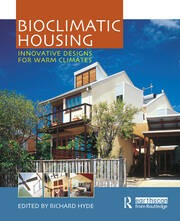
Bioclimatic housing : Innovative designs for warm climates
In the search for sustainable architecture, there is growing interest in the relationship between nature and design. In this context, Bioclimatic Housing covers creative, vernacular architecture to present both the theory and practice of innovative, low-energy architecture.The book interweaves the themes of social progress, technological fixes and industry transformation within a discussion of global and country trends, climate types, solutions and technologies. this is a truly international and authoritative work, providing an essential primer for building designers, builders, developers and advanced students in architecture and engineering.
Bio-based Building Skin
This book provides a compendium of material properties, demonstrates several successful examples of bio-based materials’ application in building facades, and offers ideas for new designs and novel solutions. It features a state-of-the-art review, addresses the latest trends in material selection, assembling systems, and innovative functions of facades in detail. Selected case studies on buildings from diverse locations are subsequently presented to demonstrate the successful implementation of various biomaterial solutions, which defines unique architectural styles and building functions. The structures, morphologies and aesthetic impressions related to bio-based building facades are discussed from the perspective of art and innovation; essential factors influencing the performance of materials with respect to functionality and safety are also presented. Special emphasis is placed on assessing the performance of a given facade throughout the service life of a building, and after its end.
