



الصفحة 92
الصفحة 92
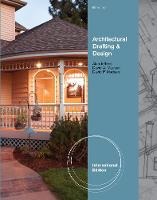
Architectural drafting and design
Ideal book for all architectural drafters and CAD operators, whether beginning, intermediate, or advanced. An important feature of this best--seller is its step--by--step instructions for the design and layout of each type of drawing associated with a complete set of architectural plans, with projects that can be completed using either CAD or manual drawing methods. The basics of residential design, commercial drafting, basic materials used for construction, common construction methods, and drawings typically associated with commercial construction are all covered in this comprehensive book, which is written to meet the most recent editions of IRC and IBC. Readers will be introduced to the various types of projects that a designer or architect is likely to complete during the actual design process and will gain the knowledge needed to complete the drawings required by most municipalities to obtain a building permit for a single--family residence.

Architectural detailing : function, constructibility, aesthetics ; 3rd ed.
This book teaches you how to design a building that will perform as well as you intend. Integrate appropriate detailing into your designs Learn the latest in materials, assemblies, and construction methods Incorporate sustainable design principles and current building codes Design buildings that perform well, age gracefully, and look great

Architecting Systems with Trustworthy Components ; International Seminar, Dagstuhl Castle, Germany, December 12-17, 2004. Revised Selected Papers
This book constitutes the thoroughly refereed post-proceedings of the International Dagstuhl-Seminar on Architecting Systems with Trustworthy Components, held in Dagstuhl Castle, Germany, in December 2004. The 10 revised full papers presented together with 5 invited papers contributed by outstanding researchers were carefully selected and included in the book reflecting ongoing impovement from the seminar. Core problems addressed by the seminar are measurement and normalization of non-functional properties, modular reasoning over non-functional properties, capture of component requirements in interfaces and protocols, interference and synergy of top-down and bottom-up aspects, duality of componentization and architecture, system properties, and opportunities for correctness by construction/static checking.

Arch bridges : Proceedings of the first international conference on arch bridges held at Bolton, UK on 3–6 September 1995
In the twentieth century bridge engineers have seen many changes. Advances in technology, materials and engineers understanding of structural behaviour and methods of analysis has presented opportunities for innovation and have led to increasingly sophisticated solutions to the basic problem of providing a bridge over an obstacle. However, despite these innovative technological changes, the masonry arch bridge has shown itself to be a durable, cost-effective structure, tolerant of its modern environment and out-performing many of its competitors.

Arabic Computational Morphology : Knowledge-based and Empirical Methods
The morphology of Arabic poses special challenges to computational natural language processing systems. The exceptional degree of ambiguity in the writing system, the rich morphology, and the highly complex word formation process of roots and patterns all contribute to making computational approaches to Arabic very challenging. Indeed many computational linguists across the world have taken up this challenge over time, and many of the researchers with a track record in this research area have contributed to this book.

Aquaculture microbiology
Details techniques involved to study aquatic pathogens that cause infections, especially in fish. Chapters guide readers through a wide range of basic and advanced methods, viral and fungal pathogens, probiotic bacteria, treatment of pathogens using seaweed extract, medicinal plant extracts, and actinomycetes.

Approximation, randomization, and combinatorial optimization algorithms and techniques ; 9th International Workshop on approximation algorithms for combinatorial optimization problems, APPROX 2006 and 10th International Workshop on Randomization and Computation, RANDOM 2006, Barcelona, Spain, August 28-30, 2006, Proceedings
This is the joint refereed proceedings of the 9th International Workshop on Approximation Algorithms for Combinatorial Optimization Problems, APPROX 2006 and the 10th International Workshop on Randomization and Computation, RANDOM 2006. The book presents 44 carefully reviewed and revised full papers. Among the topics covered are design and analysis of approximation algorithms, hardness of approximation problems, small spaces and data streaming algorithms, embeddings and metric space methods, and more.
Approximation of Additive Convolution-Like Operators : Real C*-Algebra Approach
Various aspects of numerical analysis for equations arising in boundary integral equation methods have been the subject of several books published in the last 15 years [95, 102, 183, 196, 198]. Prominent examples include various classes of o- dimensional singular integral equations or equations related to single and double layer potentials. Usually, a mathematically rigorous foundation and error analysis for the approximate solution of such equations is by no means an easy task. One reason is the fact that boundary integral operators generally are neither integral operatorsof the formidentity plus compact operatornor identity plus an operator with a small norm. Consequently, existing standard theories for the numerical analysis of Fredholm integral equations of the second kind are not applicable. In the last 15 years it became clear that the Banach algebra technique is a powerful tool to analyze the stability problem for relevant approximation methods [102, 103, 183, 189]. The starting point for this approach is the observation that the ? stability problem is an invertibility problem in a certain BanachorC -algebra. As a rule, this algebra is very complicated – and one has to ?nd relevant subalgebras to use such tools as local principles and representation theory.

Approval Voting
The book proposes a compelling way to elect some 500,000 officials in public elections. After a generation of discussion and debate on the subject, the authors remain convinced that Approval Voting is as relevant today.

Approaches to the purification, analysis and characterization of antibody-based therapeutics
Provides the interested and informed reader with an overview of current approaches, strategies and considerations relating to the purification, analytics and characterization of therapeutic antibodies and related molecules. While there are obviously other books published in and around this subject area, they seem to be either older (c.a. year 2000 publication date) or are more limited in scope. The book will include an extensive bibliography of the published literature in the respective areas covered. It is not, however, intended to be a how-to methods book.

Approaches to Fundamental Physics : An Assessment of Current Theoretical Ideas
This book presents contributions on particle theory, quantum field theory, general relativity, quantum gravity, string theory and cosmology. These represent the outcome of numerous discussions, taking place among the authors over a period of several years, about the research landscape of present-day fundamental theoretical physics. Indeed, the resultant book documents their attempt, out of their respective and highly specialized scientific positions, to find a way of communicating about methods, achievements and promises of the different approaches which shape the development of this field. It is therefore also an attempt to elucidate the connections between these approaches, and present them not as disjoint ventures but rather as facets of a common quest for understanding. Readers interested in fundamental approaches of theoretical physics will find this book highly stimulating and enlightening.

Applied therapeutics : The clinical use of drugs
"Continually revised and updated for 50 years, Applied Therapeutics: The Clinical Use of Drugs is the gold standard for patient centered drug therapeutics. With its acclaimed case-based approach, it promotes mastery and application of the fundamentals of drug therapeutics. Featuring contributions from more than 200 experienced clinicians, every chapter reflects our ever-changing knowledge of drugs and the application of this knowledge to the individualized therapy of patients. As students progress from the General Principles section to chapters on specific diseases, they will benefit from practical problem-solving techniques that help devise effective evidence-based drug treatment plans"
Applied Stochastic Control of Jump Diffusions
The main purpose of the book is to give a rigorous, yet mostly nontechnical, introduction to the most important and useful solution methods of various types of stochastic control problems for jump diffusions and its applications.
Applied Stochastic Control of Jump Diffusions
The main purpose of the book is to give a rigorous, yet mostly nontechnical, introduction to the most important and useful solution methods of various types of stochastic control problems for jump diffusionsThe types of control problems covered include classical stochastic control, optimal stopping, impulse control and singular control. Both the dynamic programming method and the maximum principle method are discussed, as well as the relation between them. Corresponding verification theorems involving the Hamilton-Jacobi Bellman equation and/or (quasi-)variational inequalities are formulated. There are also chapters on the viscosity solution formulation and numerical methods.The text emphasises applications, mostly to finance. All the main results are illustrated by examples and exercises appear at the end of each chapter with complete solutions. This will help the reader understand the theory and see how to apply it.The book assumes some basic knowledge of stochastic analysis, measure theory and partial differential equations.
Applied Spatial Data Analysis with R
Applied Spatial Data Analysis with R is divided into two basic parts, the first presenting R packages, functions, classes and methods for handling spatial data, The second part showcases more specialised kinds of spatial data analysis, including spatial point pattern analysis, interpolation and geostatistics, areal data analysis and disease mapping.
Applied scanning probe methodsVII : Biomimetics and industrial applications
The present volumes cover three main areas: novel probes and techniques (Vol. V), charactarization (Vol. VI), and biomimetics and industrial applications (Vol. VII). Volume V includes an overview of probe and sensor technologies including integrated cantilever concepts, electrostatic microscanners, low-noise methods and improved dynamic force microscopy techniques, high-resonance dynamic force - croscopy and the torsional resonance method, modelling of tip cantilever systems, scanning probe methods, approaches for elasticity and adhesion measurements on the nanometer scale as well as optical applications of scanning probe techniques based on near?eld Raman spectroscopy and imaging.
Applied scanning probe methods X : Biomimetics and industrial applications
The success of the Springer Series Applied Scanning Probe Methods I–VII and the rapidly expanding activities in scanning probe development and applications worldwide made it a natural step to collect further speci c results in the elds of development of scanning probe microscopy techniques (Vol. VIII), characterization (Vol. IX), and biomimetics and industrial applications (Vol. X). These three volumes complement the previous set of volumes under the subject topics and give insight into the recent work of leading specialists in their respective elds. Following the tradition of the series, the chapters are arranged around techniques, characterization and biomimetics and industrial applications. Volume VIII focuses on novel scanning probe techniques and the understanding of tip/sample interactions. Topics include near eld imaging, advanced AFM, specialized scanning probe methods in life sciences including new self sensing cantilever systems, combinations of AFM sensors and scanning electron and ion microscopes, calibration methods, frequency modulation AFM for application in liquids, Kelvin probe force microscopy, scanning capacitance microscopy, and the measurement of electrical transport properties at the nanometer scale.
Applied scanning probe methods VIII : Scanning probe microscopy techniques
The success of the Springer Series Applied Scanning Probe Methods I–VII and the rapidly expanding activities in scanning probe development and applications worldwide made it a natural step to collect further speci c results in the elds of development of scanning probe microscopy techniques (Vol. VIII), characterization (Vol. IX), and biomimetics and industrial applications (Vol. X). These three volumes complement the previous set of volumes under the subject topics and give insight into the recent work of leading specialists in their respective elds. Following the tradition of the series, the chapters are arranged around techniques, characterization and biomimetics and industrial applications. Volume VIII focuses on novel scanning probe techniques and the understanding of tip/sample interactions. Topics include near eld imaging, advanced AFM, s- cializedscanningprobemethodsinlifesciencesincludingnewselfsensingcantilever systems, combinations of AFM sensors and scanning electron and ion microscopes, calibration methods, frequency modulation AFM for application in liquids, Kelvin probe force microscopy, scanning capacitance microscopy, and the measurement of electrical transport properties at the nanometer scale.
Applied scanning probe methods VI : Characterization
The scanning probe microscopy feld has been rapidly expanding. It is a demanding task to collect a timely overview of this feld with an emphasis on technical dev- opments and industrial applications. It became evident while editing Vols. I–IV that a large number of technical and applicational aspects are present and rapidly - veloping worldwide. Considering the success of Vols. I–IV and the fact that further colleagues from leading laboratories were ready to contribute their latest achie- ments, we decided to expand the series with articles touching felds not covered in the previous volumes. The response and support of our colleagues were excellent, making it possible to edit another three volumes of the series
Applied scanning probe methods V : Scanning probe microscopy techniques
The scanning probe microscopy ?eld has been rapidly expanding. It is a demanding task to collect a timely overview of this ?eld with an emphasis on technical dev- opments and industrial applications. It became evident while editing Vols. I–IV that a large number of technical and applicational aspects are present and rapidly - veloping worldwide. Considering the success of Vols. I–IV and the fact that further colleagues from leading laboratories were ready to contribute their latest achie- ments, we decided to expand the series with articles touching ?elds not covered in the previous volumes. The response and support of our colleagues were excellent, making it possible to edit another three volumes of the series.
