


تحسين النتائح
ترتيب حسب
من
الى

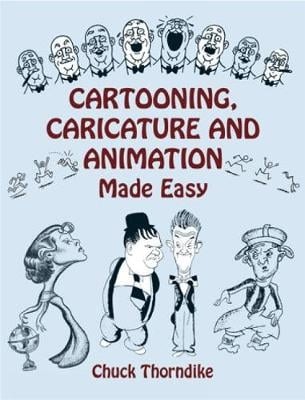
Combines the author's The Secrets of Cartooning and The Art of Cartooning. Appropriate for artists of varied skill levels, this treasury of illustrated step-by-step instructions is rich in the period style of the 1920s and '30s. It features practical advice on depicting faces, motion, anatomy, caricatures, animated features, and political cartoons.
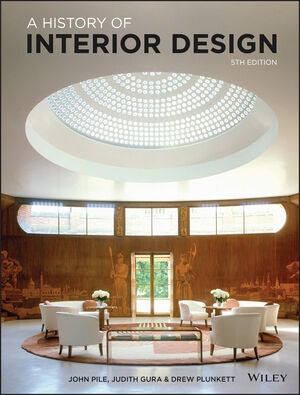
Interior design describes the process by which an interior space is made into an effective setting for whatever range of human activities are to take place there. Much like the history of art, the history of interior design encompasses numerous styles, movements, and the influence of international, political, and social developments. A basic understanding of this history is important to students taking survey courses, professional designers looking to the past for inspiration, and for those interested in antiques, furniture design, and the general evolution of the spaces where we work and live
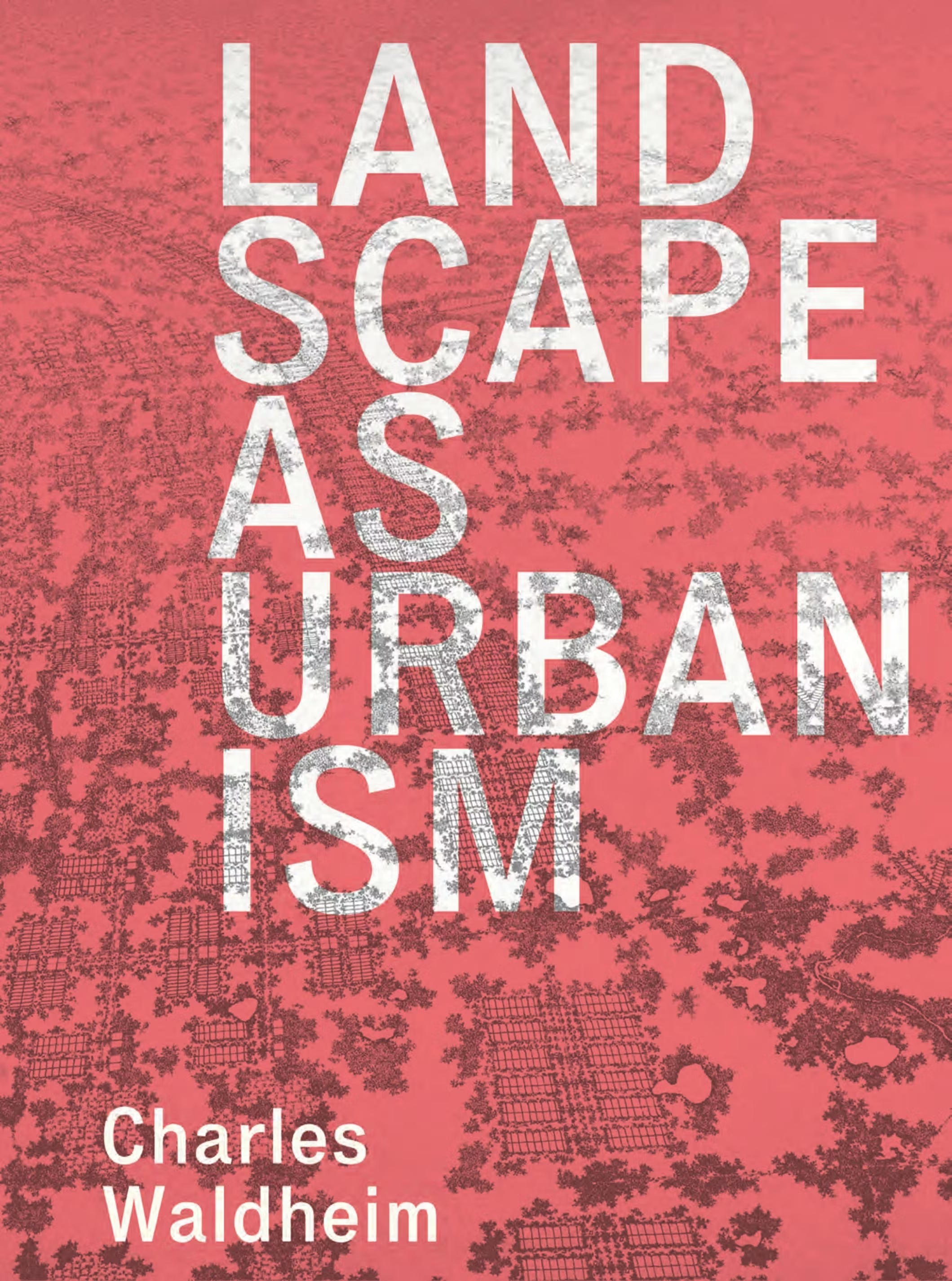
Traces the roots of landscape as a form of urbanism from its origins in the Renaissance through the twentieth century. Growing out of progressive architectural culture and populist environmentalism, the concept was further informed by the nineteenth-century invention of landscape architecture as a "new art" charged with reconciling the design of the industrial city with its ecological and social conditions. In the late twentieth and early twenty-first centuries, as urban planning shifted from design to social science, and as urban design committed to neotraditional models of town planning, landscape urbanism emerged to fill a void at the heart of the contemporary urban project.
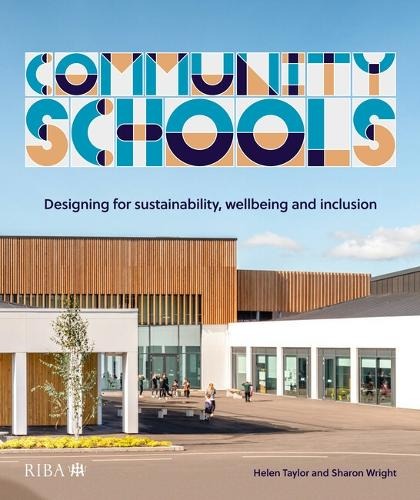
Reconsiders what is required from physical school environments, building on the learning gathered from the sector over the past two decades. To meet the new social, environmental and economic challenges it advocates designing differently, both in terms of the form that buildings take and the evaluation of their impact and performance. By calling for a reframing of the way that schools are regarded as community-wide amenities, this book explores the potential for architects to deliver design in a manner that supports healthy lifestyles and promotes wellbeing. Through encouraging social connections, new possibilities open up for educational facilities to become open, welcoming and inclusive. Featuring: Over 12 international case studies from practices including: Architype, Argyll + Bute, Bogle Architects, DRMM, Revaerk, Scott Brownrigg and XDGA. Key themes of wellbeing, connectivity, inclusion, indicators and evaluation. Practical guidance and learning points throughout. A new design brief for community schools
On the occasion of the annual Swiss Federal Design Competition, the Federal Office of Culture is realizing a publication and an exhibition - this year in collaboration with the Musée de design et d'arts appliqués contemporains in Lausanne. They serve as platforms to present and document all award winners and their award-winning works. Works from the fields of fashion, textiles, graphics, illustration, photography, product design and jewelry can be seen.
The facade serves as the building's public face, allowing rapid assessment of its architecture. 'Best of Detail: Facades' explores this topic with theoretical discussions and an in-depth look at a range of selected projects, which, besides showcasing suitable materials and designs, give the reader a detailed look behind the scenes. It turns out that quality architecture can only result from a coherency between the facade, structure, internal organisation and building services design elements that interact directly with each other. This presents the architect with enormous challenges, particularly as the unity between the exterior and interior is no longer a given, as today's range of materials and design possibilities offer nearly limitless creativity.
Masonry construction is usually the top priority in the constructive exercises during the course. The basic principles of dimensions, construction and component joining are developed using simple masonry structures. Topics: Material and dimensions Building physics and load-bearing properties Typical associations Components Execution of masonry

It consists of measures to prevent fires from starting, to facilitate the rescue of individuals in a burning building, and to help firefighters contain a blaze. The book explains the general concepts and fundamental issues of fire safety in building design beyond the particulars of local building regulations
Explores how the changing modes of representation in architecture and urbanism relate to the transformation of how the addressees of architecture and urbanism are conceived. Diagnoses the dominant epistemological debates in architecture and urbanism during the 20th and 21st centuries. It traces their transformations, paying special attention to Le Corbusier and Ludwig Mies van der Rohe’s preference for perspective representation, to the diagrams of Team 10 architects, to the critiques of functionalism, and the upgrade of the artefactual value of architectural drawings in Aldo Rossi, John Hejduk, Peter Eisenman, and Oswald Mathias Ungers, and, finally, to the reinvention of architectural programme through the event in Bernard Tschumi and the Office for Metropolitan Architecture (OMA). Particular emphasis is placed on the spirit of truth and clarity in modernist architecture, the relationship between the individual and the community in post-war era architecture, the decodification of design process as syntactic analogy and the paradigm of autonomy in the 1970s and 1980s architecture, the concern about the dynamic character of urban conditions and the potentialities hidden in architectural programme in the post-autonomy era.
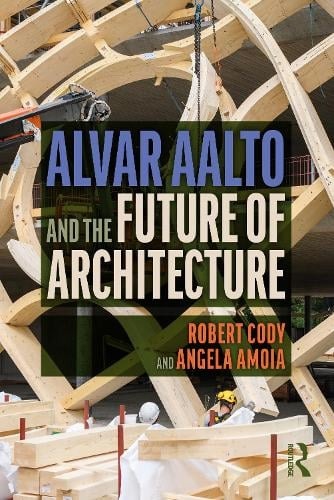
Exposes dialogue between history, theory, design, construction, technology, and sensory experience by means of digital simulations that enhance the assessment and values of our material choices. It offers a critical look to the past to inspire the future. This new edition looks to Alvar Aalto as the primary protagonist for channeling discussions related to these topics. Architects like ALA, Shigeru Ban, 3XN, Peter Zumthor, and others also play the role of contemporary guides in this review. The work of Aalto and selected contemporary architects, along with computer modeling software, showcase the importance of comprehensive design.
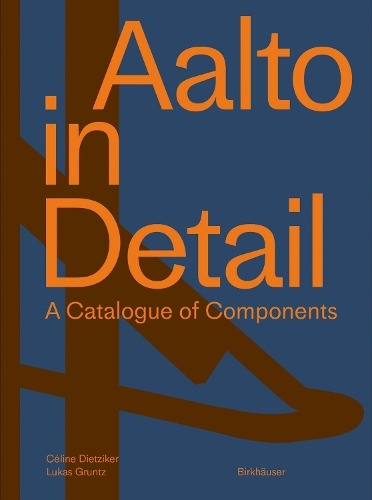
Celebrates the rich detail in the work of Aino, Elissa, and Alvar Aalto. Every support, railing, and handle is the result of intensive formal and functional research. The authors document 50 Aalto buildings - some well-known and others less so - and arrange their photographs by component into 20 chapters. The result is a rich photographic record that will serve as a source of inspiration for every architect. From door handles to skylights: Aalto's infinite wealth of components Inspiring documentation with 400 systematically arranged photos Unconventionally detailed solutions with special attention paid to technical feasibility
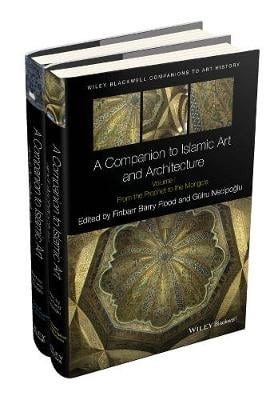
Bridges the gap between monograph and survey text by providing a new level of access and interpretation to Islamic art. The more than 50 newly commissioned essays revisit canonical topics, and include original approaches and scholarship on neglected aspects of the field. showcases more than 50 specially commissioned essays and an introduction that survey Islamic art and architecture in all its traditional grandeurEssays are organized according to a new chronological-geographical paradigm that remaps the unprecedented expansion of the field and reflects the nuances of major artistic and political developments during the 1400-year span. Represents recent developments in the field, and encourages future horizons by commissioning innovative essays that provide fresh perspectives on canonical subjects, such as early Islamic art, sacred spaces, palaces, urbanism, ornament, arts of the book, and the portable arts while introducing others that have been previously neglected, including unexplored geographies and periods, transregional connectivities, talismans and magic, consumption and networks of portability, museums and collecting,

This book describes the evolution of several socio-biological systems using mathematical kinetic theory. Specifically, it deals with modeling and simulations of biological systems—comprised of large populations of interacting cells—whose dynamics follow the rules of mechanics as well as rules governed by their own ability to organize movement and biological functions. The authors propose a new biological model for the analysis of competition between cells of an aggressive host and cells of a corresponding immune system.Because the microscopic description of a biological system is far more complex than that of a physical system of inert matter, a higher level of analysis is needed to deal with such complexity. Mathematical models using kinetic theory may represent a way to deal with such complexity, allowing for an understanding of phenomena of nonequilibrium statistical mechanics not described by the traditional macroscopic approach. The proposed models are related to the generalized Boltzmann equation and describe the population dynamics of several interacting elements (kinetic population models).The particular models proposed by the authors are based on a framework related to a system of integro-differential equations, defining the evolution of the distribution function over the microscopic state of each element in a given system. Macroscopic information on the behavior of the system is obtained from suitable moments of the distribution function over the microscopic states of the elements involved. The book follows a classical research approach applied to modeling real systems, linking the observation of biological phenomena, collection of experimental data, modeling, and computational simulations to validate the proposed models. Qualitative analysis techniques are used to identify the prediction ability of specific models.
Proposing a wide range of mathematical models that are currently used in life sciences may be regarded as a challenge, and that is precisely the challenge that this book takes up. Of course this panoramic study does not claim to offer a detailed and exhaustive view of the many interactions between mathematical models and life sciences. This textbook provides a general overview of realistic mathematical models in life sciences, considering both deterministic and stochastic models and covering dynamical systems, game theory, stochastic processes and statistical methods. Each mathematical model is explained and illustrated individually with an appropriate biological example. Finally three appendices on ordinary differential equations, evolution equations, and probability are added to make it possible to read this book independently of other literature.
This book contains some of the contributions that have been carefully selected and peer-reviewed, which were presented at the International Symposium MME06 Mathematical Methods in Engineering, held in Cankaya University, Ankara, April 2006. The Symposium provided a setting for discussing recent developments in Fractional Mathematics, Neutrices and Generalized Functions, Boundary Value Problems, Applications of Wavelets, Dynamical Systems and Control Theory.
This book introduces and explains classical and modern mathematical procedures as applied to the real problems confronting engineers and geoscientists. Written in a manner that is understandable for students across the breadth of their studies, it lays out the foundations for mastering difficult and sometimes confusing mathematical methods.
The book is divided into three parts. The first part introduces the basic ideas of linear and metric spaces, including the Jordan canonical form of matrices and the spectral theorem for self-adjoint and normal operators. The second part examines the role of general topology in the context of metric spaces and includes the notions of homotopy and degree. The third and final part is a discussion on Banach spaces of continuous functions, Hilbert spaces and the spectral theory of compact operators.
Mathematica for Theoretical Physics: Electrodynamics, Quantum Mechanics, General Relativity, and Fractals This second edition of Baumann's Mathematica® in Theoretical Physics shows readers how to solve physical problems and deal with their underlying theoretical concepts while using Mathematica® to derive numeric and symbolic solutions. Each example and calculation can be evaluated by the reader, and the reader can change the example calculations and adopt the given code to related or similar problems. The second edition has been completely revised and expanded into two volumes: The first volume covers classical mechanics and nonlinear dynamics. Both topics are the basis of a regular mechanics course. The second volume covers electrodynamics, quantum mechanics, relativity, and fractals and fractional calculus. New examples have been added and the representation has been reworked to provide a more interactive problem-solving presentation. This book can be used as a textbook or as a reference work, by students and researchers alike. A brief glossary of terms and functions is contained in the appendices.
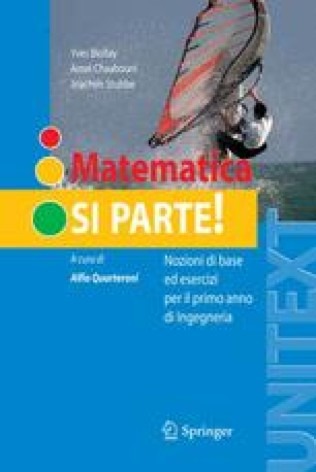
This manual has been created to allow future engineering students to successfully face their studies. Some basic concepts in mathematics are presented, generally already learned before entering the University. It has been found that not all students have a complete mastery of this set of fundamental notions: therefore this manual provides useful support, in the form of both exercises and theoretical notions. The future student will be able to choose the chapters that interest him most, in order to verify his ability to solve problems such as "Review problems", using his own reasoning skills and knowledge.
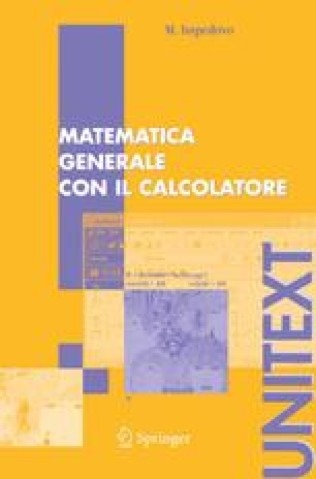
By introducing mathematical objects, it teaches students how to use a computer to perform numerical and symbolic calculations, define a function and calculate its values, plot and explore graphs, and execute simple algorithms. The course is rich in examples, applications, and models, drawn from economics, physics, biology, statistics, and mathematics itself. The analysis of these models constitutes, in a certain sense, the true purpose of the mathematical theory covered. Automatic calculation tools (mathematics software, spreadsheets) are used extensively to explore and illustrate concepts and properties. Mathcad® software, in particular, was used, both as a calculation tool and as a simple yet powerful programming language. Considerable space is devoted to approximation, emphasizing the distinction between numerical and symbolic calculation; to algorithms as a synthesis of the syntactic and semantic aspects of mathematical objects; and to computer simulation, interpreted as a "physical" experiment and a source of conjecture. The ability to use a calculator marks a sort of "democratization" of mathematics: even complex results, which have always required a broad background of knowledge and laborious calculations, are now quickly accessible to anyone who understands the meaning of mathematical objects and knows how to use the syntax.

سوريا - اتستراد درعا - غباغب
+963-15 2050 - 15 860 380 /1/2/3 - 11 662 3900