


تحسين النتائح
ترتيب حسب
من
الى


Adaptive Voltage Control in Power Systems, a self-contained blend of theory and novel application, is an in-depth treatment of such adaptive control schemes. The reader moves from power-system-modelling problems through illustrations of the main adaptive control systems (self-tuning, model-reference and nonlinearities compensation) to a detailed description of design methods: Kalman filtering, parameter-identification algorithms and discrete-time controller design are all represented. Case studies address applications issues in the implementation of adaptive voltage control.
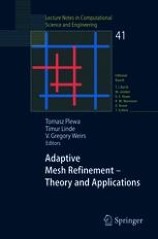
Advanced numerical simulations that use adaptive mesh refinement (AMR) methods have now become routine in engineering and science. Originally developed for computational fluid dynamics applications these methods have propagated to fields as diverse as astrophysics, climate modeling, combustion, biophysics and many others. The underlying physical models and equations used in these disciplines are rather different, yet algorithmic and implementation issues facing practitioners are often remarkably similar. Unfortunately, there has been little effort to review the advances and outstanding issues of adaptive mesh refinement methods across such a variety of fields. This book attempts to bridge this gap. The book presents a collection of papers by experts in the field of AMR who analyze past advances in the field and evaluate the current state of adaptive mesh refinement methods in scientific computing.
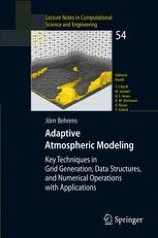
This is an overview of the development of adaptive techniques for atmospheric modeling. Written in an educational style, it functions as a starting point for readers interested in adaptive modeling, in atmospheric sciences and beyond. Coverage includes paradigms of adaptive techniques, such as error estimation and adaptation criteria. Mesh generation methods are presented for triangular/tetrahedral and quadrilateral/hexahedral meshes, with a special section on initial meshes for the sphere.

Satellite navigation receivers are used to receive, process, and decode space-based navigation signals, such as those provided by the GPS constellation of satellites. There is an increasing need for a unified open platform that will enable enhanced receiver development and design, as well as cost-effective testing procedures for various applications. This book provide hands-on exploration of new technologies in this rapidly growing field. One of the unique features of the work is the interactive approach used, giving readers the ability to construct their own Global Navigation Satellite Systems (GNSS) receivers. To construct such a reconfigurable receiver with a wide range of applications, the authors discuss receiver architecture based on software-defined radio (SDR) techniques. The presentation unfolds in a systematic, user-friendly style and goes from the basics to cutting-edge research.

This book develops the answers to these questions and fits them into a roadmap for formal property verification – a roadmap that shows how to glue FPV technology into the traditional validation flow. A Roadmap for Formal Property Verification explores the key issues in this powerful technology through simple examples – you do not need any background on formal methods to read most parts of this book.
Practical Introduction to PSL is primarily targeted to hardware designers and verification engineers who plan to use PSL. This book is also of interest to students of temporal logic. The formal semantics of PSL are included as an appendix, and bibliographical notes include pointers to some of the main theoretical works.

This book contains the edited version of the invited lectures that were delivered by prominent researchers at UTL. This book brings together in a review manner a comprehensive summary of high quality research contri- tions across basic and applied sciences. The contributing papers are organized around the following major areas: – Emergent areas (Nanosciences, Quantic Computations and Infor- tion, Risk and Volatility in Financial Markets); – Basic Sciences (Mathematics, Physics, Chemistry and Materials); – Social Sciences, Economics and Management Sciences; – Life Sciences and Biotechnology; – Engineering and Technologies – Nature, Environment and Sustainability; – Public Health, Food Quality and Safety; – Health and Sport Sciences; – Urbanism, Transports, Architecture, Arts and Design.
A Modern Introduction to Probability and Statistics has numerous quick exercises to give direct feedback to the students. In addition the book contains over 350 exercises, half of which have answers, of which half have full solutions. A website at www.springeronline.com/1-85233-896-2 gives access to the data files used in the text, and, for instructors, the remaining solutions. The only pre-requisite for the book is a first course in calculus; the text covers standard statistics and probability material, and develops beyond traditional parametric models to the Poisson process, and on to useful modern methods such as the bootstrap.
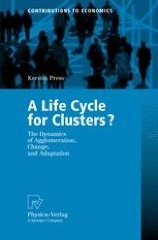
The phenomenon of non-random spatial concentrations of firms in one or few related sectors (clusters) is intensively debated in economic theory and policy. The euphoria about successful clusters however neglects that historically, many thriving clusters did deteriorate into old industrial areas. This book studies the determinants of cluster survival by analyzing their adaptability to change in the economic environment. Linking theoretic knowledge with empirical observations, a simulation model (based in the N/K method) is developed, which explains when and why the cluster's architecture assists or hampers adaptability. It is found that architectures with intermediate degrees of division of labour and more collective governance forms foster adaptability. Cluster development is thus path dependent as architectures having evolved over time impact on the likelihood of future survival.
This essentially self-contained, deliberately compact, and user-friendly textbook is designed for a first, one-semester course in statistical signal analysis for a broad audience of students in engineering and the physical sciences. The emphasis throughout is on fundamental concepts and relationships in the statistical theory of stationary random signals, explained in a concise, yet fairly rigorous presentation.
The Kuala Lumpur International Conference on Biomedical Engineering (Biomed 2006) was held from 11 to 14 December 2006 at the Palace of the Golden Horses, Kuala Lumpur, Malaysia. This international conference was jointly organised by the Department of Biomedical Engineering, University of Malaya, Malaysia; Department of Biomedical Engineering, Inje University, Korea; and Malaysian Society of Medical and Biological Engineering. The papers presented at Biomed 2006 cover the following areas: artificial intelligence, biological effects of non-ionising electromagnetic fields, biomaterials, biomechanics, biomedical sensors, biomedical signal analysis, biotechnology, clinical engineering, human performance engineering, imaging, medical informatics, medical instruments and devices, physiological modelling, simulation, and control, prostheses and artificial organs, regulations and organisations, rehabilitation engineering, telemedicine, tissue engineering, and virtual reality in medicine.
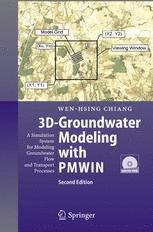
Along with a companion full-version software (PMWIN), this text offers an integrated simulation system. PMWIN comes with a professional graphical user-interface, supported models and programs and several other useful modeling tools. The graphical user-interface allows one to create and simulate models.

سوريا - اتستراد درعا - غباغب
+963-15 2050 - 15 860 380 /1/2/3 - 11 662 3900