



الصفحة 9
الصفحة 9

Computational intelligence, cyber security and computational models. models and techniques for intelligent systems and automation ; 4th International Conference, ICC3 2019, Coimbatore, India, December 19–21, 2019, Revised Selected Papers
This book constitutes the proceedings of the 4th International Conference on Computational Intelligence, Cyber Security, and Computational Models, ICC3 2019, which was held in Coimbatore, India, in December 2019. The 9 papers presented in this volume were carefully reviewed and selected from 38 submissions. They were organized in topical sections named: computational intelligence; cyber security; and computational models.

Computational intelligence in time series forecasting : Theory and engineering applications
Deals with the power of intelligent technologies individually and in combination. This book includes examples of the particular systems and processes susceptible to each technique. It is suitable for industrial training purposes, as well as serving as a useful reference material for experimental researchers.

Computational Intelligence in Reliability Engineering : New Metaheuristics, Neural and Fuzzy Techniques in Reliability
This volume contains chapters presenting applications of different metaheuristics (ant colony optimization, great deluge algorithm, cross-entropy method and particle swarm optimization) in reliability engineering. It also includes chapters devoted to cellular automata and support vector machines and different applications of artificial neural networks, a powerful adaptive technique that can be used for learning, prediction and optimization. Several chapters describe different aspects of imprecise reliability and applications of fuzzy and vague set theory.

Computational Intelligence in Multimedia Processing : Recent Advances
This book presents a large number of interesting applications to intelligent multimedia processing of various Computational Intelligence techniques, such as rough sets, Neural Networks; Fuzzy Logic; Evolutionary Computing; Artificial Immune Systems; Swarm Intelligence; Reinforcement Learning and evolutionary computation.

Computational intelligence in information assurance and security
The global economic infrastructure is becoming increasingly dependent upon information technology, with computer and communication technology being essential and vital components of Government facilities, power plant systems, medical infrastructures, financial centers and military installations to name a few. Finding effective ways to protect information systems, networks and sensitive data within the critical information infrastructure is challenging even with the most advanced technology and trained professionals. This volume provides the academic and industrial community with a medium for presenting original research and applications related to information assurance and security using computational intelligence techniques. The included chapters communicate current research on information assurance and security regarding both the theoretical and methodological aspects, as well as various applications in solving real world information security problems using computational intelligence.

Computational intelligence in economics and finance ; Vol. II
Computational intelligence (CI), as an alternative to statistical and econometric approaches, has been applied to a wide range of economics and finance problems in recent years, for example to price forecasting and market efficiency. This book contains research ranging from applications in financial markets and business administration to various economics problems. Not only are empirical studies utilizing various CI algorithms presented, but so also are theoretical models based on computational methods. In addition to direct applications of computational intelligence, readers can also observe how these methods are combined with conventional analytical methods such as statistical and econometric models to yield preferred results.

Computational intelligence in automotive applications
This volume is the first of its kind, suitable to automotive researchers, engineers and students. It provides a representative sample of contemporary CI activities in the area of automotive technology.

Computational intelligence for remote sensing
This book is a composition of different points of view regarding the application of Computational Intelligence techniques and methods to Remote Sensing data and applications. The book covers a broad range of topics, starting from the hardware design of hyperspectral sensors, and data handling problems, namely data compression and watermarking issues, as well as autonomous web services.

Computational intelligence for engineering and manufacturing
Unlike traditional computing, Computational Intelligence is tolerant of imprecise information, partial truth and uncertainty. This book presents a collection of contributions on a focused treatment of important elements of CI, centred on its key element: learning.

Computational intelligence based on lattice theory
The emergence of lattice theory within the field of computational intelligence (CI) is partially due to its proven effectiveness in neural computation. Moreover, lattice theory has the potential to unify a number of diverse concepts and aid in the cross-fertilization of both tools and ideas within the numerous subfields of CI. The compilation of this eighteen-chapter book is an initiative towards proliferating established knowledge in the hope to further expand it. This edited book is a balanced synthesis of four parts emphasizing, in turn, neural computation, mathematical morphology, machine learning, and (fuzzy) inference/logic. The articles here demonstrate how lattice theory may suggest viable alternatives in practical clustering, classification, pattern analysis, and regression applications.

Computational intelligence and bioinspired systems ; 8th International Work-conference on artificial neural networks, IWANN 2005, Vilanova i la Geltrú, Barcelona, Spain, June 8-10, 2005, Proceedings
We present in this volume the collection of finally accepted papers of the eighth edition of the “IWANN” conference (“International Work-Conference on Artificial Neural Networks”). This biennial meeting focuses on the foundations, theory, models and applications of systems inspired by nature (neural networks, fuzzy logic and evolutionary systems). For scientists, engineers and professionals working in the area, this is a very good way to get solid and competitive applications. We are facing a real revolution with the emergence of embedded intelligence in many artificial systems (systems covering diverse fields: industry, domotics, leisure, healthcare, … ). So we are convinced that an enormous amount of work must be, and should be, still done. Many pieces of the puzzle must be built and placed into their proper positions, offering us new and solid theories and models (necessary tools) for the application and praxis of these current paradigms. The above-mentioned concepts were the main reason for the subtitle of the IWANN 2005 edition: “Computational Intelligence and Bioinspired Systems.” papers was addressing the following topics: 1. Mathematical and theoretical methods in computational intelligence.

Computational intelligence ; Vol. 4114 ; International conference on intelligent computing, ICIC 2006, Kunming, China, August 16-19, 2006, Proceedings, Part II
The International Conference on Intelligent Computing (ICIC) was formed to provide an annual forum dedicated to the emerging and challenging topics in artificial intelligence, machine learning, bioinformatics, and computational biology, etc. It aims to bring together researchers and practitioners from both academia and industry to share ideas, problems and solutions related to the multifaceted aspects of intelligent computing.

Computational intelligence ; Vol. 174 : Engineering of hybrid systems
Hybrid Intelligent Systems has become an important research topic in computer science and a key application field in science and engineering. This book offers a gentle introduction to the engineering aspects of hybrid intelligent systems, also emphasizing the interrelation with the main intelligent technologies such as genetic algorithms? evolutionary computation, neural networks, fuzzy systems, evolvable hardware, DNA computing, artificial immune systems. A unitary whole of theory and application, the book provides readers with the fundamentals, background information, and practical methods.

Computational intelligence : Principles, techniques and applications
The book Computational Intelligence: Principles, Techniques and Applications presents both theories and applications of Computational Intelligence in a clear, precise and highly comprehensive style. The textbook addresses the fundamental aspects of Fuzzy Sets and Logic, Neural Networks, Evolutionary Computing and Belief Networks. The application areas include Fuzzy Databases, Fuzzy Control, Image Understanding, Expert Systems, Object Recognition, Criminal Investigation, Telecommunication Networks and Intelligent Robots. The book contains many numerical examples and homework problems with sufficient hints so that the students can solve them on their own. Emerging areas of Computational Intelligence such as artificial life, particle swarm optimization, artificial immune systems, fuzzy chaos theory, rough sets and granular computing have also been addressed with examples in this book. The book ends with a discussion on a number of open- ended research problems in Computational Intelligence. Graduate students interested to pursue their research in this subject will greatly be benefited with these problems.

Computational intelligence : Methods and techniques
This book focuses on various techniques of computational intelligence, both single ones and those which form hybrid methods. Those techniques are today commonly applied issues of artificial intelligence, e.g. to process speech and natural language, build expert systems and robots.

Computational intelligence : A compendium
Computational Intelligence paradigms have proven effective on real-world problems in virtually all disciplines including Science, Engineering, Business, healthcare, Management and Avionics. This handbook includes contributions from the leading international experts in their respective fields. There are twenty five chapters grouped in the following ten parts covering theoretical aspects and practical applications.

Machines, Computations, and Universality ; 5th International Conference, MCU 2007, Orleans, France, September 10-13, 2007, Proceedings
The 18 revised full papers presented together with nine invited papers cover Turing machines, register machines, word processing, cellular automata, tiling of the plane, neural networks, molecular computations, BSS machines, infinite cellular automata, real machines, and quantum computing.

Machine learning, image processing, network security and data sciences ; 2nd International conference, MIND 2020, Silchar, India, July 30 - 31, 2020, Proceedings, Part I
This two-volume set (CCIS 1240-1241) constitutes the refereed proceedings of the Second International Conference on Machine Learning, Image Processing, Network Security and Data Sciences, MIND 2020, held in Silchar, India. Due to the COVID-19 pandemic the conference has been postponed to July 2020. The 79 full papers and 4 short papers were thoroughly reviewed and selected from 219 submissions. The papers are organized according to the following topical sections: data science and big data; image processing and computer vision; machine learning and computational intelligence; network and cyber security.
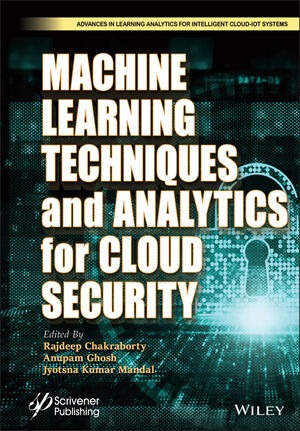
Machine Learning Techniques and Analytics for Cloud Security
covers new methods, surveys, case studies, and policy with almost all machine learning techniques and analytics for cloud security solutions
Machine Learning in Document Analysis and Recognition
The objective of Document Analysis and Recognition (DAR) is to recognize the text and graphicalcomponents of a document and to extract information. With ?rst papers dating back to the 1960’s, DAR is a mature but still gr- ing research?eld with consolidated and known techniques. Optical Character Recognition (OCR) engines are some of the most widely recognized pr- ucts of the research in this ?eld, while broader DAR techniques are nowadays studied and applied to other industrial and o?ce automation systems. In the machine learning community, one of the most widely known - search problems addressed in DAR is recognition of unconstrained handwr- ten characters which has been frequently used in the past as a benchmark for evaluating machine learning algorithms, especially supervised classi?ers.
