


تحسين النتائح
ترتيب حسب
من
الى

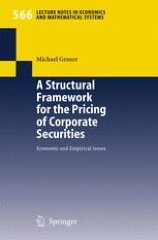
This book is the first comprehensive treatment, of structural credit risk models for the simultaneous and consistent pricing of corporate securities. Through the development of a flexible economic framework based on the firm's EBIT, the reader is taken from the economic principles of firm value models to the empirical implementation. Analytical solutions are provided, if EBIT follows an arithmetic or geometric Brownian motion.
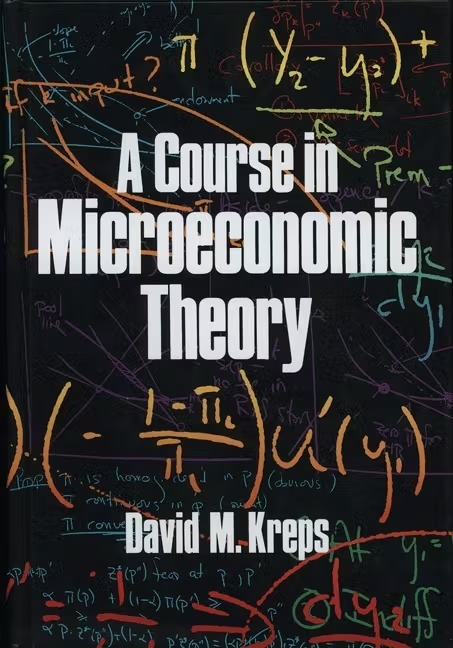
Offers a treatment of microeconomic theory - one that stresses the behavior of the individual actor in various institutional settings. This book begins with an exposition of the standard models of choice and the market. It is designed for the first-year graduate microeconomic theory course and is accessible to advanced undergraduates as well.

Investigates the possible changes needed for industrial organizations to adapt to and remain competitive in their ever evolving environment. (R)Evolution’s main area of contribution to these very complex issues is embedded in the work’s ambitious attempt to borrow from evolutionary biology and genetics not only metaphors but also concepts and models to be adapted to the management of business organizations. The work provides us with a comprehensive vision of adaptation and variation in the business community, integrating various intellectual inputs which are based on an evolutionary vision of economic behavior. Using an extensive study of the literature in management science, and applying new models and methodologies in numerous case studies, Dekkers draws many insightful conclusions including the claim that companies often evolve slower than generally expected. Furthermore the research calls into question the effectiveness of the common practice of corporate reorganization. Embracing and merging most major contemporary developments in the theories of change into a comprehensive integrated approach, (R)Evolution is an invaluable resource for researchers specializing in the management of technological change.
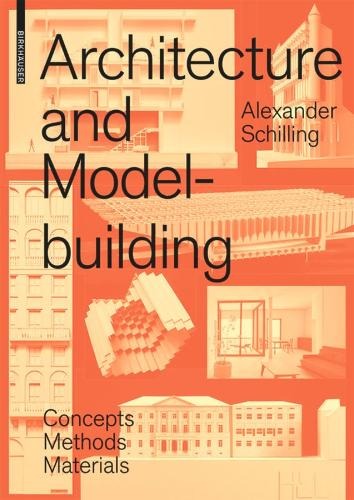
Provides in-depth information Numerous practical tips, clear explanations, concrete examples Aims and Scope Architectural models are used at various stages of a project. As working models they support the design process: they are made up from time to time using simple materials, such as cardboard, without any attempt at accuracy, and continue to be adjusted and added to as the ideas and the design progress. The point here is to swiftly check a design idea, to allow it to be continued or dismissed. Presentational models are more involved; at this stage the design has been completed and the purpose of the model is to convey the ideas to the potential user in a clear and easy-to-understand way.

Guide to "greening" these important rooms. The first book to focus exclusively on kitchen and bath sustainability, this full color guide covers every consideration for both remodels and new construction, making it a handy reference for any kitchen and bath professional. Case studies of award-winning projects demonstrate how space, budget, and sustainability can come together to create beautiful, functional, efficient rooms, and illustrations throughout provide visual examples of the techniques discussed. The book includes information on greening one's practice for the client's benefit, plus an appendix of additional resources and instructional materials for classroom use.
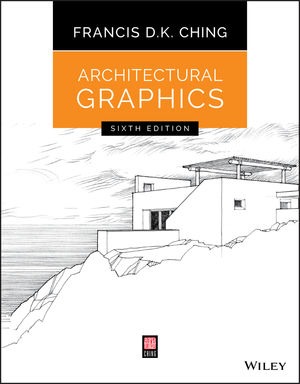
Offers a comprehensive introduction to using graphic tools and drafting conventions to translate architectural ideas into effective visual presentations, using hundreds of the author's distinctive drawings to illustrate the topic effectively. Includes new information on orthographic projection in relation to 3D models, and revised explanations of line weights, scale and dimensioning, and perspective drawing to clarify some of the most difficult concepts. New examples of modern furniture, APA facilities, and presentation layout provide more up-to-date visuals, and the Reference Center features all new animations, videos, and practice exercises. Architectural graphics are key tools for conveying design through representation on paper or on screen, and this book is the ultimate guide to mastering the skill, then applying your talent to create more effective design communication.
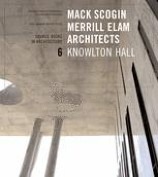
Mack Scogin Merrill Elam Architects/Knowlton Hall provides a comprehensive look at this impressive new work using sketches, models, renderings, working drawings, and photographs. it is accompanied by commentaries from the architects and critics who explore both the technical and contextual elements of the work

The visualization of light in space, its effect on model cubature and scenery, is one of the great challenges in architectural rendering. This is a decisive reason for the use of 3D tools – both for architecture offices and students. This volume features a number of exercises that enable the reader to learn how to light architecture models correctly. Complete virtual 3D scenarios are included that allow for the step-by-step construction of a lighting set up with the help of Cinema 4D® software that creates a realistic spatial impression. The tutorials are complemented by a chapter on the use of Cinema 4D®, importing CAD models and light sources as well as shadow types, which have been revised and expanded in the 9.5 and 10 version.
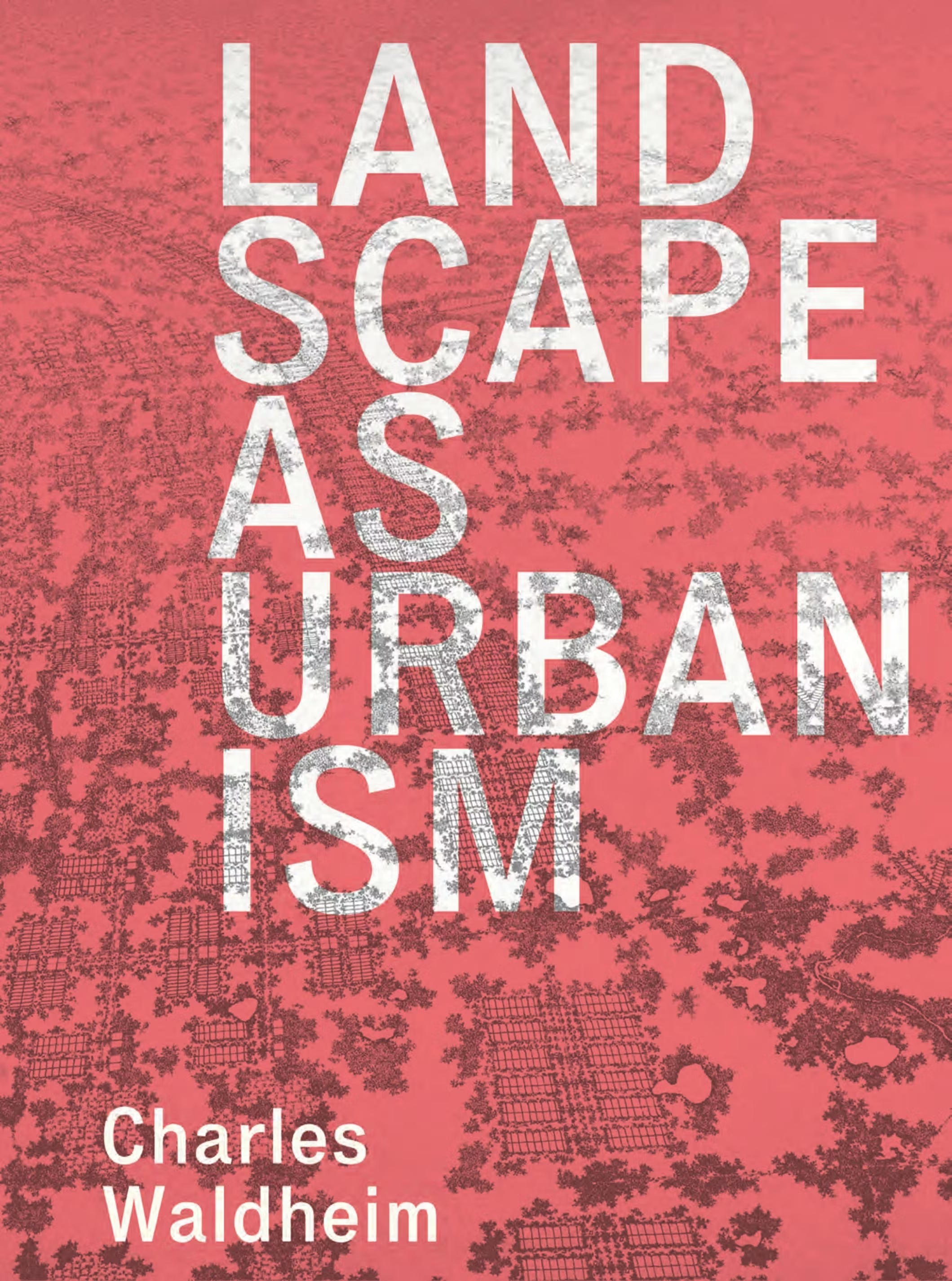
Traces the roots of landscape as a form of urbanism from its origins in the Renaissance through the twentieth century. Growing out of progressive architectural culture and populist environmentalism, the concept was further informed by the nineteenth-century invention of landscape architecture as a "new art" charged with reconciling the design of the industrial city with its ecological and social conditions. In the late twentieth and early twenty-first centuries, as urban planning shifted from design to social science, and as urban design committed to neotraditional models of town planning, landscape urbanism emerged to fill a void at the heart of the contemporary urban project.
Provides the readers with a timely guide to the application of biomimetic principles in architecture and engineering design. As a result of a combined effort by two internationally recognized authorities, the biologist Werner Nachtigall and the architect Göran Pohl, the book describes the principles which can be used to compare nature and technology, and at the same time it presents detailed explanations and examples showing how biology can be used as a source of inspiration and “translated” in building and architectural solutions (biomimicry). Even though nature cannot be directly copied, the living world can provide architects and engineers with a wealth of analogues and inspirations for their own creative designs. But how can analysis of natural entities give rise to advanced and sustainable design? By reporting on the latest bionic design methods and using extensive artwork, the book guides readers through the field of nature-inspired architecture, offering an extraordinary resource for professional architects, engineers, designers and urban planners, as well as for university teachers, researchers and students.
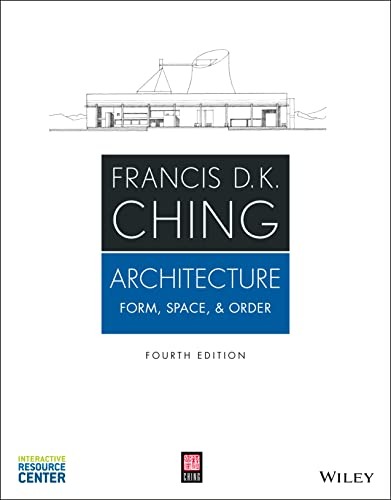
The revered architectural reference, updated with contemporary examples and interactive 3D modelsAn access card with redemption code for the online Interactive Resource Center is included with all new, print copies or can be purchased separately.

Complex geometric forms generated using virtual media can be tested and validated only by means of physical models, which also make it possible to assess their practical application. The complexity of contemporary architectural design requires the mastery of new methods of producing scale models, which opens a new chapter in the field of modeling, and is the focus of this book. Along with the traditional methods that provide the basis for modeling, this book presents the principles of digital NURBS modeling, parametric modeling, digital modeling support, and model creation, complete with a number of tutorials, practical advice and examples found in architectural practice today.
Reports on several advances in architectural graphics, with a special emphasis on education, training and research. It gathers a selection of contributions to the 19th International Conference on Graphic Design in Architecture, EGA 2022, held on June 2–4, 2022, in Cartagena, Spain, with the motto: "Beyond drawings. The use of architectural graphics".
Reports on several advances in architectural graphics, with a special emphasis on education, training, and research. It gathers a selection of contributions to the 19th International Conference on Graphic Design in Architecture, EGA 2022, held on June 2–4, 2022, in Cartagena, Spain, with the motto: "Beyond drawings. The use of architectural graphics".
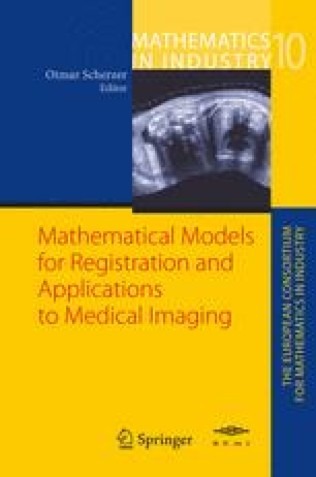
Image registration is an emerging topic in image processing with many applications in medical imaging, picture and movie processing. The classical problem of image registration is concerned with ?nding an appropriate transformation between two data sets. This fuzzy de?nition of registration requires a mathematical modeling and in particular a mathematical speci?cation of the terms appropriate transformations and correlation between data sets. Depending on the type of application, typically Euler, rigid, plastic, elastic deformations are considered. The variety of similarity p measures ranges from a simpleL distance between the pixel values of the data to mutual information or entropy distances. This goal of this book is to highlight by some experts in industry and medicine relevant and emerging image registration applications and to show new emerging mathematical technologies in these areas. Currently, many registration application are solved based on variational prin- ple requiring sophisticated analysis, such as calculus of variations and the theory of partial differential equations, to name but a few. Due to the numerical compl- ity of registration problems ef?cient numerical realization are required. Concepts like multi-level solver for partial differential equations, non-convex optimization, and so on play an important role. Mathematical and numerical issues in the area of registration are discussed by some of the experts in this volume.

This book describes the evolution of several socio-biological systems using mathematical kinetic theory. Specifically, it deals with modeling and simulations of biological systems—comprised of large populations of interacting cells—whose dynamics follow the rules of mechanics as well as rules governed by their own ability to organize movement and biological functions. The authors propose a new biological model for the analysis of competition between cells of an aggressive host and cells of a corresponding immune system.Because the microscopic description of a biological system is far more complex than that of a physical system of inert matter, a higher level of analysis is needed to deal with such complexity. Mathematical models using kinetic theory may represent a way to deal with such complexity, allowing for an understanding of phenomena of nonequilibrium statistical mechanics not described by the traditional macroscopic approach. The proposed models are related to the generalized Boltzmann equation and describe the population dynamics of several interacting elements (kinetic population models).The particular models proposed by the authors are based on a framework related to a system of integro-differential equations, defining the evolution of the distribution function over the microscopic state of each element in a given system. Macroscopic information on the behavior of the system is obtained from suitable moments of the distribution function over the microscopic states of the elements involved. The book follows a classical research approach applied to modeling real systems, linking the observation of biological phenomena, collection of experimental data, modeling, and computational simulations to validate the proposed models. Qualitative analysis techniques are used to identify the prediction ability of specific models.
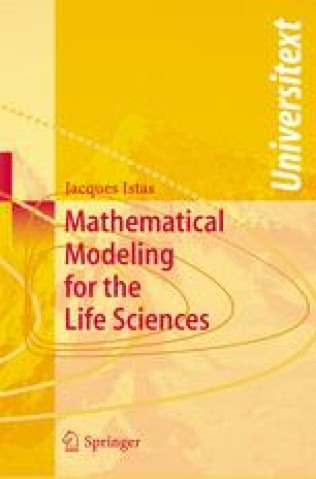
Proposing a wide range of mathematical models that are currently used in life sciences may be regarded as a challenge, and that is precisely the challenge that this book takes up. Of course this panoramic study does not claim to offer a detailed and exhaustive view of the many interactions between mathematical models and life sciences. This textbook provides a general overview of realistic mathematical models in life sciences, considering both deterministic and stochastic models and covering dynamical systems, game theory, stochastic processes and statistical methods. Each mathematical model is explained and illustrated individually with an appropriate biological example. Finally three appendices on ordinary differential equations, evolution equations, and probability are added to make it possible to read this book independently of other literature.

Linear stochastic systems are successfully used to provide mathematical models for real processes in fields such as aerospace engineering, communications, manufacturing, finance and economy. This monograph presents a useful methodology for the control of such stochastic systems with a focus on robust stabilization in the mean square, linear quadratic control, the disturbance attenuation problem, and robust stabilization with respect to dynamic and parametric uncertainty.

Based on lecture notes of two summer schools with a mixed audience from mathematical sciences, epidemiology and public health, this volume offers a comprehensive introduction to basic ideas and techniques in modeling infectious diseases, for the comparison of strategies to plan for an anticipated epidemic or pandemic, and to deal with a disease outbreak in real time. It covers detailed case studies for diseases including pandemic influenza, West Nile virus, and childhood diseases. Models for other diseases including Severe Acute Respiratory Syndrome, fox rabies, and sexually transmitted infections are included as applications. Its chapters are coherent and complementary independent units. In order to accustom students to look at the current literature and to experience different perspectives, no attempt has been made to achieve united writing style or unified notation.
In this book we describe the basic principles, problems, and methods of clssical mechanics. Our main attention is devoted to the mathematical side of the subject. Although the physical background of the models considered here and the applied aspects of the phenomena studied in this book are explored to a considerably lesser extent, we have tried to set forth first and foremost the “working” apparatus of classical mechanics. This apparatus is contained mainly in Chapters 1, 3, 5, 6, and 8. Chapter 1 is devoted to the basic mathematical models of classical - chanics that are usually used for describing the motion of real mechanical systems. Special attention is given to the study of motion with constraints and to the problems of realization of constraints in dynamics. In Chapter 3 we discuss symmetry groups of mechanical systems and the corresponding conservation laws. We also expound various aspects of ord- reduction theory for systems with symmetries, which is often used in appli- tions. Chapter 4 is devoted to variational principles and methods of classical mechanics. They allow one, in particular, to obtain non-trivial results on the existence of periodic trajectories. Special attention is given to the case where the region of possible motion has a non-empty boundary. Applications of the variational methods to the theory of stability of motion are indicated.

سوريا - اتستراد درعا - غباغب
+963-15 2050 - 15 860 380 /1/2/3 - 11 662 3900