



الصفحة 9
الصفحة 9

Inventive communication and computational technologies ; Proceedings of ICICCT 2020
This book gathers selected papers presented at the 4th International Conference on Inventive Communication and Computational Technologies (ICICCT 2020), held on 28–29 May 2020 at Gnanamani College of Technology, Tamil Nadu, India. The respective contributions highlight recent research efforts and advances in a new paradigm called ISMAC (IoT in Social, Mobile, Analytics and Cloud contexts). The topics covered include the Internet of Things, Social Networks, Mobile Communications, Big Data Analytics, Bio-inspired Computing and Cloud Computing. Given its scope, the book is chiefly intended for academics and practitioners working to resolve practical issues in this area.

Intuitive Human Interfaces for Organizing and Accessing Intellectual Assets ; International Workshop, Dagstuhl Castle, Germany, March 1-5, 2004, Revised Selected Papers
This book constitutes the thoroughly refereed post-proceedings of the 2004 International Workshop on Intuitive Human Interfaces for Organizing and Accessing Intellectual Assets, held in Dagstuhl Castle, Germany in March 2004. The 17 revised full papers presented together with an introductory overview have gone through two rounds of reviewing and revision. The papers are organized in topical sections on man-machine interface for intuitive knowledge access, intelligent pad and meme media, visualization and design of information access spaces, and semantics and narrative organization and access of knowledge.

Introduction to Machine Learning with Applications in Information Security
Provides a classroom-tested introduction to a wide variety of machine learning and deep learning algorithms and techniques, reinforced via realistic applications. The book is accessible and doesn't prove theorems, or dwell on mathematical theory. The goal is to present topics at an intuitive level, with just enough detail to clarify the underlying concepts. The book covers core classic machine learning topics in depth, including Hidden Markov Models (HMM), Support Vector Machines (SVM), and clustering. Additional machine learning topics include k-Nearest Neighbor (k-NN), boosting, Random Forests, and Linear Discriminant Analysis (LDA). The fundamental deep learning topics of backpropagation, Convolutional Neural Networks (CNN), Multilayer Perceptrons (MLP), and Recurrent Neural Networks (RNN) are covered in depth. A broad range of advanced deep learning architectures are also presented, including Long Short-Term Memory (LSTM), Generative Adversarial Networks (GAN), Extreme Learning Machines (ELM), Residual Networks (ResNet), Deep Belief Networks (DBN), Bidirectional Encoder Representations from Transformers (BERT), and Word2Vec.

Introduction to Intelligent Construction Technology of Transportation Infrastructure
Expounds on the related technologies of intelligent transportation infrastructure construction. Based on the essential characteristics of intelligent construction, "perception, analysis, decision-making, and execution," the basic structure of intelligent construction technology (ICT) is established. With the integration of engineering construction technologies, the analyses of the essence of intelligent algorithms and the feasibility of Artificial Intelligence (AI) are provided. The book introduces the essential characteristics of Big Data and the Internet of Things and their relationship with engineering construction. On this basis, the feasibility and implementation plan of intelligent technology applications in design, construction, and maintenance are analyzed and demonstrated with engineering examples.

Introduction to Data Mining and its Applications
This book explores the concepts of data mining and data warehousing, a promising and flourishing frontier in data base systems and new data base applications and is also designed to give a broad, yet in-depth overview of the field of data mining. Data mining is a multidisciplinary field, drawing work from areas including database technology, AI, machine learning, NN, statistics, pattern recognition, knowledge based systems, knowledge acquisition, information retrieval, high performance computing and data visualization.

Introducing Robotic Process Automation to Your Organization : A Guide for Business Leaders
Enables you, a novice to RPA, to successfully implement an RPA program at your company. RPA is rapidly growing in use, but is only starting to be taught at a university level. Many mid-level managers will be tasked with introducing an RPA program at their organizations as senior management learns of its efficacy, but will be unfamiliar with how to do so. This book provides you with the skills and information you need to make an informed decision. You will learn: Know the benefits of robotic process automation (RPA) / Understand the limitations of RPA / Ask the right questions to determine whether a process is a good candidate for automation / Obtain buy-in from skeptics at the senior and middle manager levels, and from line workers Be familiar with the structure required for success

Internet of things. information processing in an increasingly connected world ; First IFIP International Cross-Domain Conference, IFIPIoT 2018, Held at the 24th IFIP World Computer Congress, WCC 2018, Poznan, Poland, September 18-19, 2018, Revised Selected Papers
This book cover a wide range of topics from a technology to a business perspective and include among others hardware, software and management aspects, process innovation, privacy, power consumption, architecture, applications.

Internet of things, artificial intelligence and blockchain technology
Explores the concepts and techniques of IoT, AI, and blockchain. Also discussed is the possibility of applying blockchain for providing security in various domains. The specific highlight of this book is focused on the application of integrated technologies in enhancing data models, better insights and discovery, intelligent predictions, smarter finance, smart retail, global verification, transparent governance, and innovative audit systems. Explains how blockchain can significantly increase data privacy and security while boosting accuracy and integrity in IoT generated data and AI processed information; Gives insight into blockchain’s numerous potential applications, starting with recent technologies that give users control over sharing and privacy; Shows readers how to employ blockchain in IoT and AI, helping them to understand what they can and cannot do with blockchain.

Internet of things from hype to reality : The road to digitization
Presents updated material on its core content: an end-to-end IoT architecture that is comprised of devices, network, compute, storage, platform, applications along with management and security components. As with the second edition, it is organized into six main parts: an IoT reference model; fog computing and the drivers; IoT management and applications; smart services in IoT; IoT standards; and case studies. This edition’s features include overhaul of the IoT Protocols (Chapter 5) to include an expanded treatment of low-power wide area networks including narrow band IoT (NB-IoT) protocol, updated IoT platforms and capabilities (Chapter 7) to include comparison of commercially available platforms (e.g. AWS IoT Platform, Google Cloud IoT Platform, Microsoft Azure IoT Platform, and PTC ThinkWorx), updated security (Chapter 8) to include approaches for securing IoT devices with examples of IoT devices used in security attacks and associated solutions including MUD and DICE, and finally new Appendix B to include six IoT project detailed for students.

Internet of Things and Machine Learning in Agriculture
Machine Learning (ML) and the Internet of Things (IoT) can play a very promising role in the agricultural industry. Some examples include: an AI-powered drone to monitor the field, an IoT-designed automated crop watering system, sensors embedded in the field to monitor temperature and humidity, etc. The agriculture industry is the largest in the world, but when it comes to innovation there is a lot more to explore. IoT devices can be used to analyze the status of crops. For instance, with soil sensors, farmers can detect any irregular conditions such as high acidity and efficiently tackle these issues to improve their yield. In this book, we will point out the challenges facing the agro-industry that can be addressed by ML and IoT and explore the impacts of these technologies in the agriculture sector.

International Law Today : New Challenges and the Need for Reform?
th Rüdiger Wolfrum celebrated his 65 birthday on 13 December 2006. On this special occasion, current and former members of the large circle of his PhD and post-doctorate students (Doktoranden und Habilit- den) organized a symposium on the subject of “International Law - day: New Challenges and the Need for Reform?” to honour him and his academic work as a teacher and researcher.the subjects covered by the speakers and commentators reflect the wide variety of issues he worked on in his long and impressive academic career. They extend from a cri- cal evaluation of the new responsibility to protect and the role of the UN Security Council in post-conflict management, thoughts on the proliferation of international tribunals with regard to the unity or fragmentation of international law, marine genetic resources in the deep sea and environmental protection in Antarctica to human rights issues relating to intellectual property rights and the protection of minorities.

Interface oral health science 2016 : Innovative research on biosis-abiosis intelligent interface
This volume broadens understanding of dentistry and promotes interdisciplinary research across a wide range of related fields, based on the symposium entitled "Innovative Research for Biosis–Abiosis Intelligent Interface 2016". It aims to create highly functional and autonomic intelligent interface by combining highly functional interface science with the technology of an evaluation and a control at the interface, with the various topics of biomaterials, innovation for oral science and application, regenerative oral science, and medical engineering. Since 2002, the Tohoku University Graduate School of Dentistry has hosted “Interface Oral Health Science” several times as the main theme of dental research in the twenty-first century, and this is the sixth proceedings of the symposiums following the ones in 2005, 2007, 2009, 2011, and 2014.

Interface oral health science 2014 : Innovative research on biosis-abiosis intelligent interface
The Tohoku University Graduate School of Dentistry first introduced the concept of “Interface Oral Health Science”, designed to establish and maintain healthy oral cavities, which are home to a number of mixed systems. Included in those systems are: (1) host tissues such as teeth, mucosa, muscle and bone, (2) parasites and microorganisms cohabiting the surfaces of the oral cavity, and (3) biomaterials that are used for the rehabilitation of oral functions. In addition, (4) these systems are subject to severe and complex mechanical forces. Therefore, it is critical to promote dental studies that integrate a wide range of interdisciplinary research as medicine, agriculture, material science, engineering, and pharmacology.

Interdisciplinary public health reasoning and epidemic modelling : The case of black death
This is a book about interdisciplinary public health reasoning and epidemic m- th elling, in general, and the study of the infamous 14 century AD Black Death d- aster, in particular. We focus on the intellectual context in which epidemic mod- ling takes place, in a way that accounts for the present-day interdisciplinary and multicultural trends in scientific inquiry. Like most scientific fields, public health research defines itself based on knowledge, which raises serious epistemic and cognitive issues.
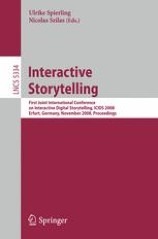
Interactive storytelling ; 1st Joint International Conference on interactive digital storytelling, ICIDS 2008 Erfurt, Germany, November 26-29, 2008 Proceedings
This book constitutes the refereed proceedings of the First Joint International Conference on Interactive Digital Storytelling, ICIDS 2008, held in Erfurt, Germany, in November 2008.The 19 revised full papers, 5 revised short papers, and 5 poster papers presented together with 3 invited lectures and 8 demo papers were carefully reviewed and selected from 62 submission. The papers are organized in topical sections on future perspectives on interactive digital storytelling, interactive storytelling applications, virtual characters and agents, user experience and dramatic immersion, architectures for story generation, models for drama management and interacting with stories, as well as authoring and creation of interactive narrative.

Interactive Curve Modeling : With Applications to Computer Graphics, Vision and Image Processing
Interactive curve modeling techniques and their applications are extremely useful in a number of academic and industrial settings, and specifically play a significant role in multidisciplinary problem solving, such as in font design, designing objects, CAD/CAM, medical operations, scientific data visualization, virtual reality, character recognition, and object recognition, etc. Various problems such as iris, fingerprint, and signature recognition, can also be intelligently solved and automated using curve techniques.

Interactive Computation : The New Paradigm
The interaction paradigm provides a new conceptualization of computational phenomena that emphasizes interaction rather than algorithms, thus reflecting the shift in technology from number-crunching on mainframes to distributed intelligent networks with graphical user interfaces.

Interactions : Mathematics, Physics and Philosophy, 1860-1930
This is an outstanding collection of original essays. All of them concern the history and philosophy of mathematics and physics in the years from 1870 to 1930. More specifically, they are intellectual histories of the interactions between the three disciplines, philosophy, mathematics and physics, they too often overlook the wealth of philosophical perplexities that can arise in detailed examples and case studies, both contemporary and historical. This volume refocuses our attention by addressing a number of topics connected to applied mathematics, any one of which is worthy of every philosopher’s attention.

Intelligent Virtual Agents ; Vol.4133 ; 6th International Conference, IVA 2006, Marina Del Rey, CA; USA, August 21-23, 2006, Proceedings
This volume contains the proceedings of the 6th International Conference on Intelligent Virtual Agents, IVA 2006, held in Marina del Rey, California, USA from August 21–23.For the second year in a row,IVA also hosted the Gathering of Animated Lifelike Agents (GALA 2006), an annual festival to showcase the latest animated lifelike agents created by university students and academic or industrial research groups. IVA 2006 received 73 submissions from Europe, the AmericasandAsia.Thepaperspublishedherearethe24fullpapersand11short papers presented at the conference, as well as one-page descriptions of posters and the featured invited talks by Brian Parkinson of Oxford University, Rod Humble of Electronic Arts, and Michael Mateas of the University of California, Santa Cruz and Andrew Stern of Procedural Arts.

Intelligent Virtual Agents ; Vol.3661 : 5th International Working Conference, IVA 2005, Kos, Greece, September 12-14, 2005, Proceedings
The origin of the Intelligent Virtual Agents conference dates from a successful workshop on Intelligent Virtual Environments held in Brighton at the 13th European Conference on Artificial Intelligence (ECAI'98). This workshop was followed by a second one held in Salford in Manchester in 1999. Subsequent events took place in Madrid, Spain in 2001 and Irsee, Germany in 2003 and attracted participants from both sides of the Atlantic as well as Asia. th This volume contains the proceedings of the 5 International Working Conference on Intelligent Virtual Agents, IVA 2005, held on Kos Island, Greece, September 12–14, 2005, which highlighted once again the importance and vigor of the research field. A half-day workshop under the title “Socially Competent IVA’s: We are not alone in this (virtual) world!” also took place as part of this event. IVA 2005 received 69 submissions from Europe, North and South America, Africa and Asia. The papers published here are the 26 full papers and 14 short papers presented at the conference, as well as one-page descriptions of the 15 posters and the descriptions of the featured invited talks by Prof. Justine Cassell, of Northwestern University and Prof. Kerstin Dautenhahn, of the University of Hertfordshire. We would like to thank a number of people that have contributed to the success of this conference. First of all, we thank the authors for their high-quality work and their willingness to share their ideas.
