


تحسين النتائح
ترتيب حسب
من
الى

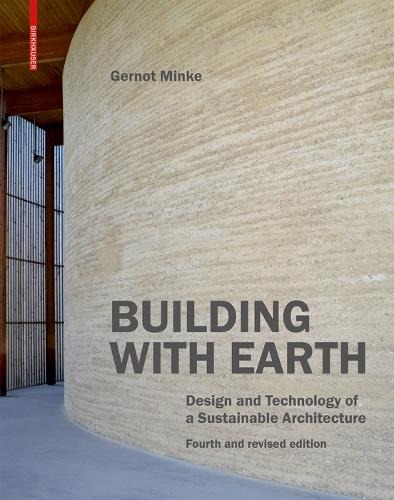
Offers a practical systematic overview of the many uses of earth and techniques for processing it. Its properties and physical characteristics are described in informed and knowledgeable detail. The presentation reflects the rich and varied experiences gained over thirty years of building earth structures all over the world. Numerous photographs of construction sites and drawings show the concrete execution of earth architecture. Documentation of 30 international earth buildings. The characteristics of the building material earth and its applications in modern architecture
Provides the readers with a timely guide to the application of biomimetic principles in architecture and engineering design. As a result of a combined effort by two internationally recognized authorities, the biologist Werner Nachtigall and the architect Göran Pohl, the book describes the principles which can be used to compare nature and technology, and at the same time it presents detailed explanations and examples showing how biology can be used as a source of inspiration and “translated” in building and architectural solutions (biomimicry). Even though nature cannot be directly copied, the living world can provide architects and engineers with a wealth of analogues and inspirations for their own creative designs. But how can analysis of natural entities give rise to advanced and sustainable design? By reporting on the latest bionic design methods and using extensive artwork, the book guides readers through the field of nature-inspired architecture, offering an extraordinary resource for professional architects, engineers, designers and urban planners, as well as for university teachers, researchers and students.
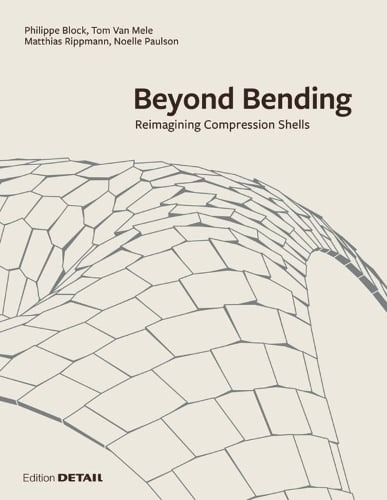
The examination of old construction principles in combination with the development of new digital graphic construction methods leads to unusual ways in the design of self-supporting structures. Based on its Armadillo Vault, which was awarded at the Venice Biennale 2016, the Block Research Group of ETH Zurich describes development processes and visions of resource-saving, refined load-bearing structures without steel. The intensive examination of principles is fundamental.
Provides an index of ideas, theories, projects, and definitions that string into a methodology for evaluating the contemporary language of architecture described as “contemporism” through a review of topology (form) and typology (system and elements). Trying to answer the postmodern question of how to move beyond modernism through a thread of architectural styles that tried to respond to deficiencies from the modern promise and contextual changes. Yet, the question remains, should this ongoing struggle to move beyond modernism be a stylistic battle? Has the present architectural practice ever left the modernist tendencies, and is there a structure for a contemporary language in architecture? Presents a collection of highly illustrated projects that have worked under these parameters to break away from modernism in order to present a holistic integration of topology and typology as a language for “contemporism.” The index is illustrated with individual spreads, which can be read sequentially or independently, and encourages the reader to make their own connections. It also includes interviews and contributions from Toyo Ito, Anthony Vidler, Ben van Berkel, Christian Kerez, and Greg Lynn.
This book describes the evolution of several socio-biological systems using mathematical kinetic theory. Specifically, it deals with modeling and simulations of biological systems—comprised of large populations of interacting cells—whose dynamics follow the rules of mechanics as well as rules governed by their own ability to organize movement and biological functions. The authors propose a new biological model for the analysis of competition between cells of an aggressive host and cells of a corresponding immune system.Because the microscopic description of a biological system is far more complex than that of a physical system of inert matter, a higher level of analysis is needed to deal with such complexity. Mathematical models using kinetic theory may represent a way to deal with such complexity, allowing for an understanding of phenomena of nonequilibrium statistical mechanics not described by the traditional macroscopic approach. The proposed models are related to the generalized Boltzmann equation and describe the population dynamics of several interacting elements (kinetic population models).The particular models proposed by the authors are based on a framework related to a system of integro-differential equations, defining the evolution of the distribution function over the microscopic state of each element in a given system. Macroscopic information on the behavior of the system is obtained from suitable moments of the distribution function over the microscopic states of the elements involved. The book follows a classical research approach applied to modeling real systems, linking the observation of biological phenomena, collection of experimental data, modeling, and computational simulations to validate the proposed models. Qualitative analysis techniques are used to identify the prediction ability of specific models.
In this book we describe the basic principles, problems, and methods of clssical mechanics. Our main attention is devoted to the mathematical side of the subject. Although the physical background of the models considered here and the applied aspects of the phenomena studied in this book are explored to a considerably lesser extent, we have tried to set forth first and foremost the “working” apparatus of classical mechanics. This apparatus is contained mainly in Chapters 1, 3, 5, 6, and 8. Chapter 1 is devoted to the basic mathematical models of classical - chanics that are usually used for describing the motion of real mechanical systems. Special attention is given to the study of motion with constraints and to the problems of realization of constraints in dynamics. In Chapter 3 we discuss symmetry groups of mechanical systems and the corresponding conservation laws. We also expound various aspects of ord- reduction theory for systems with symmetries, which is often used in appli- tions. Chapter 4 is devoted to variational principles and methods of classical mechanics. They allow one, in particular, to obtain non-trivial results on the existence of periodic trajectories. Special attention is given to the case where the region of possible motion has a non-empty boundary. Applications of the variational methods to the theory of stability of motion are indicated.

This book presents rigorous treatments of issues related to congestion pricing. The chapters describe recent advances in areas such as mathematical and computational models for predicting traffic congestion, determining when, where, and how much to levy tolls, and analyzing the impact of tolls on transporation systems. The analyses and methodologies developed in this book provide Mechanisms that aid in determining and comparing congestion pricing schemes; Methodologies for evaluating the efficiency of existing and proposed congestion pricing schemes; A means to predict the impact of pricing on urban transporation systems; and Information essential to the financial and political success of congestion pricing programs.

This book presents materials fundamentals of novel gate dielectrics that are being introduced into semiconductor manufacturing to ensure the continuous scalling of the CMOS devices. This is a very fast evolving field of research so we choose to focus on the basic understanding of the structure, thermodunamics, and electronic properties of these materials that determine their performance in device applications. Most of these materials are transition metal oxides. Ironically, the d-orbitals responsible for the high dielectric constant cause sever integration difficulties thus intrinsically limiting high-k dielectrics. Though new in the electronics industry many of these materials are wel known in the field of ceramics, and we describe this unique connection. The complexity of the structure-property relations in TM oxides makes the use of the state of the art first-principles calculations necessary. Several chapters give a detailed description of the modern theory of polarization, and heterojunction band discontinuity within the framework of the density functional theory. Experimental methods include oxide melt solution calorimetry and differential scanning calorimetry, Raman scattering and other optical characterization techniques, transmission electron microscopy, and x-ray photoelectron spectroscopy.

The series Matematica e cultura, through a journey that began ten years ago, in an ever new, surprising and fascinating way, tries to describe the influences and links existing between the world of mathematics and that of aeronautics, medicine, biology, but also art, cinema. , of theater, literature or history: "A tribute to Mario Merz could not be missing, following his Fibonacci numbers towards infinity. And cinema, that of Davide Ferrario who takes up that thread, those numbers that fly over Turin. film on the axiom of parallels, a Venetian film E.
Since the late 1960s, various groups have investigated the influence of marine surface films on mechanisms dominating energy and mass transfer across the ocean/atmosphere interface. However, a compendium summarizing the state-of-the-art research in this field is still missing. The book fills this gap and transfers the accumulated knowledge to the scientific community. After a brief historical chapter basic chemical insights are presented, followed by theoretical and experimental approaches carried out in laboratory facilities. Air-sea interaction experiments are then described and finally, remote sensing applications with sea slicks and crude oil spills are presented.

The oceans contain a great biodiversity of marine organisms. They include a rich variety of unusual genes and biochemistries and hence a diverse array of organic compounds ranging from colourful carotenoids and chlorophylls to lipids with structures ranging from the simple to the complex. This volume brings together ten chapters on the occurrence and identification of the lipid biomarkers and of pigments in marine waters. It describes how they can be used in conjunction with stable isotopes and molecular biology to ascertain the sources and fate of organic matter (both natural and pollutant) in the sea and underlying sediments. The authors are each experts in their field and the chapters provide both an overview of the state-of-the-art and knowledge gaps together with abundant detail to satisfy the needs of specialists and non-specialists alike.
Since 1980 a considerable amount of scientific research dealing with geochemical processes in marine sediments has been carried out. This textbook summarizes the state of the art in this field of research. The topics comprise the examination of sedimentological and physical properties of the sedimentary solid phase, of pore water and pore water constituents, organic matter as the driving force of most microbiological processes, biotic and abiotic redox reactions, carbonates and stable isotopes as proxies for paleoclimate reconstruction, metal enrichments in ferromanganese nodules and crusts as well as in hot vents and cold seeps on the seafloor. A new chapter describes properties, occurrence and formation of gas hydrates in marine sediments. The textbook ends with a chapter on model conceptions and computer models to quantify processes of early diagenesis.
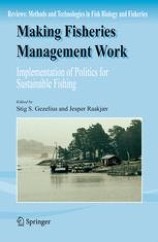
This book seeks to widen the perspective taken on implementation in fisheries management. The cases presented in this volume addresses legal, administrative, and political challenges regarding implementation of resource conservation policies. The book addresses problems relating to goal achievement, but also causes of deliberate change of political goals during implementation. Fisheries management systems are embedded in inert social structures and natural conditions that vary among different states. Consequently, the book takes a historical and comparative approach, describing the historical developments of national implementation systems and the conditions that shaped their development. It thus seeks to explain why national fisheries management systems have evolved differently, focusing on Norwegian, Faeroese, and EU/Danish management systems. The descriptive and explanatory outlines are accompanied by qualitative assessments of the systems effectiveness as tools for collective action.
The book presents research on 15 different teacher education programs and describes individual renewal efforts. The stories -- including both the successes and challenges -- are inspiring and informative. In this age of accountability these teacher educators have used a range of research methods to gather data on their work and in turn used it to guide future decisions. The text includes examples of both large scale research and individual efforts. The common thread among the authors is a commitment to "walking the talk."
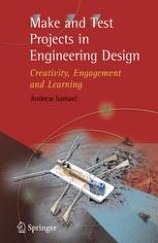
This is a book about the invention and testing of ideas. By describing how to generate engaging problem situations for engineering students to solve it inspires original currents of thought. This is the first book that formalises an important aspect of early learning in engineering design.
Addresses the exciting and rapidly developing topic of nanostructured magnetic materials. It combines modern topics in nanoscale magnetism with issues relating to the fabrication and characterization of magnetic nanostructures. The chapters describe a wide range of physical aspects, together with theoretical and experimental methods. "Magnetic Nanostructures" will be of interest to researchers and specialists both in academic and industrial research. Graduate students will also find in this book an accessible introduction to the essential issues.
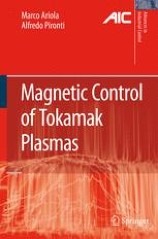
The main topic of Magnetic Control of Tokamak Plasmas is the design of feedback control systems guaranteeing the stability of plasma equilibrium inside a tokamak and the regulation of the plasma position and shape during plasma pulses. Modelling and control details are presented, allowing the non-expert to understand the control problem. Starting from equations of magneto-hydro-dynamics, all the steps needed for the derivation of plasma state-space models are enumerated. The basics of electromagnetics are frequently recalled. The control problem is then described beginning with control of current and position – vertical and radial – and progressing to the more challenging shape control. The solutions proposed vary from simple PIDs to more sophisticated MIMO controllers.
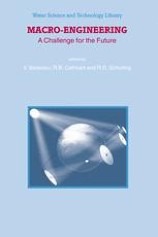
Macro-engineering involves the large-scale modification and manipulation of natural systems for the benefit of mankind. The primary goals of some Earth-based macroprojects described in this book are power production, land reclamation, food production, climate change, environment, water, transport and coastal protection. Other Earth or space projects considered here have a more futuristic ring, but our present-day technical skill makes their realization possible. Earth-based macroprojects usually combine different aspects and aims. They have a major impact on the ecology of a region and the inhabitants' means of living (like tourism, fishing, shipping). Its effects may be felt worldwide, like the rise in global sea level after the damming and evaporation of large ocean gulfs for power production, or the change in climate following the regional reduction of solar insolation.
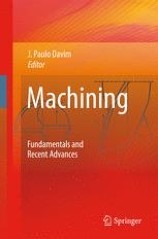
Machining is one of the most important manufacturing processes. Parts manufactured by others processes often require further operations before the product is ready for application. Machining is the broad term used to describe the removal of material from a work-piece. Machining processes can be applied to work metallic and non-metallic materials such as polymers, wood, ceramics and composites.
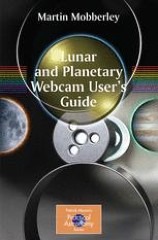
In the Lunar and Planetary Webcam User’s Guide Martin Mobberley de-mystifies the jargon of webcams and computer processing, and provides detailed hints and tips for imaging the Sun, Moon and planets with a webcam. He looks at each observing target separately, describing and explaining all specialised techniques in context.

سوريا - اتستراد درعا - غباغب
+963-15 2050 - 15 860 380 /1/2/3 - 11 662 3900