



الصفحة 89
الصفحة 89
Autonomous Robots and Agents
This book deals with the theoretical and methodological aspects of incorporating intelligence in Autonomous Robots and Agents. Challenges faced in the real world to accomplish complex tasks, which require collaborative efforts, and methods to overcome them, are detailed. Several informative articles deal with navigation, localization and mapping of mobile robots, a problem that engineers and researchers are grappling with all the time.This edited volume is targeted to present the latest state-of-the-art methodologies in Robotics. It is a compilation of the extended versions of the very best papers selected from the many that were presented at the 3rd International Conference on Autonomous Robots and Agents (ICARA 2006) which was held at Palmerston North, New Zealand from 11-14 December, 2006. Scientists and engineers who work with mobile robots will find this book very useful and stimulating.
Autonomous control for a reliable internet of services : Methods, models, approaches, techniques, algorithms, and tools
This open access book was prepared as a Final Publication of the COST Action IC1304 “Autonomous Control for a Reliable Internet of Services (ACROSS)”. The book contains 14 chapters and constitutes a show-case of the main outcome of the Action in line with its scientific goals. It will serve as a valuable reference for undergraduate and post-graduate students, educators, faculty members, researchers, engineers, and research strategists working in this field. The objective of this book is, by applying a systematic approach, to assess the state-of-the-art and consolidate the main research results achieved in this area.

Automating business modelling : A guide to using logic to represent Informal methods and support reasoning
Enterprise Modelling (EM) methods are frequently used by entrepreneurs as an analysis tool for describing and redesigning their businesses. The resulting product, an enterprise model, is commonly used as a blueprint for reconstructing organizations and such effort is often a part of business process re-engineering and improvement initiatives. Automating Business Modelling describes different techniques of providing automated support for enterprise modelling methods and introduces universally used approaches. A running example of a business modelling method is included; providing a framework and detailed explanation as to how to construct automated support for modelling, allowing readers to follow the method to create similar support. Suitable for senior undergraduates and postgraduates of Business Studies, Computer Science and Artificial Intelligence, practitioners in the fields of Knowledge Management, Enterprise Modelling and Software Engineering, this book offers insight and know-how to both student and professional.

Automated technology for verification and analysis ; 6th International Symposium, ATVA 2008, Seoul, Korea, October 20-23, 2008. Proceedings
This book constitutes the refereed proceedings of the 6th International Symposium on Automated Technology for Verification and Analysis, ATVA 2008, held in Seoul, Korea, in October 2008.

Automated technology for verification and analysis ; 5th International Symposium, ATVA 2007 Tokyo, Japan, October 22-25, 2007 Proceedings
This book presented theoretical methods to achieve correct software or hardware systems, including both functional and non functional aspects

Automated technology for verification and analysis ; 4th International Symposium, ATVA 2006, Beijing, China, October 23-26, 2006, Proceedings
The Automated Technology for Veri?cation and Analysis (ATVA) international symposium series was initiated in 2003, The main topics of the symposium include th- ries useful for providing designers with automated support for obtaining correct software or hardware systems, as well as the implementation of such theories in tools or their application. In the end, 35 papers were selected for inclusion in the program. ATVA 2006 had three keynote speeches given respectively by Thomas Ball, Jin Yang, and Mihalis Yannakakis. The main symposium was preceded by a tutorial day, consisting of three two-hourlectures given by the keynotespeakers.

Automated technology for verification and analysis ; 3rd International Symposium, ATVA 2005, Taipei, Taiwan, October 4-7, 2005, Proceedings
The Automated Technology for Veri?cation and Analysis (ATVA) international symposium series was initiated in 2003, responding to a growing interest in formal veri?cation spurred by the booming IT industry, particularly hardware design and manufacturing in East Asia. Its purpose is to promote research on automated veri?cation and analysis in the region by providing a forum for int- action between the regional and the international research/industrial commu- ties of the ?eld. ATVA 2005, the third of the ATVA series, was held in Taipei, Taiwan, 2005. The main theme of the symposium encompasses - sign, complexities, tools, and applications of automated methods for veri?cation and analysis. This book constitutes the refereed proceedings of the symposium .

Automated reasoning with analytic tableaux and related methods ; International Conference, TABLEAUX 2005, Koblenz, Germany, September 14-17, 2005, Proceedings
This volume contains the research papers presented at the International C- ference on Automated Reasoning with Analytic Tableaux and Related Methods (TABLEAUX2005)heldSeptember 2005inKoblenz,Germany. which included conferences covering a broad spectrum of topics and intere- ing ?elds of application for tableau-based methods: arti?cial intelligence (KI), multi-agent systems (MATES), automated reasoning and knowledge represen- tion (FTP), and software engineering and formal methods (SEFM).

Automated Reasoning with Analytic Tableaux and Related Methods ; 16th International Conference, TABLEAUX 2007, Aix en Provence, France, July 3-6, 2007, Proceedings
It covers the wide range of logics, from intuitionistic and substructural logics to modal logics (including temporal and dynamic logics), from many-valued logics to nonmonotonic logics, and from classical first-order logic to description logics.

Automated reasoning ; 3rd International Joint Conference, IJCAR 2006, Seattle, WA, USA, August 17-20, 2006, Proceedings
This book constitutes the refereed proceedings of the Third International Joint Conference on Automated Reasoning,The papers address the entire spectrum of research in automated reasoning including formalization of mathematics, proof theory, proof search, description logics, interactive proof checking, higher-order logic, combination methods, satisfiability procedures, and rewriting. The papers are organized in topical sections on proofs, search, higher-order logic, proof theory, search, proof checking, combination, decision procedures, CASC-J3, rewriting, and description logic.
Automated machine learning : Methods, systems, challenges
This book presents the first comprehensive overview of general methods in Automated Machine Learning (AutoML), collects descriptions of existing systems based on these methods, and discusses the first series of international challenges of AutoML systems. The recent success of commercial ML applications and the rapid growth of the field has created a high demand for off-the-shelf ML methods that can be used easily and without expert knowledge. However, many of the recent machine learning successes crucially rely on human experts, who manually select appropriate ML architectures (deep learning architectures or more traditional ML workflows) and their hyperparameters. To overcome this problem, the field of AutoML targets a progressive automation of machine learning, based on principles from optimization and machine learning itself.

Automated deduction in Geometry ; 6th International Workshop, ADG 2006, Pontevedra, Spain, August 31-September 2, 2006, Revised Papers
The book show the lively variety of topics and methods and the current applicability of automated deduction in geometry to different branches of mathematics and to other sciences and technologies.

Automated deduction in Geometry ; 5th International Workshop, ADG 2004, Gainesville, FL, USA, September 16-18, 2004, Revised Papers
This book constitutes the thoroughly refereed post-proceedings of the 6th International Workshop on Automated Deduction in Geometry, ADG 2006, held at Pontevedra, Spain, in August/September 2006 as a satellite event of the International Congress of Mathematicians, ICM 2006. The 13 revised full papers presented were carefully selected from the submissions made due to a call for papers - within the scope of ADG - shortly after the meeting. The papers show the lively variety of topics and methods and the current applicability of automated deduction in geometry to different branches of mathematics and to other sciences and technologies.

Automata, languages and programming ; 35th International Colloquium, ICALP 2008, Reykjavik, Iceland, July 7-11, 2008, Proceedings, Part II
The two-volume set LNCS 5125 and LNCS 5126 constitutes the refereed proceedings of the 35th International Colloquium on Automata, Languages and Programming, ICALP 2008, held in Reykjavik, Iceland, in July 2008.
Autoimmunity : Methods and protocols
Brings together a comprehensive and up-to-date collection of protocols that reflect the diverse experimental strategies. Chapters detail T-cell, macrophage characterization, neutrophil functional assays, organoid culture methods, spatial transcriptomics, RNA FISH, microRNA profiling, and ribosome profiling. Written in the highly successful Methods in Molecular Biology series format, chapters include introductions to their respective topics, lists of the necessary materials and reagents, step-by-step, readily reproducible laboratory protocols, and key tips on troubleshooting and avoiding known pitfalls.

Aulton's pharmaceutics : The design and manufacture of medicines
A comprehensive textbook covering the design of dosage forms and all aspects of drug delivery systems. Pharmaceutics in its broadest sense is the 'art of the apothecary' or, in simple terms, pharmaceutical preparations. It remains a diverse subject in the pharmacy curriculum, encompassing design of drugs, their manufacture and the elimination of micro-organisms from the products.

Attendnce system during covid-19
Authentication system has become a hot topic in the field of security, one of the most interested methods of authentication systems is the radio frequency identity (RFID) which is used in this project to build a smart record attendance system that contains many features, one of it to determine whether the student is wearing a mask or not by using Deep Learning algorithms, another feature is the student's temperature measurement through an electronic sensor. The results obtained are processed and stored by the processing unit which is the Raspberry pi then display the data on a mobile application.
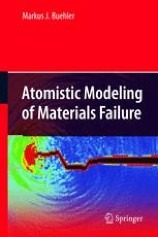
Atomistic modeling of materials failure
Atomistic Modeling of Materials Failure is an introduction to molecular and atomistic modeling techniques applied to solid deformation and fracture. Focusing on a variety of brittle, ductile and geometrically confined materials, this detailed overview includes computational methods at the atomic scale, and describes how these techniques can be used to model the dynamics of cracks, dislocations and other deformation mechanisms.
Atomistic approaches in modern biology : From quantum chemistry to molecular simulations
This volume of Topics in Current Chemistry presents an overview of atomistic theoreticalmethodsapplied tomolecular biologicalsystems. Itthus repesents abottom-upview of chemistryonbiologyfroma theoreticalperspective. The chapters arearrangedsuchthat important issuesareconsidered startingfrom a quantum mechanical perspective and proceeding to a molecular mechanics and molecular dynamics descriptiono fthemotionoftheelementaryparticles involved.which are responsible for the properties and function of biomolecules. Depending on the length and time scales relevant for a given phenomenon to be investigated, tailored theoretical methods are required to account for these. If one is interested in large scale motions of molecules, a molecul- mechnanics-based description willbeappropriate.
Atomic structure theory : Lectures on atomic physics
This is a textbook for students with a background in quantum mechanics. The text is designed to give hands-on experience with atomic structure calculations. Material covered includes angular momentum methods, the central field Schrödinger and Dirac equations, Hartree-Fock and Dirac-Hartree-Fock equations, multiplet structure, hyperfine structure, the isotope shift, dipole and multipole transitions, basic many-body perturbation theory, configuration interaction, and correlation corrections to matrix elements.
