



الصفحة 87
الصفحة 87

Clinical Nutrition in Practice
Opens with introductory chapters on the basis of healthy nutrition, malnutrition and nutritional assessment. These are followed by chapters addressing the nutritional needs of patients with obesity, diabetes, cardiovascular disease, rheumatoid and neurologic disorders, as well as diseases of various organ systems, such as the GI tract, renal and pulmonary systems. Special attention is given to describing nutrition in cancer patients and those with HIV/AIDS and the book concludes with a discussion of enteral and parenteral nutrition.
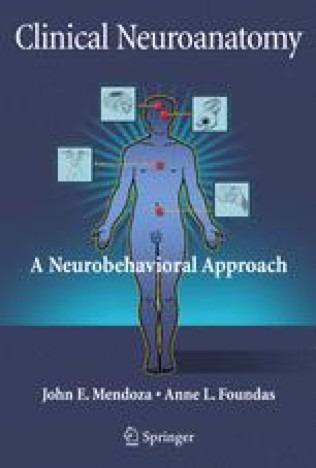
Clinical Neuroanatomy : A Neurobehavioral Approach
This book begins with a traditional review of the basic internal and external morphology, major nerve and fiber tracts, behavioral correlates, and clinical syndromes associated with spinal cord, brain stem, and cerebellum designed to reacquaint students and practicing clinicians with the functional anatomy of the subtentorial central nervous system. However, as the text was specifically geared to meet the needs of those practitioners whose primary interest is in what might be termed "higher order cognitive-behavioral function," the main focus of the text is on the brain itself. Borrowing heavily from a Lurian tradition, the central chapters reflect an attempt to offer more detailed, integrated, and, at times, theoretical models of cortical systems and their internal organization. Additional chapters highlight vascular anatomy and associated pathology, as well as neurochemical systems and their potential clinical relevance.
Clinical Chemistry
Clinical Chemistry considers what happens to the body’s chemistry when affected by disease. It provides introductory coverage of the scientific basis for biochemistry tests routinely used in medicine - including tests for the assessment of organ function, diagnosis and monitoring disease activity and therapy efficacy. Each topic area begins with a concise description of the underlying physiological and biochemical principles and then applies them to patient investigation and management. The regular use of case histories helps further emphasise clinical relevance and chapter key points, as well as provide a useful starting point for examination revision.
Clinical Cardiac Electrophysiology in the Young
This volume focuses on the practical aspects of clinical electrophysiology of cardiac arrhythmias in the young as practiced by current and former faculty and fellows in the Department of Pediatric Cardiology at the University of Michigan.

Clinical applications of botulinum toxin
Botulinum toxin (BoNT) is a neurotoxin produced by the Gram-positive, rod-shaped, sporeforming anaerobic bacterium Clostridium botulinum. Although there are seven major serotypes of Botulinum Neurotoxin (BoNT/A-G), only type A and B are used clinically. For the purpose of this research paper, we will refer to this agent as BoNT. This research paper primarily serves to provide a historical review of the toxin, assess its mechanism of action, and highlight the most common clinical applications of BoNT therapy across multiple medical specialties in an organized, specialty-based manner, including their complications and recommended BoNT dosages.

Climate and Land Degradation
In many parts of the world, climatic variations are recognized as one of the major factors contributing to land degradation impacting on agricultural systems performance and management. To accurately assess sustainable land management practices, the climate resources and the risk of climate-related or induced natural disasters in a region must be known. Only when climate resources are paired with management or development practices can the land degradation potential be assessed and appropriate mitigation technologies be developed. This book is based on an International Workshop held in Arusha, Tanzania and should be of interest to all organizations and agencies interested in sustainable land management to arrest land degradation.

Clear Blogging : How People Blogging Are Changing the World and How You Can Join Them
Clear Blogging sets out to answer in non-technical terms what blogging has to offer, and why and how you should blog. Clear Blogging will show you why blogging has shaken up mainstream media, and how a blogger can end up on CNN.
Claytons basic pharmacology for nurses
Helps you understand the principles of pharmacology and apply them to nursing practice. Known for its practical application of the nursing process to drugs and disorders, this book explains how to make informed decisions about drug therapy, educate patients, and administer medications. This edition adds new Next Generation NCLEX® (NGN)-style case studies and questions to prepare you for the critical thinking questions on the NGN exam. Concise and easy to use, this text teaches the basics of medication administration and drug actions.

Classification and Clustering for Knowledge Discovery
This book covers recent advances in unsupervised and supervised data analysis methods in Computational Intelligence for knowledge discovery. In its first part the book provides a collection of recent research on distributed clustering, self organizing maps and their recent extensions. If labeled data or data with known associations are available, we may be able to use supervised data analysis methods, such as classifying neural networks, fuzzy rule-based classifiers, and decision trees. Therefore this book presents a collection of important methods of supervised data analysis. "Classification and Clustering for Knowledge Discovery" also includes variety of applications of knowledge discovery in health, safety, commerce, mechatronics, sensor networks, and telecommunications.

Classification - the ubiquitous challenge ; Proceedings of the 28th annual conference of the Gesellschaft für Klassifikation e.V., University of Dortmund, March 9-11, 2004
This volume contains revised versions of selected papers presented duringthe 28th Annual Conference of the Gesellschaft f ̈ur Klassifikation (GfKl), theGerman Classification Society. contributed papers by authors from 18countries were presented at the conference in 52 parallel sessions representingthe whole field addressed by the title of the conference “Classification: TheUbiquitous Challenge”. Among these 52 sessions the VOC organized sessionson Mixture Modelling, Optimal Scaling, Multiway Methods, and Psychomet-rics with 18 papers. Overall, presentation of the papers in this volume is arranged in the fol-lowing parts:I. (Semi-)Plenary PresentationsII. Classification and Data AnalysisIII. Applications, andIV. Contest: Social Milieus in Dortmund
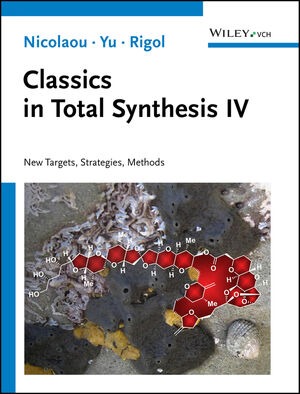
Classics in total synthesis IV : new targets, strategies, and methods
A compilation of highly important synthetic methods which lead to complex molecules with valuable properties. From the complex architectures of natural products to the streamlined synthesis of functional molecules, each chapter in Classics in Total Synthesis IV unfolds a unique story. The interplay of mechanisms, reactivity, selectivity, and stereochemical aspects is thoroughly examined, echoing the pedagogical format that has become synonymous with this series. Well-designed graphics are included throughout, and all important parts of the reaction sequences are highlighted.

Classical Nucleation Theory in Multicomponent Systems
Nucleation is the initial step of every first-order phase transition, and most phase transitions encountered both in everyday life and industrial processes are of the first-order. Using an elegant classical theory based on thermodynamics and kinetics, this book provides a fully detailed picture of multi-component nucleation. As many of the issues concerning multi-component nucleation theory have been solved during the last 10-15 years, it also thoroughly integrates both fundamental theory with recent advances presented in the literature. It covered are: the basic relevant thermodynamics and statistical physics; modelling a molecular cluster as a spherical liquid droplet; predicting the size and composition of the nucleating critical clusters; kinetic models for cluster growth and decay; calculating nucleation rates; and a full derivation and application of nucleation theorems that can be used to extract microscopic cluster properties from nucleation rate measurements.

Class 2 Transferases VIII : EC 2.6.1.58 - 2.7.1.37
Springer Handbook of Enzymes provides data on enzymes sufficiently well characterized. It offers concise and complete descriptions of some 5,000 enzymes and their application areas. Data sheets are arranged in their EC-Number sequence and the volumes themselves are arranged according to enzyme classes. This new, second edition reflects considerable progress in enzymology: many enzymes are newly classified or reclassified. Each entry is correlated with references and one or more source organisms. New datafields are created: application and engineering (for the properties of enzymes where the sequence has been changed). The total amount of material contained in the Handbook has more than doubled so that the complete second edition consists of 39 volumes as well as a Synonym Index.

Class 2 Transferases VI : EC 2.5.1.31 - 2.6.1.57
Springer Handbook of Enzymes provides data on enzymes sufficiently well characterized. It offers concise and complete descriptions of some 5,000 enzymes and their application areas. Data sheets are arranged in their EC-Number sequence and the volumes themselves are arranged according to enzyme classes. This new, second edition reflects considerable progress in enzymology: many enzymes are newly classified or reclassified. Each entry is correlated with references and one or more source organisms. New datafields are created: application and engineering (for the properties of enzymes where the sequence has been changed). The total amount of material contained in the Handbook has more than doubled so that the complete second edition consists of 39 volumes as well as a Synonym Index.

Class 2 Transferases IX : EC 2.7.1.38 - 2.7.1.112
Springer Handbook of Enzymes provides data on enzymes sufficiently well characterized. It offers concise and complete descriptions of some 5,000 enzymes and their application areas. Data sheets are arranged in their EC-Number sequence and the volumes themselves are arranged according to enzyme classes. This new, second edition reflects considerable progress in enzymology: many enzymes are newly classified or reclassified. Each entry is correlated with references and one or more source organisms. New datafields are created: application and engineering (for the properties of enzymes where the sequence has been changed). The total amount of material contained in the Handbook has more than doubled so that the complete second edition consists of 39 volumes as well as a Synonym Index.

Class 2 Transferases I : EC 2.1.1
This new, second edition reflects considerable progress in enzymology: many enzymes are newly classified or reclassified. Each entry is correlated with references and one or more source organisms. New datafields are created: application and engineering (for the properties of enzymes where the sequence has been changed). The total amount of material contained in the Handbook has more than doubled so that the complete second edition consists of 39 volumes as well as a Synonym Index. In addition, starting in 2009, all newly classified enzymes are treated in Supplement Volumes. Springer Handbook of Enzymes is an ideal source of information for researchers in biochemistry, biotechnology, organic and analytical chemistry, and food sciences, as well as for medicinal applications

Class 2 · Transferases IV EC 2.4.1.1. -2.4.1.89 ; Vol.31
Springer Handbook of Enzymes provides data on enzymes sufficiently well characterized. It offers concise and complete descriptions of some 5,000 enzymes and their application areas. Data sheets are arranged in their EC-Number sequence and the volumes themselves are arranged according to enzyme classes. This new, second edition reflects considerable progress in enzymology: many enzymes are newly classified or reclassified. Each entry is correlated with references and one or more source organisms. New datafields are created: application and engineering (for the properties of enzymes where the sequence has been changed). The total amount of material contained in the Handbook has more than doubled so that the complete second edition consists of 39 volumes as well as a Synonym Index. In addition, starting in 2009, all newly classified enzymes are treated in Supplement Volumes.

Class 2 Transferases VI : 2.4.2.1 - 2.5.1.30
Springer Handbook of Enzymes provides data on enzymes sufficiently well characterized. It offers concise and complete descriptions of some 5,000 enzymes and their application areas. Data sheets are arranged in their EC-Number sequence and the volumes themselves are arranged according to enzyme classes. This new, second edition reflects considerable progress in enzymology: many enzymes are newly classified or reclassified. Each entry is correlated with references and one or more source organisms. New datafields are created: application and engineering (for the properties of enzymes where the sequence has been changed). The total amount of material contained in the Handbook has more than doubled so that the complete second edition consists of 39 volumes as well as a Synonym Index.

Class 1 Oxidoreductases XI : EC 1.14.11 - 1.14.14
This new, second edition reflects considerable progress in enzymology: many enzymes are newly classified or reclassified. Each entry is correlated with references and one or more source organisms. New datafields are created: application and engineering (for the properties of enzymes where the sequence has been changed). The total amount of material contained in the Handbook has more than doubled so that the complete second edition consists of 39 volumes as well as a Synonym Index. In addition, starting in 2009, all newly classified enzymes are treated in Supplement Volumes. Springer Handbook of Enzymes is an ideal source of information for researchers in biochemistry, biotechnology, organic and analytical chemistry, and food sciences, as well as for medicinal applications.

Class 1 Oxidoreductases X : EC 1.9 - 1.13
This new, second edition reflects considerable progress in enzymology: many enzymes are newly classified or reclassified. Each entry is correlated with references and one or more source organisms. New datafields are created: application and engineering (for the properties of enzymes where the sequence has been changed). The total amount of material contained in the Handbook has more than doubled so that the complete second edition consists of 39 volumes as well as a Synonym Index. In addition, starting in 2009, all newly classified enzymes are treated in Supplement Volumes. Springer Handbook of Enzymes is an ideal source of information for researchers in biochemistry, biotechnology, organic and analytical chemistry, and food sciences, as well as for medicinal applications.
