



الصفحة 84
الصفحة 84
A Prodigy of Universal Genius : Robert Leslie Ellis, 1817-1859
Written by a diverse team of experts, the chapters in the book’s first part contain in-depth examinations of, among other things, Ellis’s family, education, Bacon scholarship and mathematical contributions. The second part consists of annotated transcriptions of a selection of Ellis’s diaries and correspondence. Taken together, A Prodigy of Universal Genius: Robert Leslie Ellis, 1817–1859 is a rich resource for historians of science, historians of mathematics and Victorian scholars alike.
A Problem-based Approach for Management Education : Preparing Managers for Action
This book is designed to provide both novice and experienced users of PBL with resources for designing and implementing problem-based management education. The book provides the novice with useful theoretical and practical background on how to design a PBL curriculum, use PBL in a classroom, and develop PBL materials. At the same time, the book will challenge experienced users of PBL and case teaching to extend their applications through the use of learning technologies and more systematic approaches to assessment and curriculum design. Finally, the volume includes a set of sample PBL materials that provide readers with in-dept examples of what a PBL unit looks like and how it may be employed in the classroom.
A Practical Theory of Reactive Systems : Incremental Modeling of Dynamic Behaviors
Presents a ""practical theory"" of reactive systems, with formal foundations in Temporal Logic of Actions. This book emphasises theoretical understanding of reactive behaviors and using ""horizontal"" modularity to manage their complexity. It illustrates the incremental specification by a number of examples of varying size and complexity

A Practical Guide to TPM 2.0 : Using the New Trusted Platform Module in the New Age of Security
A Practical Guide to TPM 2.0: Using the Trusted Platform Module in the New Age of Security is a straight-forward primer for developers. It shows security and TPM concepts, demonstrating their use in real applications that the reader can try out. Simply put, this book is designed to empower and excite the programming community to go out and do cool things with the TPM. The approach is to ramp the reader up quickly and keep their interest.A Practical Guide to TPM 2.0: Using the Trusted Platform Module in the New Age of Security explains security concepts, describes the TPM 2.0 architecture, and provides code and pseudo-code examples in parallel, from very simple concepts and code to highly complex concepts and pseudo-code.

A Practical Guide to Lightcurve Photometry and Analysis
A Practical Guide to Lightcurve Photometry and Analysis provides, for those with access to even a modest telescope and CCD camera, all the information needed to take part in the scientific study of asteroids and variable stars.A Practical Guide to Lightcurve Photometry and Analysis contains all the material needed for readers to understand the theory, and avoid the practical pitfalls of lightcurve photometry. Detailed examples are given for obtaining data, and of course for the exciting and rewarding task of analyzing the data to determine the physical properties of the object.
A Practical Guide for SystemVerilog Assertions
SystemVerilog language consists of three very specific areas of constructs - design, assertions and testbench. This guide shows how to use the language to solve real verification problems. It examines how to verify complex protocols and memories using SVA with seeral examples.

A Practical Clinical Guide to Resin Cements
Discusses and describes in detail the available resin cements, which are now a staple of dental practice. Factors that affect the clinical performance of resin cements are thoroughly examined and the different resin cements currently on the market are discussed in depth, with information on indications, limitations, handling and manipulation and storage.
A Posteriori Error Analysis Via Duality Theory : With Applications in Modeling and Numerical Approximations
This volume provides a posteriori error analysis for mathematical idealizations in modeling boundary value problems, especially those arising in mechanical applications, and for numerical approximations of numerous nonlinear variational problems. The author avoids giving the results in the most general, abstract form so that it is easier for the reader to understand more clearly the essential ideas involved. Many examples are included to show the usefulness of the derived error estimates.

A Pocket Guide to Epidemiology
A Pocket Guide to Epidemiology is a useful addition to the ready reference genre of epidemiological texts. … The text offers a comprehensive look at the salient fundamentals of epidemiology. … Organized logically and replete with classic examples, the text offers a firm foundation in epidemiological methodology. … this guide offers more examples and may be a better choice for the reader who desires to become better acquainted with epidemiology.
A Philosophical Examination of Social Justice and Child Poverty
Investigates child poverty from a philosophical perspective. It identifies the injustices of child poverty, relates them to the well-being of children, and discusses who has a moral responsibility to secure social justice for children.
A Life Course Perspective on Health Trajectories and Transitions
This book examines health trajectories and health transitions at different stages of the life course, including childhood, adulthood and later life. It provides findings that assess the role of biological and social transitions on health status over time. The essays examine a wide range of health issues, including the consequences of military service on body mass index, childhood obesity and cardiovascular health, socio-economic inequalities in preventive health care use, depression and anxiety during the child rearing period, health trajectories and transitions in people with cystic fibrosis, and oral health over the life course.
A History of Limb Amputation
This book traces humanity’s long experience of natural amputations due to congenital absence, disease, frostbite, toxins, domestic and wild animal trauma, and for non-medical reasons related to punitive, ritual, and legal actions, ultimately leading to the development of elective surgical amputation. While the evolution of surgical techniques forms a major chapter in the book, many ancillary problems are addressed including the control of hemorrhage and infection, the approach to pain relief, the development of suitable instruments and equipment, and the invention of prostheses, all suitably illuminated with case histories and relevant illustrations. In addition, alternative procedures designed to avoid amputation, increasingly important in the last two centuries, are debated, and factors associated with self-amputation in extremis, not rare according to press reports, are also examined. A separate chapter considers the philosophy and interpretations of society, patients, and surgeons faced with amputation, particularly before anesthesia.
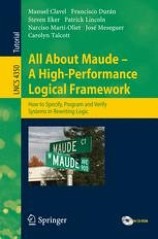
A High-Performance Logical Framework -- All About Maude : How to Specify, Program, and Verify Systems in Rewriting Logic
This book gives a comprehensive account of Maude, a language and system based on rewriting logic. Many examples are used throughout the book to illustrate the main ideas and features of Maude, and its many possible uses. Maude modules are rewrite theories. Computation with such modules is - cient deduction by rewriting. Because of its logical basis and its initial model semantics,aMaude module defines a precise mathematical model.This means that Maude and its formal tool environment can be used in three, mutually reinforcing ways: • as a declarative programming language; • as an executable formal specification language; and • as a formal verification system. Maude’s rewriting logic is simple, yet very expressive. This gives Maude good representational capabilities as a semantic framework to formally represent a wide range of systems, including models of concurrency, distributed al- rithms, network protocols, semantics of programming languages, and models of cell biology. Rewriting logic is also an expressive universal logic,making Maude a fiexible logical framework in which many difierent logics and - ference systems can be represented and mechanized. This makes Maude a useful metatool to build many other tools, including those in its own formal tool environment. Thanks to the logic’s simplicity and the use of advanced semi-compilation techniques, Maude has a high-performance implementation, making it competitive with other declarative programming languages.

A healthcare professionals training system
The Objective Structured Clinical Examination (OSCE) is a type of examination often used in health sciences. It is designed to test clinical skill performance and competence in a range of skills. It is a practical, real-world approach to learning and assessment. Comprises a circuit of short (5-10 minutes) stations, in which each candidate is examined on a one-to-one basis with one or two impartial examiner(s) and patients who are either real or simulated (actors or electronic patient simulators). Each station has a different examiner; in comparison, the traditional method of clinical examination is when a candidate is assigned to an examiner for the entire examination.

A Guide to Lead-free Solders : Physical Metallurgy and Reliability
While tin/lead solders have dominated the electronics industry for many years, environmental considerations and new legislation are forcing change. Backed by more than ten years of research in Pb-free solders, many electronics manufacturers are poised for conversion. A Guide to Lead-free Solders is intended as a tool to help industry as it moves into a new era in the production and use of solders. An overview of the principles of soldering technology is provided beginning with the theory underlying each concept. Focusing on the most up-to-date methods for testing and characterization, these theories are then reinforced by experimental examples and industrial applications.
A Guide to Graph Algorithms
Offers high-quality content in the research area of graph algorithms and explores the latest developments in graph algorithmics. The reader will gain a comprehensive understanding of how to use algorithms to explore graphs. It is a collection of texts that have proved to be trend setters and good examples of that. The book aims at providing the reader with a deep understanding of the structural properties of graphs that are useful for the design of efficient algorithms. These algorithms have applications in finite state machine modelling, social network theory, biology, and mathematics. The book contains many exercises, some up at present-day research-level. The exercises encourage the reader to discover new techniques by putting things in a clear perspective.
A Guide to Good Occlusal Practice
Considers occlusion within the different disciplines of clinical dentistry, taking into account the challenges specific to each, in order to develop guidelines of good occlusal practice (GGOP). The GGOP for each discipline has benefited from an authoritative contribution of a recognised specialist in that field. Readers will find full description of what constitutes good occlusal practice in, for example, simple and advanced restorative dentistry, removable prosthodontics, the restoration of the worn dentition and implantology. It is clearly explained why and how the GGOP differ in the various branches of dentistry, the key point being that it is the support for the occlusal surfaces that determines GGOP.
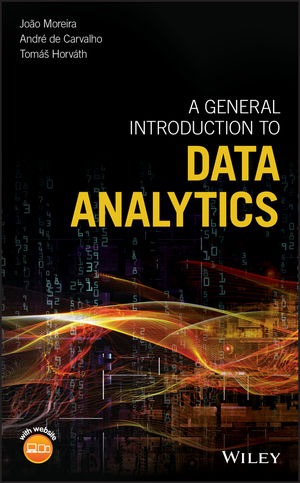
A General introduction to data analytics
A guide to the principles and methods of data analysis that does not require knowledge of statistics or programming. A guide to the reasoning behind data mining techniques. A unique illustrative example that extends throughout all the chapters. Exercises at the end of each chapter and larger projects at the end of each of the text’s two main parts
A First Course in Statistical Inference
Offers a modern and accessible introduction to Statistical Inference, the science of inferring key information from data. Aimed at beginning undergraduate students in mathematics, it presents the concepts underpinning frequentist statistical theory. Written in a conversational and informal style, this concise text concentrates on ideas and concepts, with key theorems stated and proved. Detailed worked examples are included and each chapter ends with a set of exercises, with full solutions given at the back of the book. Examples using R are provided throughout the book, with a brief guide to the software included. Topics covered in the book include: sampling distributions, properties of estimators, confidence intervals, hypothesis testing, ANOVA, and fitting a straight line to paired data.
A First Course in Harmonic Analysis
This book is a primer in harmonic analysis using an elementary approach. Its first aim is to provide an introduction to Fourier analysis, leading up to the Poisson Summation Formula. Secondly, it makes the reader aware of the fact that both, the Fourier series and the Fourier transform, are special cases of a more general theory arising in the context of locally compact abelian groups. The third goal of this book is to introduce the reader to the techniques used in harmonic analysis of noncommutative groups. There are two new chapters in this new edition. One on distributions will complete the set of real variable methods introduced in the first part. The other on the Heisenberg Group provides an example of a group that is neither compact nor abelian, yet is simple enough to easily deduce the Plancherel Theorem.
