



الصفحة 8
الصفحة 8

Hybrid Learning and Education ; 1st International Conference, ICHL 2008 Hong Kong, China, August 13-15, 2008 Proceedings
This book constitutes the refereed proceedings of the First International Conference on Hybrid Learning, ICHL 2008, held in Hong Kong, China, in August 2008.The 38 revised full papers presented together with 3 keynote lectures were carefully reviewed and selected from 142 submissions. The papers are organized in topical sections on hybrid education, model and pedagogies for hybrid learning, trends, pervasive learning, mobile and ubiquitous learning, hybrid learning experiences, hybrid learning systems, technologies, as well as contextual attitude and cultural effects.

Human Exploitation and Biodiversity Conservation
The sustainable use of biodiversity is one of the three key objectives of the 1992 "Convention on Biological Diversity". To achieve this, sound conservation practice has to be recognized as beneficial and implemented by all who access, or use it – from subsistence farmers to skiers and pharmaceutical bioprospectors. At the same time, indigenous peoples necessarily utilize enormous numbers of plants, fungi, and fish, particularly for foods and medicines. This book gathers together a wide range of contributions addressing diverse aspects of front-line human involvement in biodiversity exploitation and conservation. Its scope is broad, the organisms explored ranging from birds, invertebrates and mammals – both terrestrial and aquatic – to crops and medicinal plants. Meanwhile, the issues addressed include land use changes, the importance of gardens, hedges and green lanes, housing developments, hunting, invasive species, local community involvement, sacred groves, socioeconomic factors and trade.

Human Cytomegalovirus
The golden age of cytomegalovirus research was ushered in during the late 1970s and early 1980s by a set of powerful new technologies that included restriction enzymes, DNA cloning, DNA sequencing, and open reading frame prediction. The genetic manipulation and propagation of novel CMV strains was accelerated with the app- cation of bacterial artificial chromosome technology. Today, we still struggle to understand the full spectrum of disease associated with human CMV. To the molecular biologist, CMV is a master of regulation in the eukaryotic cell where it either replicates or remains latent. To the immunologist, CMV is a master of immune evasion with tools to escape both the innate and acquired immune responses. The use of animal models with non-human CMVs has become significantly more sophisticated and tied to a more certain understanding of the interrelationships of non-human and human CMV genes.

Human antibody therapeutics for viral disease
The articles in this volume are definitive and comprehensive reviews written by experts who have sought to define the principles of viral neutralization by human antibodies. They explore and anticipate the obstacles and opportunities that will be encountered as the power of human antibodies is harnessed to address the vast, un-met need for effective anti-viral therapeutics.

How to Improve the Results of Peripheral Nerve Surgery
All over the world research is going on to improve the outcome of the treatment of peripheral nerve lesions. Questions over questions arise. Is the autologeous nerve grafting still the golden standard in bridging defects? Have alternative techniques to overcome defects reached a level to replace autografting? To which length are they effective? What is the role of allografting? Are there still indications for vascularized nerve grafts? What can be expected from end to side coaptation? Does it exist at all? Under what conditions useful recoveries can be achieved? Are there new developments in physical medicine and physiotherapy? Can the quality of recovery be influenced by surgery on muscles to provide a better equilibrium of forces? To what extent cerebral plasticity may be exploited to improve functional results? The contributions in this book give answers to all of these questions.

How does MRI work? : An introduction to the physics and function of magnetic resonance imaging
A succinct introduction to the physics and function of magnetic resonance imaging with an emphasis on practical information. It progresses to more advanced techniques such as parallel imaging and cardiovascular MR imaging.

Horizons of Combinatorics
Hungarian mathematics has always been known for discrete mathematics, including combinatorial number theory, set theory and recently random structures, combinatorial geometry as well. The recent volume contains high level surveys on these topics with authors mostly being invited speakers for the conference "Horizons of Combinatorics" held in Balatonalmadi, Hungary in 2006. The collection gives a very good overview of recent trends and results in a large part of combinatorics and related topics, and offers an interesting reading for experienced specialists as well as to young researchers and students.

Histopathology Reporting : Guidelines for Surgical Cancer
This second revised and updated edition provides an easily comprehensible and practicable framework for standardized histopathology reports in surgical cancer. It details the gross description, histological classification, tumor differentiation, extent of local tumor spread, involvement of lymphovascular channels, lymph nodes and excision margins of the common carcinomas and also summarizes non-carcinomatous malignancies.
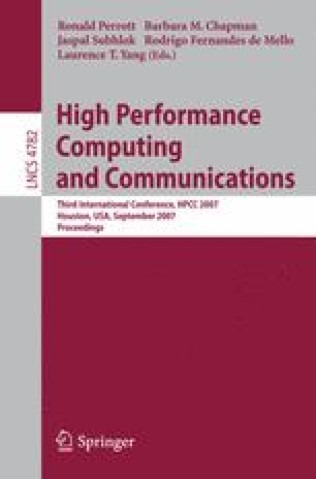
High performance computing and communications ; 3rd International Conference, HPCC 2007, Houston, USA, September 26-28, 2007, Proceedings
The 75 revised full papers address all current issues of parallel and distributed systems and high performance computing and communication, including networking protocols, embedded systems, wireless, mobile and pervasive computing, Web services and internet computing, and programming interfaces for parallel systems.

High performance computing - HiPC 2007 ; 14th International Conference, Goa, India, December 18-21, 2007, Proceedings
This book constitutes the refereed proceedings of the 14th International Conference on High-Performance Computing, HiPC 2007, held in Goa, India, in December 2007. The 53 revised full papers presented together with the abstracts of five keynote talks were carefully reviewed and selected from 253 submissions.

High accuracy detection of mobile malware using machine learning
As increasingly sophisticated and evasive malware attacks continue to emerge, more effective detection solutions to tackle the problem are being sought through the application of advanced machine learning techniques. This reprint presents several advances in the field including: a new method of generating adversarial samples through byte sequence feature extraction using deep learning; a state-of-the-art comparative evaluation of deep learning approaches for mobile botnet detection; a novel visualization-based approach that utilizes images for Android botnet detection; a study on the detection of drive-by exploits in images using deep learning; etc. Furthermore, this reprint presents state-of-the-art reviews about machine learning-based detection techniques that will increase researchers' knowledge in the field and enable them to identify future research and development directions.

Hexagonal image processing : A practical approach
Hexagonal Image Processing provides an introduction to the processing of hexagonally sampled images, includes a survey of the work done in the field, and presents a novel framework for hexagonal image processing (HIP) based on hierarchical aggregates. Digital image processing is currently dominated by the use of square sampling lattices, however, hexagonal sampling lattices can also be used to define digital images. The strengths offered by hexagonal lattices over square lattices are considerable: • higher packing density, • uniform connectivity of points (pixels) in the lattice, • better angular resolution by virtue of having more nearest neighbours, and • superlative representation of curves. The utility of the HIP framework is demonstrated by implementing several basic image processing techniques (for the spatial and frequency domain) and some applications. The HIP framework serves as a tool for comparing processing of images defined on a square vs hexagonal grid, to determine their relative merits and demerits. The theory and algorithms covered are supplemented by attention to practical details such as accommodating hardware that support only images sampled on a square lattice. Including a Foreword written by Professor Narendra Ahuja, an eminent researcher in the field of Image Processing and Computer Vision, the book’s fresh approach to the subject offers insight and workable know-how to both researchers and postgraduates.

Hermeneutics and Hindu Thought : Toward a Fusion of Horizons
The emergence of Hinduism as a field of study in the Western academia coincides with the development of modern hermeneutics. Despite this coemergence, and the rich possibilities inherent in a dialectical encounter between the theories of modern and pre-modern hermeneutics and those of Hindu hermeneutical traditions, this potential has not been tapped within the boundaries of religious studies. This volume sets out to initiate such an interface.Some essays in this volume, such as those by Shrinivas Tilak, Sharada Sugirtharajah, and Purushottama Bilimoria examine the impact of Western hermeneutics on the Indian religious landscape.

Herbals as nutraceuticals : Their role in healthcare
Herbal nutraceuticals demonstrate a variety of therapeutic benefits and have been found to prevent, treat, and even cure a range of diseases. This new book provides insight into nutraceuticals and their function in human health, highlighting their antimicrobial and immune-inflammatory properties. It describes the nutraceutical properties of various medicinal herbs and details the role of nutraceuticals in treating diseases such as Alzheimer's, Parkinson's, obesity, diabetes, cancer, cardiovascular diseases, skincare issues, and more.

Herbal immunity boosters against COVID-19
Provides an introduction to COVID-19 and herbal medications that boost the human immune system against SARS-CoV-2. The topics are covered in 7 chapters starting with an introduction to the disease, followed by notes on nutraceuticals and common herbal medicines that have therapeutic potential by enhancing the patient’s immune response. Special topics such as COVID-19 risk factors and Indian traditional medicines are also included to supplement the contents. The editors have taken advantage of the vast body of knowledge accumulated since the start of the COVID-19 pandemic in 2019.

Hepatitis C virus-host interactions and therapeutics : Current insights and future perspectives
The burden of hepatitis C virus (HCV) infection on the public health care system continues to remain significant despite the remarkable progress made in HCV therapeutics in the recent past. There are now almost a dozen oral interferon-free direct-acting antivirals available for the treatment of hepatitis C virus infection. Despite advances in the treatment of HCV, therapeutic gaps remain that are yet to be fully explored. Researchers and scientists still strive to understand virus-host interactions to map the disease’s progression along with extrahepatic manifestations and virus invasion strategies impacting the host’s immune system. This book briefly discusses the biology of HCV infection, virus-host interactions, molecular epidemiology of the infection, and the full spectrum of immune responses to hepatitis C. It also provides in-depth information about HCV, clinical diagnostics, and therapeutic knowledge to all stakeholders involved in HCV screening, diagnosis, treatment, and management.

Heat transfer : Evolution, design and performance
Covers thermodynamics principles and establishes performance and evolution as fundamental concepts in thermal sciences Demonstrates how principles of physics predict a future with economies of scale, multi-scale design, vascularization, and hierarchical distribution of many small features Explores new work on conduction architecture, convection with nanofluids, boiling and condensation on designed surfaces, and resonance of natural circulation in enclosures

Heart block
Cardiac muscle (also called heart muscle or myocardium) is one of three types of vertebrate muscle tissue, with the other two being skeletal muscle and smooth muscle. It is involuntary, striated muscle that constitutes the main tissue of the wall of the heart. The cardiac muscle (myocardium) forms a thick middle layer between the outer layer of the heart wall (the pericardium) and the inner layer (the endocardium), with blood supplied via the coronary circulation. It is composed of individual cardiac muscle cells joined together by intercalated discs, and encased by collagen fibers and other substances that form the extracellular matrix.

Healthcare solutions using machine learning and informatics
Covers novel and innovative solutions for the healthcare that apply machine learning and biomedical informatics technology. The healthcare sector is one of the most critical in society. This book presents a series of artificial intelligence, machine learning, intelligent IoT-based solutions for medical image analysis, medical big data processing, disease predictions. Machine learning and artificial intelligence use cases in healthcare presented in the book give researchers, practitioners, and students a wide range of practical examples of cross-domain convergence. The wide variety of topics covered include: Artificial Intelligence in healthcare Machine learning solutions for such disease as diabetes, arthritis, cardiovascular disease, and COVID-19 Big data analytics solutions for healthcare data processing Reliable biomedical applications using AI models Intelligent IoT in healthcare. The book explains fundamental concepts as well as the advanced use cases illustrating how to apply emerging technologies such as machine learning, AI models, data informatics into practice to tackle challenges in the field of healthcare with real-world scenarios. Chapters contributed by noted academicians and professionals examine various solutions, frameworks, applications, case studies, and best practices in the healthcare domain

Head and Neck Cancer Imaging ; 1st ed.
This book provides a comprehensive review of state-of-the-art imaging in head and neck cancer. Precise determination of tumor extent is of the utmost importance in these neoplasms, as it has important consequences for staging of disease, prediction of outcome and choice of treatment. Only the radiologist can fully appreciate submucosal, perineural, and perivascular tumor spread and detect metastatic disease at an early stage. Imaging is also of considerable benefit for patient surveillance after treatment.
