


تحسين النتائح
ترتيب حسب
من
الى


Magnetic heterostructures constitute an important field in magnetism and nanotechnology, which has developed over the past fifteen years due to important advances in epitaxial- growth techniques and lithographic processes. Magnetic heterostructures combine different physical properties which do not exist in nature. Examples are semiconductors/ferromagnets, superconductors/ferromagnets, and ferromagnets/antiferromagnets. These combinations display rich and novel physical properties different from those that exit in any single one of them. Interlayer exchange coupling, exchange bias, proximity effects, giant magneto-resistance, tunneling magneto-resistance, spininjection and spintransport are examples of new physical phenomena that rely on the combination of different materials layers

Chapter 1 presents the physical principles of the growth mechanism of fiber and fiber network with LMGs, as treated on the basis of the heterogeneous nucleation model. in Chaps. 2 and 3, respectively. These chapters are intended to outline useful synthetic guidelines for the generation of an ever-increasing variety of molecular architectures within these two families of gelators. Recent developments in the chemistry of nucleobase-containing LMGs are described in Chap. 4. Hydrogen-bonding within these molecular systems involves complementary base pair formation, a process relevant to DNA double-helix formation The self-assembly of chiral organo- or hydrogelators is the subject of Chap. 5. result from the orthogonal self-assembly of liquid crystals and LMGs are presented in Chap. 6. The volume concludes with Chap. 7, a review of the emerging field of dendritic gels.
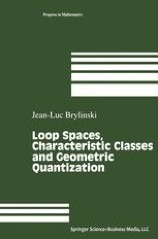
This book deals with the differential geometry of manifolds, loop spaces, line bundles and groupoids, and the relations of this geometry to mathematical physics. Various developments in mathematical physics (e.g., in knot theory, gauge theory, and topological quantum field theory) have led mathematicians and physicists to search for new geometric structures on manifolds and to seek a synthesis of ideas from geometry, topology and category theory. In this spirit, this book develops the differential geometry associated to the topology and obstruction theory of certain fiber bundles (more precisely, associated to grebes). The theory is a 3-dimensional analog of the familiar Kostant--Weil theory of line bundles. In particular the curvature now becomes a 3-form.

Signifies the arrival of a new renaissance in logic, a new revival not only of logic, but of the vision of logic as a unifying tool for science as a whole, including mathematics, physics, cosmology, computer science and AI. The book and the vision behind it give logic, conceived as a scientific study of rationality, new unifying power, new perspectives, and new horizons.Universal Logic is not a new logic, but a general theory of logics, considered as mathematical structures. The name was introduced about ten years ago, but the subject is as old as the beginning of modern logic: Alfred Tarski and other Polish logicians such as Adolf Lindenbaum developed a general theory of logics at the end of the 1920s based on consequence operations and logical matrices. The subject was revived after the flowering of thousands of new logics during the last thirty years: there was a need for a systematic theory of logics to put some order in this chaotic multiplicity.

This book presents critical reviews of the present position and future trends in modern chemical research concerned with chemical structure and bonding. It contains short and concise reports, each written by the world's renowned experts.
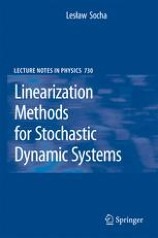
The aim of this book is to give a systematic introduction to and overview of the relatively simple and popular linearization methods available. The scope is limited to models with continous external and parametric excitations, yet these cover the majority of known approaches. The book contains an application chapter with emphasis on vibration analysis of stochastic mechanical structures as well as a chapter devoted to the assessment of the accuracy of the theoretical methods presented, both with respect to numerical and to experimental studies.

Reviews recent developments concerning mainly semiconductor nanostructures and inelastic x-ray scattering, including both coherent time-domain and spontaneous scattering studies.
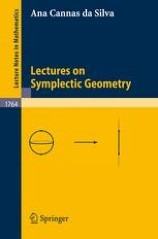
Provides a fast introduction to symplectic geometry for graduate students with some knowledge of differential geometry, de Rham theory and classical Lie groups. This text addresses symplectomorphisms, local forms, contact manifolds, compatible almost complex structures, Kaehler manifolds, hamiltonian mechanics, moment maps, symplectic reduction and symplectic toric manifolds. It contains guided problems, called homework, designed to complement the exposition or extend the reader's understanding.
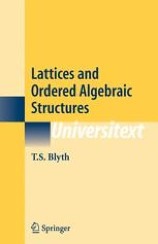
Lattices and Ordered Algebraic Structures provides a lucid and concise introduction to the basic results concerning the notion of an order. Although as a whole it is mainly intended for beginning postgraduates, the prerequisities are minimal and selected parts can profitably be used to broaden the horizon of the advanced undergraduate. The treatment is modern, with a slant towards recent developments in the theory of residuated lattices and ordered regular semigroups.

Accurate positioning of self-organized nanostructures on a substrate surface can be regarded as the Achilles’ heel of nanotechnology. This perception also applies to self-assembled semiconductor quantum dots. This book describes the full range of possible strategies to laterally align self-assembled quantum dots on a substrate surface, starting from pure self-ordering mechanisms and culminating with forced alignment by lithographic positioning. The text addresses both short- and long-range ordering phenomena and paves the way for the future high integration of single quantum dot devices on a single chip. Contributions by the best-known experts in this field ensure that all relevant quantum-dot heterostructures are elucidated from diverse relevant perspectives.
From the Preface: K-theory was introduced by A. Grothendieck in his formulation of the Riemann- Roch theorem. For each projective algebraic variety, Grothendieck constructed a group from the category of coherent algebraic sheaves, and showed that it had many nice properties. Atiyah and Hirzebruch considered a topological analog defined for any compact space X, a group K{X) constructed from the category of vector bundles on X. It is this ''topological K-theory" that this book will study. Topological K-theory has become an important tool in topology. Using K- theory, Adams and Atiyah were able to give a simple proof that the only spheres which can be provided with H-space structures are S1, S3 and S7. Moreover, it is possible to derive a substantial part of stable homotopy theory from K-theory.
Computer and communication networks are among society's most important infrastructures. The internet, in particular, is a giant global network of networks without central control or administration. It is a paradigm of a complex system, where complexity may arise from different sources: topological structure, network evolution, connection and node diversity, or dynamical evolution. The present volume is the first book entirely devoted to the new and emerging field of nonlinear dynamics of TCP/IP networks. It addresses both scientists and engineers working in the general field of communication networks.

Compatible spatial discretizations are those that inherit or mimic fundamental properties of the PDE such as topology, conservation, symmetries, and positivity structures and maximum principles. It offer a snapshot of the current trends and developments in compatible spatial discretizations. The reader will find valuable insights on spatial compatibility from several different perspectives and important examples of applications compatible discretizations in computational electromagnetics, geosciences, linear elasticity, eigenvalue approximations and MHD. The contributions collected in this volume will help to elucidate relations between different methods and concepts and to generally advance our understanding of compatible spatial discretizations for PDEs.

This book critically examines equality, equity and democracy in education, globally as well as from various perspectives. Globally, there are increasing arguments both for the democratization of education and for the use of education to promote a democratic society. It is argued that democratic schools would better prepare for active citizenship and for a strong civil society which are seen to be the foundation of a democratic state. The book further argues that while there are inspiring examples of schools that engage in peace education or emancipatory pedagogy that work across various ethnic or religious divides, on balance, the forms, structures, ideologies and purposes of formal education interact to make national and international conflict more likely.
Noncompact symmetric and locally symmetric spaces naturally appear in many mathematical theories, including analysis (representation theory, nonabelian harmonic analysis), number theory (automorphic forms), algebraic geometry (modulae) and algebraic topology (cohomology of discrete groups). In most applications it is necessary to form an appropriate compactification of the space. The literature dealing with such compactifications is vast. The main purpose of this book is to introduce uniform constructions of most of the known compactifications with emphasis on their geometric and topological structures. The book is divided into three parts. Part I studies compactifications of Riemannian symmetric spaces and their arithmetic quotients. Part II is a study of compact smooth manifolds. Part III studies the compactification of locally symmetric spaces.

This book highlights the complexities around making adaptation decisions and building resilience in the face of climate risk. It is based on experiences in sub-Saharan Africa through the Future Climate For Africa (FCFA) applied research programme. It begins by dealing with underlying principles and structures designed to facilitate effective engagement about climate risk, including the robustness of information and the construction of knowledge through co-production
The book presents an updated state-of-the-art overview of the general aspects and practical applications of the theories of thin structures, through the interaction of several topics, ranging from non-linear thin-films, shells, junctions, beams of different materials and in different contexts (elasticity, plasticity, etc.).

It is well known that corrosion products, i.e. rust, on iron and steel surfaces cannot be assigned a typical crystallographic structure with long-range order. In fact, the structure of rust is considered to be very complicated, and some forms of rust are assigned to the amorphous state for this reason. Accurate information about the atomic-scale structure of rust is important to shed light on corrosion mechanisms of metallic materials. And, since life of steel structures is often dominated by environmental degradation or corrosion of the surface, the structure of the rust formed on iron and steel surfaces during prolonged exposure to air is of great interest. This book describes the fundamental aspects of materials characterization for the ferric oxyhydroxides formed on steel surfaces.

There is much ambivalence in women’s experience of the academy as teachers and students. Although today many more women follow academic careers than in the past, they do not find the welcome that they had hoped for and expected. Additionally, women students find that whilst they can now enter through the doors of universities, academic space remains embedded in structures and cultures of gender and social class. This book is a clear and accessible exploration of lifelong learning and educational opportunities for women in higher education. It has been developed from work undertaken by members of the Women in Higher Education Network with chapters organised in three thematic sections: Ambivalent Positions in the Academy / Process and Pedagogy at Work / Career – Identity – Home

Chalcogenocarboxylic acid derivatives are a large class of compounds including more than one chalcogenocarboxyl group in which one or two oxygen atoms of the carboxyl group are replaced with sulfur, selenium or tellurium atoms. The chemistry of metal chalcogenocarboxylates has not been explored extensively as that of carboxylates and dithiocarbamates. This volume presents a comprehensive overview of the syntheses and their limitations, structures and reactions of chalcogenocarboxylic acid derivatives, by emphasizing the developments in organic and inorganic chalcogen chemistry over the last 5 to 20 years.

سوريا - اتستراد درعا - غباغب
+963-15 2050 - 15 860 380 /1/2/3 - 11 662 3900