



الصفحة 8
الصفحة 8

Clinical trial registries : A practical guide for sponsors and researchers of medicinal products
A necessary addition to the library of all researchers who plan to publish their results in top-tier, peer-reviewed journals. ICMJE editors and other journal editors require registration of clinical trial information on publicly available Web sites before enrollment of study subjects and some countries and regions also require this information, as well as timely publication of study results. Not only does this book discuss the genesis of these requirements, it also provides practical information for researchers and sponsors on how to establish a workflow for a clinical registry project, how to file to a registry, and how to post results. More than 25 current Web addresses for registries are provided as well as a comprehensive annotated bibliography of papers on the topic of clinical trial registries. This book is a valuable source of information for all sponsors of medicinal products.

Mastering VMware Horizon 8 : An Advanced Guide to Delivering Virtual Desktops and Virtual Apps
Learn all about designing, installing, configuring, and managing VMware Horizon, with a core focus on how to deliver virtual desktops using Horizon. This book allows you to follow the complete process for deploying VMware Horizon and covers the design, deployment, and management of solutions. You will: See the core components of VMware Horizon and their functionality / Design and install a Horizon environment / Deliver the best end-user experience / Manage the deployed solution / Use VMware reference architectures to create real-life scenario examples / Review the minimum requirements for designing a solution

Martens and Fishers (Martes) in human-altered environments : An international perspective
Examines the conditions where humans and martens are compatible and incompatible, and promotes land use practices that allow Martes to be representatively distributed and viable. All Martes have been documented to use forested habitats and 6 species (excluding the stone marten) are generally considered to require complex mid- to late-successional forests throughout much of their geographic ranges. All species in the genus require complex horizontal and vertical structure to provide escape cover protection from predators, habitat for their prey, access to food resources, and protection from the elements. Martens and the fisher have high metabolic rates, have large spatial requirements, have high surface area to volume ratios for animals that often inhabit high latitudes, and often require among the largest home range areas per unit body weight of any group of mammals. Resulting from these unique life history characteristics, this genus is particularly sensitive to human influences on their habitats, including habitat loss, stand-scale simplification of forest structure via some forms of logging, and landscape-scale effects of habitat fragmentation. Given their strong associations with structural complexity in forests, martens and the fisher are often considered as useful barometers of forest health and have been used as ecological indicators, flagship, and umbrella species in different parts of the world. Thus, efforts to successfully conserve and manage martens and fishers are associated with the ecological fates of other forest dependent species and can greatly influence ecosystem integrity within forests that are increasingly shared among wildlife and humans.We have made great strides in our fundamental understanding of how animals with these unique life history traits perceive and utilize habitats, respond to habitat change, and how their populations function and perform under different forms of human management and mismanagement.
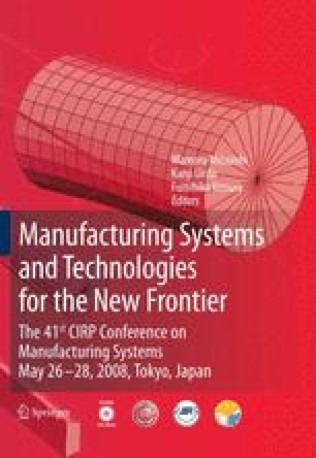
Manufacturing Systems and Technologies for the New Frontier ; The 41st CIRP Conference on Manufacturing Systems May 26–28, 2008, Tokyo, Japan
Manufacturing systems and technology stand on a new frontier, facing up to the challenges posed by the ever-evolving requirements of global sustainability. Value-creation is taking its place alongside more traditional production-process priorities. Collected here are over a hundred papers concerned with all manner of new directions in manufacturing systems and given at the 41st CIRP Conference on Manufacturing Systems. The high-quality material presented in this volume includes reports of work from both scientific and engineering standpoints and several invited and keynote papers addressing the current cutting edge and likely future trends in manufacturing systems.

Managing Health and Safety in the Dental Practice : A Practical Guide
Provides clear, straightforward information about the key requirements relating to health and safety in dental practices, with a practical and user-friendly approach to help manage these issues on a day-to-day basis.
Managing Agile Business Technology : The Business and Technology Relationship Model in Practice
Describes in detail how the BTRM, combined with a focus on value creation and value delivery, will enable continuous change, in the context of current, emerging and future technologies. It illustrates the potential for real-time insight and control not previously considered and provides a wide range of information to plan an implementation, understand where AI can be applied, and its importance in the world of self-managing systems.
Magnesium Technology : Metallurgy, Design Data, Applications
Magnesium, with a density of 1.74 g/cm², is the lightest structural metal and magnesium are increasingly chosen for weight-critical applications such as in land-based transport systems. "Magnesium Technology" substantially updates and complements existing reference sources on this key material. It assembles international contributions from seven countries covering a wide range of research programs into new alloys with the requisite property profiles, i.e., the current state of both research and technological applications of magnesium. In particular, the international team of authors covers key topics, such as: casting and wrought alloys; fabrication methods; corrosion and protection; engineering requirements and strategies, with examples from the automobile, aerospace, and consumer-goods industries, and recycling.

Magnesium
Until recently the physiological role of magnesium was essentially ignored. However, with the development of new technologies to measure the intracellular free concentration of magnesium ([Mg2+]i), the biologically important fraction, there has been an explosion of interest in the molecular, biochemical, physiological and pharmacological functions of magnesium. In addition improved methods for assessing magnesium status in the clinic have contributed to the further understanding of magnesium regulation in health and disease...

Machine Learning for Multimodal Interaction ; 5th International Workshop, MLMI 2008, Utrecht, The Netherlands, September 8-10, 2008. Proceedings
The 12 revised full papers and 15 revised poster papers presented together with 5 papers of a special session on user requirements and evaluation of multimodal meeting browsers/assistants were carefully reviewed and selected from 47 submissions. The papers cover a wide range of topics related to human-human communication modeling and processing, as well as to human-computer interaction, using several communication modalities. Special focus is given to the analysis of non-verbal communication cues and social signal processing, the analysis of communicative content, audio-visual scene analysis, speech processing, interactive systems and applications.
Leveraging Mobile Media : Cross-Media Strategy and Innovation Policy for Mobile Media Communication
Mobile communications and next generation wireless networks emerge as new distribution channels for the media. This development offers exciting new opportunities for media companies: the mobile communication system creates new usage contexts for media content and services; the social use of mobile communications suggests that identity representation in social networks, impulsive access to trusted media brands, and micro-coordination emerge as new sources of value creation in the media industries. In the light of this background, this book takes two different viewpoints on the development of mobile media: from a competitive strategy point of view it analyzes the extension of cross-media strategies and the emergence of cross-network strategies; from a public policy point of view it develops demands and requirements for an innovation policy that fosters innovation in mobile media markets.

Leveraging Applications of Formal Methods ; 1st International Symposium, ISoLA 2004, Paphos, Cyprus, October 30 - November 2, 2004, Revised Selected Papers
This book constitutes the thoroughly refereed post-proceedings of the First International Symposium on Leveraging Applications of Formal Methods, ISoLA 2004, held in Paphos, Cyprus in October/November 2004. The 12 revised full papers presented were carefully selected from more than 70 submissions. The papers discuss issues related to the adoption and use of rigorous tools and methods for the specification, analysis, verification, certification, construction, test, and maintenance of systems. In particular, by discussing common problems, requirements, algorithms, methodologies, and practices, ISoLA aims at supporting researchers in their quest to improve the utility, reliability, flexibility, and efficiency of tools for building systems, and users in their search for adequate solutions to their problems.
Knowledge and Skill Chains in Engineering and Manufacturing : Information Infrastructure in the Era of Global Communications
Explores knowledge and skill chains in engineering and manufacturing in the age of global communications. Information infrastructure involves a range of activities from product planning, engineering, and manufacturing trough transportation, marketing, and repair/upgrade to returns and recycling/disposal. Distinct from the traditional engineering database, life-cycle support information has its own characteristic requirements, -- flexible extensibility, distributed architecture, multiple viewpoints, long-time archiving, and product usage information. Several authors address the architecture of the information infrastructure, its services and its requirements. Other papers focus on the knowledge and skill chains that develop in a variety of situations: the supply chain, the factory floor, the man-system interaction, etc. For each of these, state-of-the-art and state-of-research scenarios for various industrial sectors address both engineering and operations requirements in the current socio-economic environment.
Just-in-Time Scheduling : Models and Algorithms for Computer and Manufacturing Systems
As the field of Supply Chain Management has matured, maintaining the precise flow of goods to maintain schedules (hence, minimizing inventories) on a just-in-time basis still remains as a major challenge. This problem or challenge has resulted in a fair amount of quantitative research in the area, producing an array of models and algorithms to help ensure the precise flow of components and final products into inventories to meet just-in-time requirements.The scheduling models and algorithms presented and illustrated in the book will be done so in the context of extensive use of computer systems in a "real time context.

Jurisdiction of the Coastal State over Foreign Merchant Ships in Internal Waters and the Territorial Sea
Dr Yang's book deals with the port and coastal State's jurisdiction over foreign merchant ships as well as with the rights and duties of these ships in the internal waters and in the territorial sea. The international law is rather different in both situations. Despite the fact that it faces a number of issues such as, for example, a contested right of access to ports or conditions for port access requirements, the law of foreign merchant ships in internal waters has never been codified. On the other hand, already the League of Nations considered the law of the territorial sea as appropriate for codification in the 1930s. And the Geneva Convention on the Territorial Sea and the Contiguous Zone of 1958 was indeed a codification of most rules of international law on the territorial sea known at that time.

ISSE/SECURE 2007 securing electronic business processes : Highlights of the information security solutions Europe/SECURE 2007 Conference
Presents the most interesting talks given at ISSE/SECURE 2007 - the forum for the interdisciplinary discussion of how to adequately secure electronic business processes. Adequate information security is one of the basic requirements of all electronic business processes. It is crucial for effective solutions that the possibilities offered by security technology can be integrated with the commercial requirements of the applications.
ISSE 2006 — Securing Electronic Busines Processes : Highlights of the Information Security Solutions Europe 2006 Conference
Presents the most interesting talks given at ISSE 2006 - the forum for the interdisciplinary discussion of how to adequately secure electronic business processes. The topics include: Smart Token and e-ID-Card Developments and their Application - Secure Computing and how it will change the way we trust computers - Risk Management and how to quantify security threats - Awareness raising, Data Protection and how we secure corporate information. Adequate information security is one of the basic requirements of all electronic business processes. It is crucial for effective solutions that the possibilities offered by security technology can be integrated with the commercial requirements of the applications. The reader may expect state-of-the-art: best papers of the Conference ISSE 2006.
City, climate, and architecture : A theory of collective practice
Based on a history of climate control on urban scales, it promotes the integration of indoors and outdoors in order to reduce environmental and thermal loads in cities. Just as heating and cooling practices inside the buildings are affecting the (urban) climate outdoors, urban heat islands are influencing the energy requirements and thermal conditions inside the buildings. While the first part of the book focuses on the interwar period in Europe, the publication’s second part considers examples from all over the globe, tracing the growing significance of ecological thinking for the design of urban environments.

Business modeling and software design ; 10th International Symposium, BMSD 2020, Berlin, Germany, July 6-8, 2020, Proceedings
This book constitutes the refereed proceedings of the 10th International Symposium on Business Modeling and Software Design, BMSD 2020, which took place in Berlin, Germany, in July 2020. BMSD is a leading international forum that brings together researchers and practitioners interested in business modeling and its relation to software design. Particular areas of interest are: Business Processes and Enterprise Engineering; Business Models and Requirements; Business Models and Services; Business Models and Software; Information Systems Architectures and Paradigms; Data Aspects in Business Modeling and Software Development; Blockchain-Based Business Models and Information Systems; IoT and Implications for Enterprise Information Systems.
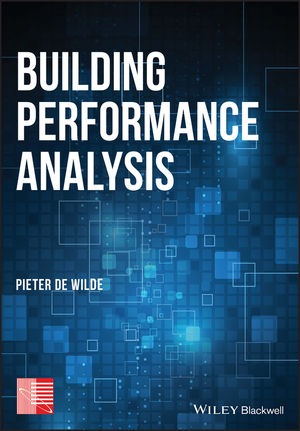
Building performance analysis
presents a comprehensive and systematic overview of the subject. It provides a working definition of building performance, and an in-depth discussion of the role building performance plays throughout the building life cycle. The book also explores the perspectives of various stakeholders, the functions of buildings, performance requirements, performance quantification (both predicted and measured), criteria for success, and the challenges of using performance analysis in practice. Assembles the current body of knowledge on building performance analysis in one unique resource Offers deep insights into the complexity of using building performance analysis throughout the entire building life cycle, including design, operation and management Contributes an emergent theory of building performance and its analysis

Building design, construction and performance in tropical climates
Outlines: the functional requirements of buildings in tropical climates; the challenges associated with the sustainability of the built environment, building form and whole life performance in the context of a tropical setting; the impact of potentially hostile tropical conditions upon building pathology and the durability of components, structure and fabric; the tasks which face those responsible for appraising the design, condition, maintenance and conservation of built heritage in tropical regions; the facilities management issues faced in tropical climates; and the refurbishment, upgrade and renewal of the tropical built environment.
