



الصفحة 8
الصفحة 8

Modern Construction Handbook
Tried and tested component details, examples focusing on sustainability and energy consumption, and an update on finite element analysis (FEA) and computational fluid dynamics (CFD) introduced in the last edition set new standards for this handbook which serves as a foundational textbook in many architecture courses

Modern construction envelopes
Using current examples by renowned architects, Watts presents the constructive and material-related details. It is based on a text, photos, and standardized detail drawings, as well as 3D representations of the components

Modern clinic design : strategies for an era of change
A comprehensive guide to optimizing patient experience through the design of the built environment. Written by a team of veteran healthcare interior designers, architects, and engineers, this book addresses the impacts of evolving legislation, changing technologies, and emerging nontraditional clinic models on clinic design, and illustrates effective design strategies for any type of clinic. Readers will find innovative ideas about lean design, design for flexibility Understand how recent industry developments impact facility design Learn how design strategies can help create a positive patient experience Examine emerging clinic models that are becoming increasingly prevalent Analyze the impact of technology on clinic design

Models and methods for management science
Introduces systems science as an entry point to present a basic introduction to research models and methods in management science (operation research). This textbook selects the classic quantitative models and methods as well as rich cases and detailed examples, which are suitable for students with a certain management and economics knowledge for further study, and helps to develop the abilities of using the basic models in real life

Modellistica numerica per problemi differenziali = Numerical modeling for differential problems
This text introduces the basic concepts for the numerical modeling of partial differential problems. We consider the classic elliptic, parabolic and hyperbolic linear equations, but also other equations, such as those of diffusion and transport, of Navier-Stokes, and the conservation laws, and we provide numerous physical examples underlying these equations. Then we analyze numerical resolution methods based on finite elements, finite differences, finite volumes, spectral methods and domain decomposition methods. In particular, the algorithmic and computer implementation aspects are discussed and various easy-to-use programs are provided.

Modellistica Numerica per Problemi Differenziali = Numerical Modeling for Differential Problems
This text introduces the fundamental concepts for the numerical modeling of partial differential problems. We consider the classic linear elliptic, parabolic and hyperbolic equations, but also other equations, such as those of diffusion and transport, of Navier-Stokes, and the conservation laws. Numerous physical examples underlying these equations are provided, their main mathematical properties are studied, then numerical resolution methods based on finite elements, finite differences, finite volumes and spectral methods are proposed and analyzed. In particular, the algorithmic and computer implementation aspects are discussed and some easy-to-use programs in C ++ language are provided. The text does not presuppose an advanced mathematical knowledge of partial differential equations: the strictly indispensable concepts in this regard are reported in the Appendix. The volume is therefore suitable for students of scientific degree courses (Engineering, Mathematics, Physics, Chemistry, Information Sciences) and recommended for researchers from the academic and extra-academic world who want to approach this interesting branch of applied mathematics.

Modelling, State Observation and Diagnosis of Quantised Systems
The book concerns quantised systems which emerge from continuous-variable systems by quantising the values of all signals. It is shown how this leads to an abstract system description by means of a stochastic automaton. Based on stochastic automata, new methods for the solution to state observation and fault diagnostic problems are derived. The methods are extended to networks of stochastic automata, allowing component-oriented modelling and, thus, to deal with complex systems. The practical applicability and usefulness of the approach is shown at several examples.

Modelling, Monitoring and Diagnostic Techniques for Fluid Power Systems
Modelling, Monitoring and Diagnostic Techniques for Fluid Power Systems covers the background theory of fluid power and indicates the range of concepts necessary for a modern approach to condition monitoring and fault diagnosis in a readable and understandable fashion. The theory is constantly leavened by 15 years' worth of practical measurements by the author, working in association with major fluid power companies, and real industrial case studies – hot-strip-mill monitoring in conjunction with Corus p.l.c. being just one example. Comprising four parts, it provides: • an introduction to component behaviour. • a guide to the modelling methods employed for circuit analysis. • methods for doing condition monitoring. • common faults and breakdowns.
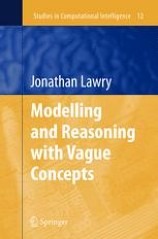
Modelling and Reasoning with Vague Concepts
This volume outlines a formal representation framework for modelling and reasoning with vague concepts in Artificial Intelligence. The new calculus has many applications, especially in automated reasoning, learning, data analysis and information fusion. This book gives a rigorous introduction to label semantics theory, illustrated with many examples, and suggests clear operational interpretations of the proposed measures. It also provides a detailed description of how the theory can be applied in data analysis and information fusion based on a range of benchmark problems.

Modelli Dinamici Discreti = Discrete Dynamic Models
Discrete mathematical modeling is one of the driving factors in modern mathematics research, and has played a role of synthesis between different disciplines, becoming a tool for qualitative and quantitative analysis in applied sciences. This volume provides an introduction to the analysis of discrete dynamic systems, following a modeling approach. An examination of a wide range of examples, models, and motivations drawn from Biology, Demography, Engineering and Economics, is followed by the presentation of the tools for the study of linear and non-linear scalar dynamical systems, with particular attention to stability analysis. The linear difference equations are studied in detail and an elementary introduction to the Z and DFT transforms is provided. One chapter is devoted to the study of bifurcations and chaotic dynamics. One-step vector dynamical systems and the applications of Markov chains are the subject of three chapters.

Modeling, Estimation and Control : Festschrift in Honor of Giorgio Picci on the Occasion of his Sixty-Fifth Birthday
Coefficients of Variations in Analysis of Macro-Policy Effects: An example of two-parameter Poisson-Dirichlet distributions.- How Many Experiments Are Needed to Adapt?- A Mutual Information Based Distance for Multivariate Gaussian Processes.- Differential Forms and Dynamical Systems.- An Algebraic Framework for Bayes Nets of Time Series.- A Birds Eye View on System Identification.- Further Results on the Byrnes-Georgiou-Lindquist Generalized Moment Problem.- Factor Analysis and Alternating Minimization.- Tensored PolynomialModels.- Distances Between Time-Series and Their Autocorrelation Statistics.- Global Identifiability of Complex Models, Constructed from Simple Submodels.- Identification of Hidden MarkovModels - Uniform LLN-s.- Identifiability and Informative Experiments in Open and Closed-Loop Identification.- On Interpolation and the Kimura-Georgiou Parametrization.- The Control of Error in Numerical Methods.- Contour Reconstruction and Matching Using Recursive Smoothing Splines.- Role of LQ Decomposition in Subspace Identification Methods.- Canonical Operators on Graphs.

Modeling Uncertainty : An Examination of Stochastic Theory, Methods, and Applications
Modeling Uncertainty: An Examination of Stochastic Theory, Methods, and Applications, is a volume undertaken by the friends and colleagues of Sid Yakowitz in his honor. Fifty internationally known scholars have collectively contributed 30 papers on modeling uncertainty to this volume. Each of these papers was carefully reviewed and in the majority of cases the original submission was revised before being accepted for publication in the book. The papers cover a great variety of topics in probability, statistics, economics, stochastic optimization, control theory, regression analysis, simulation, stochastic programming, Markov decision process, application in the HIV context, and others. There are papers with a theoretical emphasis and others that focus on applications. A number of papers survey the work in a particular area and in a few papers the authors present their personal view of a topic. It is a book with a considerable number of expository articles, which are accessible to a nonexpert - a graduate student in mathematics, statistics, engineering, and economics departments, or just anyone with some mathematical background who is interested in a preliminary exposition of a particular topic. Many of the papers present the state of the art of a specific area or represent original contributions which advance the present state of knowledge. In sum.

Modeling Solid Oxide Fuel Cells : Methods, Procedures and Techniques
The volume is structured in two parts. Part one presents the basic theory, and the general equations describing SOFC operation phenomena. Part two deals with the application of the theory to practical examples, where different SOFC geometries, configurations (from single cells to hybrid systems), operating conditions (steady-state and dynamic), and different phenomena (e.g. performance, temperature and chemical species, and mechanical stress distribution) are analyzed in detail.

Modeling Solar Radiation at the Earth’s Surface : Recent Advances
Solar radiation data is important for a wide range of applications, e.g. in engineering, agriculture, health sector, and in many fields of the natural sciences. A few examples showing the diversity of applications may include: architecture and building design e.g. air conditioning and cooling systems; solar heating system design and use; solar power generation; weather and climate prediction models; evaporation and irrigation; calculation of water requirements for crops; monitoring plant growth and disease control; skin cancer research.

Modeling Performance Measurement : Applications and Implementation Issues in DEA
MODELING PERFORMANCE MEASUREMENT: Applications and Implementation Issues in DEA presents unified results from authors’ recent DEA research. These new DEA methodology and techniques are developed in application-driven scenarios that go beyond the identification of the best-practice frontier and seek solutions to aid managerial decisions. These new DEA developments are well-grounded in real world applications. Both DEA researchers and practitioners will find this book helpful. Theory is provided for DEA researchers for further development and possible extensions. However, it should also be mentioned that each theory is presented in practical terms with numerical examples, simple real management cases and verbal descriptions. It is felt that these concrete examples will be of value to researchers, students, and practitioners , This book also provides an easy-to-use DEA software — DEAFrontier (www.deafrontier.com). This DEA software is an Add-In for Microsoft Excel and provides a custom menu of DEA approaches The DEAFrontier does not set limit on the number of units, inputs or outputs.

Modeling of Soft Matter
Soft matter plays a role in a wide variety of important processes and application. For example, gel swelling and dynamics are an essential part of many biological and individual processes, such as motility mechanisms in bacteria and the transport and absorption of drugs. Ferroelectrics, liquid crystals, and elastomers are being used to design ever faster switching devices. Experimental studies, such as scattering, optical and electron microscopy, have provided a great deal of detailed information on structures. But the integration of mathematical modeling and analysis with experimental approaches promises to greatly increase our understanding of structure-property relationships and constitutive equations. The workshop on Modeling of Soft Matter has taken such an integrated approach.

Modeling of Creep for Structural Analysis
"Creep Modeling for Structural Analysis" develops methods to simulate and analyze the time-dependent changes of stress and strain states in engineering structures up to the critical stage of creep rupture. The principal subjects of creep mechanics are the formulation of constitutive equations for creep in structural materials under multi-axial stress states; the application of structural mechanics models of beams, plates, shells and three-dimensional solids and the utilization of procedures for the solution of non-linear initial-boundary value problems. The objective of this book is to review some of the classical and recently proposed approaches to the modeling of creep for structural analysis applications as well as to extend the collection of available solutions of creep problems by new, more sophisticated examples.

Modeling Longitudinal Data
This book teaches the art and statistical science of modern longitudinal data analysis. The author emphasizes specifying, understanding, and interpreting longitudinal data models. He inspects the longitudinal data graphically, analyzes the time trend and covariates, models the covariance matrix, and then draws conclusions. The book has many figures and tables illustrating longitudinal data and numerous homework problems. The associated web site contains many longitudinal data sets, examples of computer code, and labs to re-enforce the material.

Modeling in Biopharmaceutics, Pharmacokinetics and Pharmacodynamics : Homogeneous and Heterogeneous Approaches
The state of the art in Biopharmaceutics, Pharmacokinetics, and Pharmacodynamics Modeling is presented in this book. It shows how advanced physical and mathematical methods can expand classical models in order to cover heterogeneous drug-biological processes and therapeutic effects in the body. The book is divided into four parts; the first deals with the fundamental principles of fractals, diffusion and nonlinear dynamics; the second with drug dissolution, release, and absorption; the third with empirical, compartmental, and stochastic pharmacokinetic models, and the fourth mainly with nonclassical aspects of pharmacodynamics. The classical models that have relevance and application to these sciences are also considered throughout. Many examples are used to illustrate the intrinsic complexity of drug administration related phenomena in the human, justifying the use of advanced modeling methods.

Modeling Financial Time Series with S-PLUS®
This book represents an integration of theory, methods, and examples using the S-PLUS statistical modeling language and the S+FinMetrics module to facilitate the practice of financial econometrics. This is the first book to show the power of S-PLUS for the analysis of time series data.It covers S+FinMetrics 2.0 and includes new chapters on copulas, nonlinear regime switching models, continuous-time financial models, generalized method of moments, semi-nonparametric conditional density models, and the efficient method of moments.
