



الصفحة 79
الصفحة 79
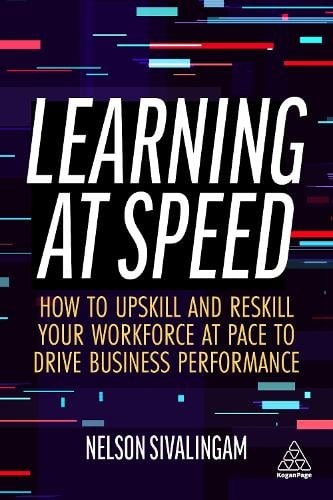
Learning at speed : How to upskill and reskill your workforce at pace to drive business performance
Learning at Speed is a practical book which brings together the best from lean and agile methodologies to show how they can be applied to learning and development (L&D) to improve individual and organizational performance. This provides a people development framework which can be used to deconstruct a learning strategy and optimise each element for improved results. It shows how to identify learning barriers and possible solutions, leverage company data to understand learning needs and how to assess the most effective learning resources and delivery channels.

Learning and Adaption in Multi-Agent Systems ; 1st International Workshop, LAMAS 2005, Utrecht, The Netherlands, July 25, 2005, Revised Selected Papers
Contains selected and revised papers of the International Workshop on Lea- ing and Adaptation in Multi-Agent Systems (LAMAS 2005), held at the AAMAS 2005 Conference in Utrecht, The Netherlands, July 26. An important aspect in multi-agent systems (MASs) is that the environment evolves over time, not only due to external environmental changes but also due to agent int- actions. For this reason it is important that an agent can learn, based on experience, and adapt its knowledge to make rational decisions and act in this changing environment autonomously. Machine learning techniques for single-agent frameworks are well established. Agents operate in uncertain environments and must be able to learn and act - tonomously. This task is, however, more complex when the agent interacts with other agents that have potentially different capabilities and goals. The single-agent case is structurally different from the multi-agent case due to the added dimension of dynamic interactions between the adaptive agents. Multi-agent learning, i.e., the ability of the agents to learn how to cooperate and compete, becomes crucial in many domains. Autonomous agents and multi-agent systems (AAMAS) is an emerging multi-disciplinary area encompassing computer science, software engineering, biology, as well as cognitive and social sciences. A t- oretical framework, in which rationality of learning and interacting agents can be - derstood, is still under development in MASs, although there have been promising ?
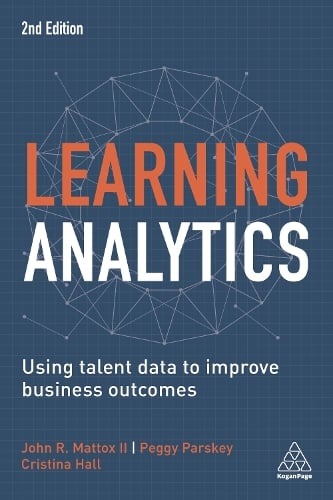
Learning Analytics : Using Talent Data to Improve Business Outcomes
Effective evaluation and measurement of learning and development initiatives is critical to maximise the impact of training, identify gaps for improvement and ensure that efforts are aligned to the business' needs. Learning Analytics outlines how analytical approaches can respond to these challenges, the types and benefits of technological solutions and how to ask the right questions of organizational data in order to build a learning organization that boosts performance and competitive advantage.
Lean Brain Management : More Success and Efficiency by Saving Intelligence
Intelligence is wasted on problems that themselves have been caused by an excess of intelligence. Lean Brain Management strives toward uncompromising Lean Brain Quality. Lean Brain stands for consistent economization of intelligence in all realms of life: Intelligent systems will only be operated by unskilled workers. Education, universities, and schools would become obsolete. A week of training would be enough for virtually any job. ("You are now the physician for the measles in the State of Ohio. In response to phone calls, send this prescription.") Lean Brain is not aimed at dumbing down! Lean Brain can survive on just a very small amount of central intelligence. Potential savings amount to trillions! This is demonstrated using Germany as an example. With this book, Dueck presents a radical suggestion for world improvement. The desire to laugh infinitely about it will eventually segue into a collective rude awakening. The book contains concrete advice for managers to economize on intelligence, and is thus--in keeping with the theme--written in an easy-to-read fashion.

Le choix bayésien: Principes et pratique
Covers the so-called Bayesian approach to statistical inference and in particular its decision-making aspects. The bases of this axiomatics (choice of the a priori, optimal decisions, tests and regions of confidence) are discussed in detail, as well as more recent openings of Bayesian analysis such as the choice of models, the use of numerical methods. Stochastic approximation (MCMC), the theory of noninformative laws (Berger-Bernardo axioms) and the relation to the classical theory of admissibility. Each chapter is completed by an extensive series of exercises of increasing difficulty and by bibliographical notes on the themes addressed. This book can be used in a Master's program in Applied Mathematics, Biometrics, Econometrics or any other program that uses quantitative information processing techniques. It only requires a basic course in probability theory and mathematical statistics as a preliminary.

Layered Double Hydroxides
Both experimental and theoretical studies of nearly every aspect of the LDH structure are discussed, including the range of metal cations and interlayer anions, M 3+ /M 2+ ratios, LDH polytypes, arrangement of the "interlayer" anions and water molecules, molecular modeling and molecular dynamics simulations, and the long- and short-range order in both the layers and interlayer galleries. Of especial value is the treatment of the more detailed aspects of the LDH structure that are still unresolved.

Layce (Image data poisoning) = لايس (تسميم بيانات الصور )
The ongoing growth of image generative artificial intelligence models was paved with existing drawings and art pieces by great artists both past and present, and while generative models are very useful and helpful, there is the issue of the origin of the datasets trained on, and the morality of usage regarding copyrights and artistic identity. A novel line of defense that helps artists and visual content creators actively protect their pieces emerged, dubbed Data Poisoning and it works by misleading Artificial Intelligence models that attempt to use a Poisoned Image for training, or as a reference, as the Poisoned Image will appear to the human eye identical to the original art piece, while the Artificial Intelligence model will be seeing a remarkably different image, causing generative models to generate false positive results when given a prompt poisoned by the author or when trained on data poisoned by the original owner. This study aims to study image data poisoning methods and technologies, and build an application containing multiple image models, and poisoning models as well, accompanied by a Community for artists to share art and interact with each other.

Law and the Semantic Web : Legal Ontologies, Methodologies, Legal Information Retrieval, and Applications
As part of this objective, ICT (information and communication technologies) services should become available for every citizen, and for all schools, homes and businesses. The book you have in front of you is about Semantic Web technology and law. Law is something omnipresent; all citizens — at some points in their lives — have to deal with it. In addition, law involves a large group of professionals, and is a mul- billion business world wide. Information technology is important because it that can improve citizens’ interaction with law, as well as improve legal professionals’ work environment. Legal professionals dedicate a significant amount of their time to finding, reading, analyzing and synthesizing information in order to take decisions, and prepare advice and trials, among other tasks. As part of the “Semantic-Based Knowledge and Content Systems” Strategic Objective, the European Commission is funding projects to construct technology to make the Semantic Web vision come true. 1 The articles in this book are related to two current foci of the Strategic Objective : • Knowledge acquisition and modelling, capturing knowledge from raw information and multimedia content in webs and other distributed repositories to turn poorly structured information into machi- processable knowledge.

Launching the imagination : A comprehensive guide to two-dimensional design
Launching the Imagination treats design as both a verb and a noun—as both a process and a product. Through an immersion in 2D, 3D, and 4D concepts and possibilities, students develop visual thinking strategies that will serve them throughout their studies and their careers. They discover that design is deliberate—a process of exploring a wide range of solutions and choosing the most promising option for development. They are encouraged to analyze each resulting solution thoughtfully in order to produce the clearest and most inventive solution to each assignment.

LATIN 2006 : Theoretical Informatics ; 7th Latin American Symposium, Valdivia, Chile, March 20-24, 2006, Proceedings
This book constitutes the refereed proceedings of the 7th International Symposium, Latin American Theoretical Informatics, LATIN 2006, held in March 2006. The 66 revised full papers presented together with seven invited papers were carefully reviewed and selected from 224 submissions. The papers presented are devoted to a broad range of topics in theoretical computer science with a focus on algorithmics and computations related to discrete mathematics as well as on cryptography, data compression and Web applications.

Lateral Alignment of Epitaxial Quantum Dots
Accurate positioning of self-organized nanostructures on a substrate surface can be regarded as the Achilles’ heel of nanotechnology. This perception also applies to self-assembled semiconductor quantum dots. This book describes the full range of possible strategies to laterally align self-assembled quantum dots on a substrate surface, starting from pure self-ordering mechanisms and culminating with forced alignment by lithographic positioning. The text addresses both short- and long-range ordering phenomena and paves the way for the future high integration of single quantum dot devices on a single chip. Contributions by the best-known experts in this field ensure that all relevant quantum-dot heterostructures are elucidated from diverse relevant perspectives.

Laser Spectroscopy : Vol.1 Basic Principles
Keeping abreast of the latest techniques and applications, this new edition of the standard reference and graduate text on laser spectroscopy has been completely revised and expanded. While the general concept is unchanged, the new edition features a broad array of new material, e.g., frequency doubling in external cavities, reliable cw-parametric oscillators, tunable narrow-band UV sources, more sensitive detection techniques, tunable femtosecond and sub-femtosecond lasers (X-ray region and the attosecond range), control of atomic and molecular excitations, frequency combs able to synchronize independent femtosecond lasers, coherent matter waves, and still more applications in chemical analysis, medical diagnostics, and engineering.

Laser Ablation and its Applications
Laser Ablation and its Applications emphasizes the wide range of these topics rather than focusing on one specialty or discipline. It is intended for a graduate course in laser interactions with plasmas and materials, but it should be accessible to anyone with a graduate degree in physics or engineering.

Large-Scale Scientific Computing ; 6th International Conference, LSSC 2007, Sozopol, Bulgaria, June 5-9, 2007. Revised Papers
The 6th International Conference on Large-Scale Scienti?c Computations (LSSC 2007) was held in Sozopol, Bulgaria, June 5–9, 2007. The conference was organized by the Institute for Parallel Processing at the Bulgarian Academy of Sciences in cooperation with SIAM (Society for Industrial and Applied Ma- ematics). Partial support was also provided from project BIS-21++ funded by the European Commission in FP6 INCO via grant 016639/2005. The conference was devoted to the 60th anniversary of Richard E. Professor Ewing is internati- ally well known with his contributions in applied mathematics, mathematical modeling, and large-scale scientific computations.

Large-Scale Scientific Computing ; 5th International Conference, LSSC 2005, Sozopol, Bulgaria, June 6-10, 2005, Revised Papers
The 5th International Conference on Large-Scale Scientific Computations (LSSC 2005) was held in Sozopol, Bulgaria, June 6–10, 2003. The conference was organized and sponsored by the Institute for Parallel Processing at the Bulgarian Academy of Sciences. Partial support was also provided from project BIS-21++ funded by the European Commission in FP6 INCO via grant 016639/2005. More than 120 participants from all over the world attended the conference representing some of the strongest research groups in the field of advanced largescale scientific computing. This volume contains 80 papers submitted by authors from over 20 countries. The 6th International Conference, LSSC 2007, will be organized in June 2007

Languages and Compilers for Parallel Computing ; Vol. 2481 : 15th Workshop, LCPC 2002, College Park, MD, USA, July 25-27, 2002, Revised Papers
LCPC 2002 brought together over 60 researchers from academia and research institutions from many countries. The program of 26 papers was selected from 32 submissions. Each paper was reviewed by at least three Program Committee members and sometimes by additional reviewers. Prior to the workshop, revised versions of accepted papers were informally published on the workshop’s website and in a paper proceedings that was distributed at the meeting. This year, the workshopwas organizedinto sessions of papers on related topics, and each session consisted of two to three 30-minute presentations.Based on feedback from the workshop,the papers were revised and submitted for inclusion in the formal proceedings published in this volume. Two papers were presented at the workshop but later withdrawn from the ?nal proceedings by their authors. We were very lucky to have Bill Carlson from the Department of Defense give the LCPC 2002 keynote speech on “UPC: A C Language for Shared M- ory Parallel Programming.” Bill gave an excellent overview of the features and programming model of the UPC parallel programming language.

Languages and Compilers for Parallel Computing ; 21th International Workshop, LCPC 2008, Edmonton, Canada, July 31 - August 2, 2008, Revised Selected Papers
This book constitutes the thoroughly refereed post-conference proceedings of the 21th International Workshop on Languages and Compilers for Parallel Computing, LCPC 2008, held in Edmonton, Canada, in July/August 2008.The 18 revised full papers and 6 revised short papers presented were carefully reviewed and selected from 35 submissions. The papers address all aspects of languages, compiler techniques, run-time environments, and compiler-related performance evaluation for parallel and high-performance computing and comprise

Languages and Compilers for Parallel Computing ; 20th International Workshop, LCPC 2007, Urbana, IL, USA, October 11-13, 2007, Revised Selected Papers
This book constitutes the thoroughly refereed post-conference proceedings of the 20th International Workshop on Languages and Compilers for Parallel Computing, LCPC 2007, held in Urbana, IL, USA, in October 2007.The 23 revised full papers presented were carefully reviewed and selected from 49 submissions. The papers are organized in topical sections on reliability, languages, parallel compiler technology, libraries, run-time systems and performance analysis, and general compiler techniques.

Language Technologies for the Challenges of the Digital Age ; 27th International Conference, GSCL 2017, Berlin, Germany, September 13-14, 2017, Proceedings
Constitutes the refereed proceedings of the 27th biennial conference of the German Society for Computational Linguistics and Language Technology, GSCL 2017, held in Berlin, Germany, in September 2017, which focused on language technologies for the digital age. The 16 full papers and 10 short papers included in the proceedings were carefully selected from 36 submissions. Topics covered include text processing of the German language, online media and online content, semantics and reasoning, sentiment analysis, and semantic web description languages.

Language and Automata Theory and Applications ; 2nd International Conference, LATA 2008, Tarragona, Spain, March 13-19, 2008. Revised Papers
This book constitutes the refereed proceedings of the Second International Conference on Language and Automata Theory and Applications, LATA 2008, held in Tarragona, Spain, in March 2008.The 40 revised full papers presented were carefully reviewed and selected from 134 submissions. The papers deal with the various issues related to automata theory and formal languages
