



الصفحة 74
الصفحة 74

Clinical Research Methods for Surgeons
The text addresses the clinical research questions facing 21st century surgeons, and provides clear direction on how to incorporate sophisticated research techniques into practice. In addition to the surgical generalist, this practical volume is specifically oriented to surgeons who treat unique diseases, yet have no single resource to facilitate clinical research in these specific areas. This comprehensive and easy-to-use guide encompasses the entire process of clinical study design, application, and assessment. Part One is aimed at the young surgeon about to engage in new studies, and gives a general overview of the infrastructure of clinical research. Parts Two and Three are geared towards experienced investigators interested in pursuing clinical research and surgeons reviewing the literature for practical application. Part Two focuses on study design and related statistical issues, while Part Three is concerned with measuring and assessing the outcome of clinical studies. Part Four presents topics of interest to the active investigator, such as quality of care and cost-effectiveness analyses. Clinical Research Methods for Surgeons is relevant to both beginning investigators and established researchers, and addresses the unique concerns of surgical diseases and acknowledges that they require special approaches to deal with clinical questions.

Clinical PET and PET
A practical manual covering the full spectrum of PET and PET/CT imaging, now in common clinical practice, this book includes images of normal variants, artifacts, and pathologic conditions. Indications for and the relative clinical value of PET in the armamentarium of diagnostic medical imaging are reviewed. The information in the book is organized to be brief, concise, easy-to-understand and readily accessed.
Mathematical Modelling of Biosystems
This volume is an interdisciplinary book, which introduces, in a very readable way, state of the art research in the fundamental topics of mathematical modelling of Biosystems. These topics include: the study of Biological Growth and its mechanisms, the coupling of pattern to form via theorems of Differential Geometry, the human immunodeficiency virus dynamics, the inverse folding problem and the possibility of analysing true protein backbone flexibility, the Biclustering techniques for the organization of microarray data, the analytical approach to the modelling of biomolecular structure via Steiner trees, the action of biocides on resistance mechanisms of mutated and phenotypic bacteria strains, a description of the fundamental processes for the distribution and abundances of species towards a unified theory of Ecology, and a special introduction to Protein Physics aiming to explain the all-or-none first order phase transitions from native to denatured states.
Mathematical Modelling for Sustainable Development
Mathematics needs Sustainable Development. When science was gradually reinvented in European medieval societies, it was legitimised as contributing to the disclosure of God’s divine creation. The conflicts that emerged became well known as a result of the clash between Galileo and the Church. Science found a new legitimacy through recognition that it was a powerful force against superstition. In the Enlightenment the argument was pushed forward by attributing Progress to the advancement of science: science could produce a better world by promoting rationality. In our modern society, science has become intimately linked to technology. Science for its own sake unfortunately rarely has positive outcomes in terms of research grant applications. Meanwhile, science and technology, and the progress they are supposed to produce, meet with wide scale scepticism. We all know of the current global problems: climate change, resource depletion, a thinning ozone layer, space debris, declining biodiversity, malnutrition, dying ecosystems, global inequity, and the risk of unprecedented nuclear wars
Mathematical Modeling of Concrete Mixture Proportioning
It puts together an understanding of the appropriate principles of ensuring performance and sustainability of concrete. Broadly subdivided into three parts, first part contains the fundamental aspects introducing the constituent materials, the concepts of concrete mixture designs and the mathematical formulations of the various parameters involved in these designs. The second part is dedicated to discussing approaches and recommendations of American, British and European bodies related to mathematical modelling. Lastly, it discusses perceptions and prescriptions towards both the performance assessment and insurance of the resulting concrete compositions.
Mathematical Modeling of Complex Biological Systems : A Kinetic Theory Approach
Describes the evolution of several socio-biological systems using mathematical kinetic theory. Specifically, it deals with modeling and simulations of biological systems—comprised of large populations of interacting cells—whose dynamics follow the rules of mechanics as well as rules governed by their own ability to organize movement and biological functions. The authors propose a new biological model for the analysis of competition between cells of an aggressive host and cells of a corresponding immune system.Because the microscopic description of a biological system is far more complex than that of a physical system of inert matter, a higher level of analysis is needed to deal with such complexity. Mathematical models using kinetic theory may represent a way to deal with such complexity, allowing for an understanding of phenomena of nonequilibrium statistical mechanics not described by the traditional macroscopic approach. The proposed models are related to the generalized Boltzmann equation and describe the population dynamics of several interacting elements (kinetic population models).The particular models proposed by the authors are based on a framework related to a system of integro-differential equations, defining the evolution of the distribution function over the microscopic state of each element in a given system. Macroscopic information on the behavior of the system is obtained from suitable moments of the distribution function over the microscopic states of the elements involved.
Mathematical Modeling of Biological Systems ; Vol. II : Epidemiology, Evolution and Ecology,Immunology, Neural Systems and the Brain, and Innovative Mathematical Methods
This two-volume, interdisciplinary work is a unified presentation of a broad range of state-of-the-art topics in the rapidly growing field of mathematical modeling in the biological sciences. Highlighted throughout both works are mathematical and computational approaches to examine central problems in the life sciences, ranging from the organizational principles of individual cells to the dynamics of large populations.
Mathematical Modeling of Biological Systems ; Vol. I : Cellular Biophysics, Regulatory Networks, Development, Biomedicine, and Data Analysis
This two-volume, interdisciplinary work is a unified presentation of a broad range of state-of-the-art topics in the rapidly growing field of mathematical modeling in the biological sciences. Highlighted throughout both works are mathematical and computational approaches to examine central problems in the life sciences, ranging from the organizational principles of individual cells to the dynamics of large populations.
Mathematical Methods in Robust Control of Linear Stochastic Systems
Linear stochastic systems are successfully used to provide mathematical models for real processes in fields such as aerospace engineering, communications, manufacturing, finance and economy. This monograph presents a useful methodology for the control of such stochastic systems with a focus on robust stabilization in the mean square, linear quadratic control, the disturbance attenuation problem, and robust stabilization with respect to dynamic and parametric uncertainty.

Mathematical Knowledge Management ; Vol. 4108 ; 5th International Conference, MKM 2006, Wokingham, UK, August 11-12, 2006, Proceedings
This book constitutes the refereed proceedings of the 5th International Conference on Mathematical Knowledge Management, MKM 2006, held in Wokingham, UK in August 2006 as official satellite event of the International Congress of Mathematicians, ICM 2006. The 22 revised full papers presented were carefully selected during two rounds of reviewing and improvement. The papers in this volume cover the whole area of mathematical knowledge management in the intersection of mathematics, computer science, library science, and scientific publishing. The papers are organized in topical sections on proof representations, proof processing, knowledge extraction, knowledge representation, as well as systems and tools.
Mathematical Approaches to Software Quality
This book considers the potential and limitations of the various mathematical approaches and thereby aims to give a balanced view of the usability of each mathematical approach. Written with both student and professional in mind, this book assists the reader in applying mathematical methods to solve practical problems that are relevant to software engineers. It is suitable for coursework or self-study and there is helpful material on tools to support the various mathematical approaches.
Mathematical Analysis I
The purpose of the volume is to provide a support for a first course in Mathematical Analysis, along the lines of the recent Programme Specifications for mathematical teaching in European universities. The contents are organised to appeal especially to Engineering, Physics and Computer Science students, all areas in which mathematical tools play a crucial role. Basic notions and methods of differential and integral calculus for functions of one real variable are presented in a manner that elicits critical reading and prompts a hands-on approach to concrete applications. The layout has a specifically-designed modular nature, allowing the instructor to make flexible didactical choices when planning an introductory lecture course. The book may in fact be employed at three levels of depth. At the elementary level the student is supposed to grasp the very essential ideas and familiarise with the corresponding key techniques.
Materials Syntheses : A Practical Guide
Materials syntheses are generally more complex than syntheses of inorganic or organic compounds, and specific characterization methods play a more important role. Materials synthesis protocols often suffer from unclarities, irreproducibility, lack in detail and lack in standards. The need to change this situation is the main motivation for this book. A number of detailed protocols has been collected, ranging from organic polymers to carbonaceous and ceramic materials, from gels to porous and layered materials and from powders and nanoparticles to films. Preparation methods include intercalation and flux methods, sol-gel processing, templating methods for porous materials, sonochemistry or spray pyrolysis.

Materials Fundamentals of Gate Dielectrics
This book presents materials fundamentals of novel gate dielectrics that are being introduced into semiconductor manufacturing to ensure the continuous scalling of the CMOS devices. This is a very fast evolving field of research so we choose to focus on the basic understanding of the structure, thermodunamics, and electronic properties of these materials that determine their performance in device applications. Most of these materials are transition metal oxides. Ironically, the d-orbitals responsible for the high dielectric constant cause sever integration difficulties thus intrinsically limiting high-k dielectrics. Though new in the electronics industry many of these materials are wel known in the field of ceramics, and we describe this unique connection. The complexity of the structure-property relations in TM oxides makes the use of the state of the art first-principles calculations necessary. Several chapters give a detailed description of the modern theory of polarization, and heterojunction band discontinuity within the framework of the density functional theory. Experimental methods include oxide melt solution calorimetry and differential scanning calorimetry, Raman scattering and other optical characterization techniques, transmission electron microscopy, and x-ray photoelectron spectroscopy.
Materials for Tomorrow : Theory, Experiments and Modelling
This book contains six chapters on central topics in materials science. Each is written by specialists in the field, and gives a state-of-the-art presentation of the subject for graduate students and scientists not necessarily working in that field. Computer simulations of new materials, theory and experimental work are all extensively discussed. As nanomaterials are of great current interest, most of the topics discussed have a bearing on nanomaterials and nanodevices. In addition to inorganic nanotubes, metallic nanocrystals, electronic nanodevices, spintronics and interfaces on an atomic scale, the text also presents computer simulations on one of the less well understood fields in solid-state physics and materials science: glasses and undercooled fluids.

Materials Chemistry
"Written to fill the need for a textbook that addresses inorganic-, organic-, and nano-based materials from a structure vs. property treatment, Materials Chemistry aims to provide a suitable breadth and depth coverage of the rapidly evolving materials field - in a concise format. This modern treatment offers innovative coverage and practical perspective throughout.

Material Flow Management : Improving Cost Efficiency and Environmental Performance
The implementation of material flow management offers enterprises a high potential for realizing new economic competitive advantages. The eco-efficient optimization of material flows aims at reducing costs while simultaneously achieving long-term sustainability with regard to ecological and societal aspects. Knowledge of existing methods and the latest trends is a key prerequisite for successfully implementing, refining and disseminating material flow management approaches.
Matematica e cultura in Europa
Non è vero che la matematica susciti sempre poco interesse. Questa almeno è l'impressione che si ricava quando lo spunto per parlarne viene non solo dalla scienza e dalla tecnologia, ma anche dall'arte, dalla letteratura, dal cinema e dal teatro. Ce lo ha insegnato Michele Emmer con i suoi convegni Matematica e Cultura e lo abbiamo sperimentato a Bologna con le iniziative del 2000 per l'Anno Mondiale della Matematica e per Bologna Città Europea della Cultura. D’altra parte, negli ultimi anni abbiamo finalmente visto sullo schermo come protagonisti di film di successo dei matematici, non rappresentati come individui strani, ma come professionisti che svolgono il proprio lavoro, non necessariamente di insegnanti. Anche alcune opere teatrali di risonanza internazionale hanno parlato di matematici e questo ci ha spinto a organizzare per la prima volta in Italia, a Bologna, la rassegna Matematica e Teatro, che ha dato occasione non solo di assistere a spettacoli molto piacevoli, ma anche di parlare dei rapporti tra scienza, matematica e potere al tempo di Napoleone, di numeri primi, di teoria di Galois.
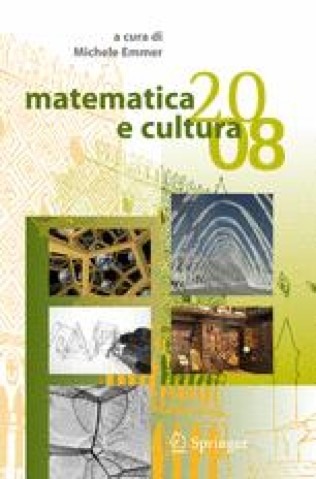
Matematica e cultura 2008 = mathematics and culture 2008
In this new book, the tenth of the series that began in Venice with the meetings "Mathematics and culture" that many have tried to imitate, we talk about all this and among others Simon Singh (author of the best seller "The last theorem di Fermat "), in her third presence in Venice, and Siobhan Roberts (author of" The king of infinite space. History of the man who saved geometry "). Venice bridge between mathematics and culture.
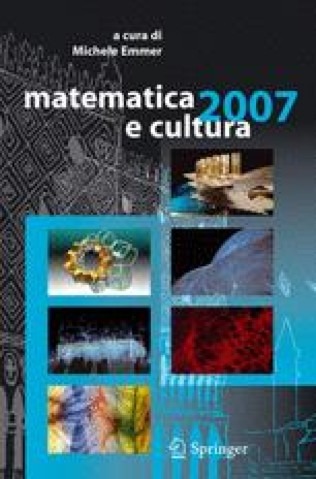
Matematica e cultura 2007 = Mathematics and culture 2007
We talk about theater even if the page cannot tell about Bustric's unforgettable show. And about art, and applied arts, such as geometric structure and spiritual meaning of the Zen garden of Ryoanji in Kyoto, and of soap bubbles, which are almost never lacking in Venetian encounters, Four-dimensional bubbles and gigantic bubbles that serve as a model for the Olympic swimming pool in Bejing
