


تحسين النتائح
ترتيب حسب
من
الى

This original and informative collection of studies of agri-food standards in the modern economy addresses these and helps to define the scope of the emerging study of the politics of standards setting.

Consists of various topics, including radioactivity inspection of food products; decontamination trials for rice and livestock production; the state of contamination in wild animals and birds, trees, mushrooms, and timber; the dynamics of radioactivity distribution in mountain and paddy fields; damage incurred by the forestry and fishery industries; and the change in consumers’ minds. The last chapter introduces a real-time radioisotope imaging system, the forefront technique to visualize actual movement of cesium in soil and in plants. This is the only book to provide systematic data about the actual change of radioactivity, and thus is of great value for all researchers who wish to understand the effect of radioactive fallout on agriculture.

Reports on studies undertaken at contaminated sites such as farmland, forests, and marine and freshwater environments, with a particular focus on livestock, wild plants and mushrooms, crops, and marine products in those environments. It also provides additional data collected in the subsequent years to show how the radioactivity levels in agricultural products and their growing environments have changed with time and the route by which radioactive materials entered agricultural products as well as their movement between different components (e.g., soil, water, and trees) within an environmental system (e.g., forests). The book covers various topics, including radioactivity testing of food products; decontamination trials for rice and livestock production; the state of contamination in, trees, mushrooms, and timber; the dynamics of radioactivity distribution in paddy fields and upland forests; damage incurred by the forestry and fishery industries; and the change in consumers’ attitudes. Chapter 19 introduces a real-time radioisotope imaging system, a pioneering technique to visualize the movement of cesium in soil and in plants.
Our societies are ageing. The Family is changing. Labour force behaviour is evolving. How is the organisation of family and collective solidarity adapting in this context of longer life spans, low fertility, and work that is simultaneously scarce and abundant? The welfare states are currently facing three main challenges: ensure satisfactory living conditions for the elderly without increasing the cost burden on the active population, reduce social inequality, and maintain equity between successive generations. In this book, researchers from different countries compare their experiences and offer contrasting views on the future of social protection. They consider the theoretical aspects of the intergenerational debate, relations between generations within the family, the living standards of elderly people, and the question of social time.
Provides a good example of the diverse scope and standard of research achieved in simulation and gaming today. The theme of the special session at ISAGA2003 was Agent-Based Modeling Meets Gaming Simulation. Nowadays, agent-based simulation is becoming very popular for modeling and solving complex social phenomena. It is also used to arrive at practical solutions to social problems. At the same time, however, the validity of simulation does not exist in the magni?cence of the model. R. Axelrod stresses the simplicity of the agent-based simulation model through the “Keep it simple, stupid” (KISS) principle: As an ideal, simple modeling is essential.
This book provides an exploration of the consequences of the ontological differences between natural and social objects (sometimes described as objects of nature and objects of thought) in the workings of causal and agency relationships.
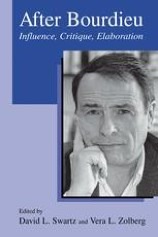
Intellectual origins & orientations We begin by providing an overview of Bourdieu’s life as a scholar and a public intellectual. The numerous obituaries and memorial tributes that have appeared following Bourdieu’s untimely death have revealed something of his life and career, but few have stressed the intersection of his social origins, career trajectory, and public intellectual life with the changing political and social context of France. This is precisely what David Swartz’s “In memoriam” attempts to accomplish. In it he emphasizes the coincidence of Bourdieu’s young and later adulthood with the period of decolonization, the May 1968 French university crisis, the opening up of France to privatization of many domains previously entrusted to the state (l’état providence), and, most threatening to post-World War II reforms, the emergence of globalization as the hegemonic structure of the 21st century.
Examines the crucial role still played by African languages in pedagogy and literatures in the 21st century, generating insights into how they effectively serve cultural needs across the African continent and beyond. Boldly positioning African languages as key resources in the 21st century, chapters focus on themes such as language revolt by marginalized groups at grassroots level, the experience of American students learning African languages, female empowerment through the use of African languages in music, film and literary works, and immigration issues. The contributions are written by scholars of language, literature, education and linguistics, and will be of interest to students and scholars in these and related areas.
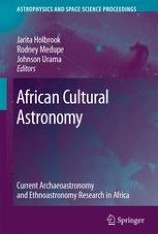
Astronomy is the science of studying the sky using telescopes and light collectors such as photographic plates or CCD detectors. However, people have always studied the sky and continue to study the sky without the aid of instruments this is the realm of cultural astronomy. This is the first scholarly collection of articles focused on the cultural astronomy of Africans. It weaves together astronomy, anthropology, and Africa. The volume includes African myths and legends about the sky, alignments to celestial bodies found at archaeological sites and at places of worship, rock art with celestial imagery, and scientific thinking revealed in local astronomy traditions including ethnomathematics and the creation of calendars. Authors include astronomers Kim Malville, Johnson Urama, and Thebe Medupe; archaeologist Felix Chami, and geographer Michael Bonine, and many new authors.
Concerned with the evolution and achievements of cooperation in research and innovation between Africa and Europe, and points to the need for more diversified funding and finance mechanisms, and for novel models of collaboration to attract new actors and innovative ideas. It reflects on the political, economic, diplomatic and scientific rationale for cooperation, while also examining practical developments, illustrated with examples, in the fields of food security, health, and climate change. The need to mobilise scientific knowledge and to ensure equality and fairness in the cooperation are recurrent themes. Africa-Europe Cooperation in Research and Innovation is essential reading for policy makers and researchers in international relations and science diplomacy.
The present volume is a continuation of the series Contemporary Philosophy (International Institute of Philosophy). As with the earlier volumes in the series, the present chronicles purport to give a survey of significant trends in contemporary philosophy. This volume on Aesthetics, containing nineteen surveys, shows the variety of approaches to Aesthetics in various cultures. The close connection between aesthetics and religion and between aesthetics and ethics is emphasized in several contributions.
Provides a comprehensive review of available techniques for the remote sensing of aerosols. Although mostly satellite remote sensing is considered, ground-based techniques are also discussed.describes techniques for the determination of the column concentration of aerosol particles and their optical sizing using spaceborne optical instrumentation. The majority of the techniques described in this book use a so-called "library method". This method relies upon the precalculated top-of-atmosphere reflectances (TOAR) for vaious atmospheric aerosol types. The comparison of measured and calculated TOARS allows one to characterize the optically-equivalent aerosol state.
Provides a comprehensive view of the chemical, dynamical, and radiative processes that affect ozone and other chemicals in the stratosphere and mesosphere. Over recent decades our understanding of these processes has increased dramatically. The discovery of the Antarctic ozone hole has shown that human activities can lead to major changes in our environment.
Environmental issues continued to loom large in the last decade of the twentieth century,especially environmental problems related to rising levels of CO emissions and 2 other greenhouse gases on the planet’s average temperatures and, subsequently, storm patterns. Floods and droughts, in combination with unseasonably high and low temperatures became the norm rather than the exception for large expanses of Africa,Asia and Oceania. Even large areas of Europe and NorthAmerica were s- jected to recurrent floods and droughts and experienced unseasonable extremes of hot and cold temperatures associated with man-made intrusions into the natural environment. And, still, a global plan of action to haltman-related patterns of def- estation, desertification, and over-fishing of the seas has yet to come into being. At the same time, the number of regional conflicts and civil wars increased and, with them, the lives of many women, children, old people and other n- combatants were lost in these conflicts.
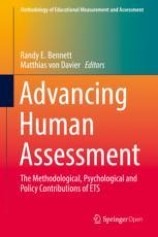
Describes the extensive contributions made toward the advancement of human assessment by scientists from one of the world’s leading research institutions, Educational Testing Service. The book’s four major sections detail research and development in measurement and statistics, education policy analysis and evaluation, scientific psychology, and validity. Many of the developments presented have become de-facto standards in educational and psychological measurement, including in item response theory (IRT), linking and equating, differential item functioning (DIF), and educational surveys like the National Assessment of Educational Progress (NAEP), the Programme of international Student Assessment (PISA), the Progress of International Reading Literacy Study (PIRLS) and the Trends in Mathematics and Science Study (TIMSS). In addition to its comprehensive coverage of contributions to the theory and methodology of educational and psychological measurement and statistics,
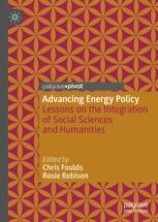
Advocates for the Social Sciences and Humanities to be more involved in energy policymaking. It forms part of the European platform for energy-related Social Sciences and Humanities’ activities, and works on the premise that crossing disciplines is essential. All of its contributions are highly interdisciplinary, with each chapter grounded in at least three different Social Sciences and Humanities disciplines. These varying perspectives come together to cover an array of issues relevant to the energy transition, including: energy poverty, justice, political ecology, governance, behaviours, imaginaries, systems approaches, modelling, as well as the particular challenges faced by interdisciplinary work. As a whole, the book presents new ideas for future energy policy, particularly at the European level. It is a valuable resource for energy researchers interested in interdisciplinary and society-relevant perspectives. Those working outside the Social Sciences and Humanities will find this book an accessible way of learning more about how these subjects can constructively contribute to energy policy.
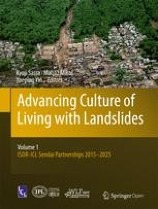
Contains peer-reviewed papers from the Fourth World Landslide Forum organized by the International Consortium on Landslides (ICL), the Global Promotion Committee of the International Programme on Landslides (IPL), University of Ljubljana (UL) and Geological Survey of Slovenia in Ljubljana, Slovenia from May 29 to June 2, 2017. The complete collection of papers from the Forum is published in five full-color volumes
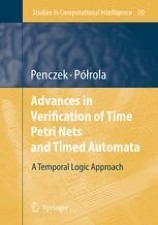
This monograph presents a comprehensive introduction to timed automata (TA) and time Petri nets (TPNs) which belong to the most widely used models of real-time systems. Some of the existing methods of translating time Petri nets to timed automata are presented, with a focus on the translations that correspond to the semantics of time Petri nets, associating clocks with various components of the nets. "Advances in Verification of Time Petri Nets and Timed Automata – A Temporal Logic Approach" introduces timed and untimed temporal specification languages and gives model abstraction methods based on state class approaches for TPNs and on partition refinement for TA. Moreover, the monograph presents a recent progress in the development of two model checking methods, based on either exploiting abstract state spaces or on application of SAT-based symbolic techniques.
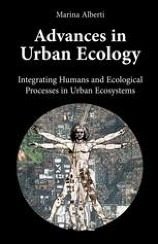
The future of Earth’s ecosystems is increasingly influenced by the pace and patterns of urbanization. One of the greatest challenges for natural and social scientists is to understand how urbanizing regions evolve through the complex interactions between humans and ecological processes. Questions and methods of inquiry specific to our traditional disciplinary domains yield partial views that reflect different epistemologies and understandings of the world. In order to achieve the level of synthesis required to see the urban ecosystem as a whole we must change the way we pose questions and search for answers. Cities are the result of human and ecological processes occurring simultaneously in time and in space and the legacy of the simultaneous processes of the past. Urban ecology is the study of the co-evolution of human-ecological systems. Scholars of both urban systems and ecology must challenge the assumptions and world views within their disciplines and work towards a hybrid theory that builds on multiple world views.
As is now generally accepted mankind’s burning of fossil fuels has resulted in the mass transfer of greenhouse gases to the atmosphere, a modification of the delicately-balanced global carbon cycle, and a measurable change in world-wide temperatures and climate. Although not the most powerful greenhouse gas, carbon dioxide (CO) drives climate 2 change due to the enormous volumes of this gas pumped into the atmosphere every day. Produced in almost equal parts by the transportation, industrial and energy-generating sectors, atmospheric CO concentrations have 2 increased by about 50% over the last 300 years, and according to some sources are predicted to increase by up to 200% over pre-industrial levels during the next 100 years. If we are to reverse this trend, in order to prevent significant environmental change in the future, action must be taken immediately.

سوريا - اتستراد درعا - غباغب
+963-15 2050 - 15 860 380 /1/2/3 - 11 662 3900