


تحسين النتائح
ترتيب حسب
من
الى


This book is arranged and developed around the theme of “2050 China,” it analyzes the factors and advantages of the Chinese road to socialist modernization, explores and summarizes the development goal and the basic logic of the socialist modernization of China, and further shows the general basis of the primary stage of socialism.
Examine the evolving enterprise security landscape and discover how to manage and survive risk. While based primarily on the author’s experience and insights at major companies where he has served as CISO and CSPO, the book also includes many examples from other well-known companies and provides guidance for a management-level audience. Managing Risk and Information Security provides thought leadership in the increasingly important area of enterprise information risk and security. It describes the changing risk environment and why a fresh approach to information security is needed. Because almost every aspect of an enterprise is now dependent on technology not only for internal operations but increasing as a part of product or service creation, the focus of IT security must shift from locking down assets to enabling the business while managing and surviving risk. This edition discusses business risk from a broader perspective, including privacy and regulatory considerations. It describes the increasing number of threats and vulnerabilities and offers strategies for developing solutions. These include discussions of how enterprises can take advantage of new and emerging technologies—such as social media and the huge proliferation of Internet-enabled devices—while minimizing risk.
Discusses how to build various ML algorithms and how they can be applied to improve healthcare systems. Healthcare applications of AI are innumerable: medical data analysis, early detection and diagnosis of disease, providing objective-based evidence to reduce human errors, curtailing inter- and intra-observer errors, risk identification and interventions for healthcare management, real-time health monitoring, assisting clinicians and patients for selecting appropriate medications, and evaluating drug responses. Extensive demonstrations and discussion on the various principles of machine learning and its application in healthcare is provided, along with solved examples and exercises.
Contains selected papers from the international conference ML4CPS – Machine Learning for Cyber-Physical Systems, which was held in Hamburg (Germany), from 29 to 31 March 2023. Cyber-physical systems are adaptive and learning: they analyze their environment and, based on observations, learn patterns, associations and predictive models. Typical applications are condition monitoring, predictive maintenance, image processing and diagnostics. Machine learning is the key technology for these developments.
Introduces and explores a variety of schemes designed to empower, enhance, and represent multi-institutional and multi-disciplinary machine learning (ML) and deep learning (DL) research in healthcare paradigms. Serving as a unique compendium of existing and emerging ML/DL paradigms for the healthcare sector, this book demonstrates the depth, breadth, complexity, and diversity of this multi-disciplinary area. It provides a comprehensive overview of ML/DL algorithms and explores the related use cases in enterprises such as computer-aided medical diagnostics, drug discovery and development, medical imaging, automation, robotic surgery, electronic smart records creation, outbreak prediction, medical image analysis, and radiation treatments.
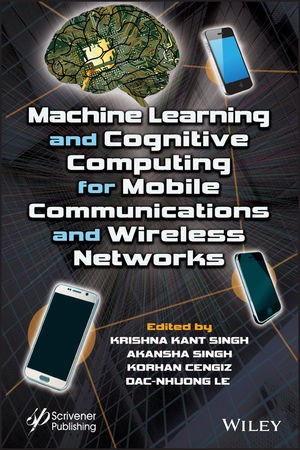
Communication and network technology has witnessed recent rapid development and numerous information services and applications have been developed globally. These technologies have high impact on society and the way people are leading their lives. The advancement in technology has undoubtedly improved the quality of service and user experience yet a lot needs to be still done. Some areas that still need improvement include seamless wide-area coverage, high-capacity hot-spots, low-power massive-connections, low-latency and high-reliability and so on. Thus, it is highly desirable to develop smart technologies for communication to improve the overall services and management of wireless communication. Machine learning and cognitive computing have converged to give some groundbreaking solutions for smart machines. With these two technologies coming together, the machines can acquire the ability to reason similar to the human brain. The research area of machine learning and cognitive computing cover many fields like psychology, biology, signal processing, physics, information theory, mathematics, and statistics that can be used effectively for topology management. Therefore, the utilization of machine learning techniques like data analytics and cognitive power will lead to better performance of communication and wireless systems.
Presents the latest advances in machine intelligence and big data analytics to improve early warning of cyber-attacks, for cybersecurity intrusion detection and monitoring, and malware analysis. Cyber-attacks have posed real and wide-ranging threats for the information society. Detecting cyber-attacks becomes a challenge, not only because of the sophistication of attacks but also because of the large scale and complex nature of today’s IT infrastructures. It discusses novel trends and achievements in machine intelligence and their role in the development of secure systems and identifies open and future research issues related to the application of machine intelligence in the cybersecurity field.

Offers the first systematic guide to machine ethics, bridging between computer science, social sciences and philosophy. Based on a dialogue between an AI scientist and a novelist philosopher, the book discusses important findings on which moral values machines can be taught and how. In turn, it investigates what kind of artificial intelligence (AI) people do actually want.
Dedicated chapters address : the use of ASM (Abstract State Machines) in the classroom; the Event-B modelling method; a methodological guide to CafeOBJ logic; CASL, the Common Algebraic Specification Language; the Duration Calculus; the logic of the RAISE specification language (RSL); the specification language TLA+; the typed logic of partial functions and the Vienna Development Method (VDM); and Z logic and its applications. Each chapter is self-contained, with references, and symbol and concept indexes. Finally, in a unique feature, the book closes with short commentaries on the specification languages written by researchers closely associated with their original development.
This book covers two major classes of mixed effects models—linear mixed models and generalized linear mixed models—and it presents an up-to-date account of theory and methods in analysis of these models as well as their applications in various fields. It offers a systematic approach to inference about non-Gaussian linear mixed models. Furthermore, it discusses the latest developments and methods in the field, incorporating relevant updates since publication of the first edition. These include advances in high-dimensional linear mixed models in genome-wide association studies (GWAS), advances in inference about generalized linear mixed models with crossed random effects, new methods in mixed model prediction, mixed model selection, and mixed model diagnostics.
The IFIP series publishes state-of-the-art results in the sciences and technologies of information and communication. The scope of the series includes: foundations of computer science; software theory and practice; education; computer applications in technology; communication systems; systems modeling and optimization; information systems; computers and society; computer systems technology; security and protection in information processing systems; artificial intelligence; and human-computer interaction. Proceedings and post-proceedings of referred international conferences in computer science and interdisciplinary fields are featured. These results often precede journal publication and represent the most current research. The principal aim of the IFIP series is to encourage education and the dissemination and exchange of information about all aspects of computing.
Explores knowledge and skill chains in engineering and manufacturing in the age of global communications. Information infrastructure involves a range of activities from product planning, engineering, and manufacturing trough transportation, marketing, and repair/upgrade to returns and recycling/disposal. Distinct from the traditional engineering database, life-cycle support information has its own characteristic requirements, -- flexible extensibility, distributed architecture, multiple viewpoints, long-time archiving, and product usage information. Several authors address the architecture of the information infrastructure, its services and its requirements. Other papers focus on the knowledge and skill chains that develop in a variety of situations: the supply chain, the factory floor, the man-system interaction, etc. For each of these, state-of-the-art and state-of-research scenarios for various industrial sectors address both engineering and operations requirements in the current socio-economic environment.
This book addresses the application of computing to cultural heritage and the discipline of Digital Humanities that formed around it. Digital Humanities research is transforming how the Human record can be transmitted, shaped, understood, questioned and imagined and it has been ongoing for more than 70 years. However, we have no comprehensive histories of its research trajectory or its disciplinary development. The authors make a first contribution towards remedying this by uncovering, documenting, and analysing a number of the social, intellectual and creative processes that helped to shape this research from the 1950s until the present day.
This book originate from a workshop held at the European University Institute of Florence, Italy, in December 2006. The workshop was devoted to the discussion of the different ways of understanding and explaining contemporary law, for the purpose of building computable models of it -- especially models enabling the development of computer applications for the legal domain.

Media and communication have become ubiquitous in today’s societies andaffect all aspects of life. On an individual level, they impact how we learnabout the world, how we entertain ourselves, and how we interact withothers. On an organisational level, the interactions between media andorganisations, such as political parties, NGOs, businesses and brands, shapeorganisations’ reputation, legitimacy, trust and (financial) performance, aswell as individuals’ consumer, political, social and health behaviours. Atthe societal level, media and communication are crucial for shaping publicopinion on current issues such as climate change, sustainability, diversity,and well-being.
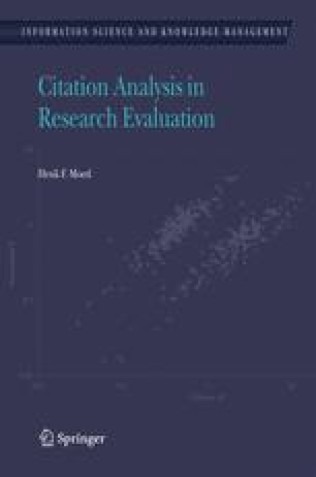
This book is written for members of the scholarly research community, and for persons involved in research evaluation and research policy. More specifically, it is directed towards the following four main groups of readers: – All scientists and scholars who have been or will be subjected to a quantitative assessment of research performance using citation analysis. – Research policy makers and managers who wish to become conversant with the basic features of citation analysis, and about its potentialities and limitations. – Members of peer review committees and other evaluators, who consider the use of citation analysis as a tool in their assessments. – Practitioners and students in the field of quantitative science and technology studies, informetrics, and library and information science. Citation analysis involves the construction and application of a series of indicators of the ‘impact’, ‘influence’ or ‘quality’ of scholarly work, derived from citation data, i.e. data on references cited in footnotes or bibliographies of scholarly research publications. Such indicators are applied both in the study of scholarly communication and in the assessment of research performance. The term ‘scholarly’ comprises all domains of science and scholarship, including not only those fields that are normally denoted as science – the natural and life sciences, mathematical and technical sciences – but also social sciences and humanities.
Discusses advances in smart and sustainable development of smart environments. The authors discuss the challenges faced in developing sustainable smart applications and provide potential solutions. The solutions are aimed at improving reliability and security with the goal of affordability, safety, and durability. Topics include health care applications, sustainable smart transportation systems, intelligent sustainable wearable electronics, and sustainable smart building and alert systems. Authors are from both industry and academia and present research from around the world. Addresses problems and solutions for sustainable development of smart cities; Includes applications such as healthcare, transportation, wearables, security, and more ; Relevant for scientist and researchers working on real time smart city development.

This book covers a variety of well known topics of interest to practitioners in industry and research scientists. The range of topics includes languages, tools and methodologies for the semantic Web, semantic Web-based ontology management and engineering, semantic Web services, practical applications of the semantic Web techniques, artificial intelligence methods and tools for the semantic Web, software agents on the semantic Web, visualization and modeling of the semantic Web. The goal of this book is to provide a state-of-the-art review of the research as well as to introduce topics of interest to experts.

Blockchain technology is a powerful, cost-effective method for network security. Essentially, it is a decentralized ledger for storing all committed transactions in trustless environments by integrating several core technologies such as cryptographic hash, digital signature and distributed consensus mechanisms. Over the past few years, blockchain technology has been used in a variety of network interaction systems such as smart contracts, public services, Internet of Things (IoT), social networks, reputation systems and security and financial services. With its widespread adoption, there has been increased focus on utilizing blockchain technologies to address network security concerns and vulnerabilities as well as understanding real-world security implications.
This book presents research performed as part of the EU project on biomimeticmultimodal learning in a mirror neuron-based robot (MirrorBot) and contribu-tions presented at the International AI-Workshop on NeuroBotics. The over-all aim of the book is to present a broad spectrum of current research intobiomimetic neural learning for intelligent autonomous robots. In this book we show the development of newtechniques using cell assemblies, associative neural networks, and Hebbian-typelearning in order to associate vision, language and motor concepts. We havedeveloped biomimetic multimodal learning and language instruction in a robotto investigate the task of searching for objects. As well as the research performedin this area for the MirrorBot project, the second part of this book incorporatessignificant contributions from other research in the field of biomimetic robotics.This second part of the book concentrates on the progress made in neuroscienceinspired robotic learning approaches (in short: NeuroBotics). We hope that this book stimulates and encourages new research in this in-teresting and dynamic area.

سوريا - اتستراد درعا - غباغب
+963-15 2050 - 15 860 380 /1/2/3 - 11 662 3900