



الصفحة 7
الصفحة 7

Geology and Ecosystems
This book includes an analysis of the relationship between the different geological, hydrochemical, hydrogeological and engineering-geological processes and the processes within surface ecosystems. The analysis of specific interactions between the lithosphere and biosphere provides an integrated concept of the role of the geological environment in the evolution of the biosphere. The practical significance of the book is reflected by the analysis of modern engineering activity associated with the mining of minerals, excessive groundwater withdrawal, disposal of industrial and domestic wastes (including radioactive wastes) and their impacts on all components of the environment. Geology and Ecosystems includes a scientific approach to the complex monitoring of the environment under different natural and anthropogenic conditions, including the monitoring of permafrost regions. An important part of the book is the analysis of the "water factor" impact on ecosystems and sustainable development. Influences of intensive groundwater extraction on river flow, vegetation and land subsidence are also considered.

Geological atlas of Africa : With notes on stratigraphy, tectonics, economic geology, geohazards, geosites and geoscientific education of each country
T is atlas is intended primarily for anybody who is in-some background for the arrangement of how the terested in basic geology of Africa. Its originality lies atlas was done. T e second chapter is devoted to the in the fact that the regional geology of each African history of geological mapping in Africa, necessary nation or territory is reviewed country-wise by maps for a fuller appreciation of why this work in Africa is and text, a view normally not presented in textbooks worth doing. Chapter 3 provides an executive s- of regional geology. It is my belief, that there has long mary on the stratigraphy and tectonics of Africa as a been a need in universities and geological surveys, whole, i. e. in the context of no political boundaries.
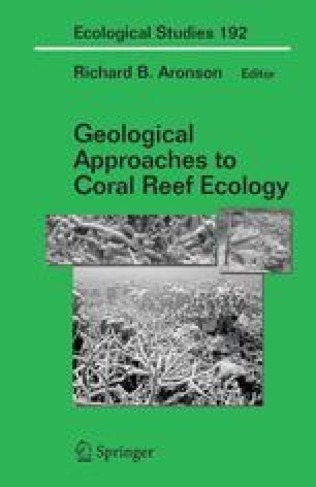
Geological Approaches to Coral Reef Ecology
By reconstructing the ecological history of coral reefs, the authors are able to evaluate whether or not recent, dramatic changes to reef ecosystems are novel events or part of a long-term trend or cycle. The contributions examine the interacting causes of change, which include hurricane damage, regional outbreaks of coral-consuming predators, disease epidemics, sea-level rise, nutrient loading, global warming and acidification of the oceans. Crucial predictions about the future of coral reefs lead to practical strategies for the successful restoration and management of reef ecosystems.

Geographies of the University
Raises awareness of the histories, geographies, and practices of universities and analyzes their role as key actors in today’s global knowledge economy. Universities are centers of research, teaching, and expertise with significant economic, social, and cultural impacts at different geographical scales. Scholars from a variety of disciplines and countries offer original analyses and discussions along five main themes: historical perspectives on the university as a site of knowledge production, cultural encounter, and political interest; institutional perspectives on university governance and the creation of innovative environments; relationships between universities and the city; the impact of universities on national and regional economies and cultures; and the processes of internationalization through student mobility, the creation of education hubs, and global regionalism in higher education.

Geographies of Asylum in Europe and the Role of European Localities
This book describes how the numerous arrivals of asylum seekers since 2015 shaped reception and integration processes in Europe. It addresses the structuration of asylum and reception systems, and spaces and places of reception on European, national, regional and local level.

Geodetic and geophysical observations in Antarctica : An overview in the IPY perspective
This book is a collection of papers on various aspects of the scientific investigation and observation techniques of the polar regions at both temporary and permanent observatories. Most papers focus on regional models based on data acquired in polar regions. Geodetic satellite positions systems (GNSS: GPS, GLONASS, GALILEO) will also be discussed as well as other space techniques (DORIS, VLBI). Gravimetry, absolute gravimetry, and tidal gravimetry are also discussed, as well as seismology and meteorology.

Gathering Hopewell : Society, Ritual and Ritual Interaction
In this book, twenty-one researchers in interwoven efforts immerse themselves and the reader in this vibrant archaeological record in order to richly reconstruct the faces, actions, and motivations Hopewellian people in their social and ritual life. Using a personalized and locally contextualized approach, the authors explore Hopewellian leadership, systems of social ranking and prestige, animal-totemic clan organization, kinship structures, sodalities, gender, community organizations, strategies of intercommunity alliance, and interregional travels for power questing, pilgrimage, healing, tutelage, and acquiring rituals.

Gastrointestinal malignancies
Details the advances in drug discovery and delivery and the present need for emerging technologies. Throughout the text new micro and nanofabrication techniques are described, including methods such as electrohydrodynamic processes, additive manufacturing, and microfluidics, which have the potential to produce drug delivery systems that were not possible a few years ago. This book is of great use to both entry-level and experienced researchers in the field of emerging technologies for the manufacturing of drug delivery devices.
Fuzzy systems and knowledge discovery ; Vol. 3614 ; 2nd International Conference, FSKD 2005, Changsha, China, August 27-29, 2005, Proceedings, Part II
This book and its sister volume, LNAI 3613 and 3614, constitute the proce- ings of the Second International Conference on Fuzzy Systems and Knowledge Discovery (FSKD 2005), jointly held with the First International Conference on Natural Computation (ICNC 2005, LNCS 3610, 3611, and 3612) from - gust 27–29, 2005 in Changsha, Hunan, China. FSKD 2005 successfully attracted 1249 submissions from 32 countries/regions (the joint ICNC-FSKD 2005 received 3136 submissions). After rigorous reviews, 333 high-quality papers, i. e. , 206 long papers and 127 short papers, were included in the FSKD 2005 proceedings, r- resenting an acceptance rate of 26. 7%. The ICNC-FSKD 2005 conference featured the most up-to-date research - sults in computational algorithms inspired from nature, including biological, e- logical, and physical systems. It is an exciting and emerging interdisciplinary area in which a wide range of techniques and methods are being studied for dealing with large, complex, and dynamic problems. The joint conferences also promoted cross-fertilization over these exciting and yet closely-related areas, which had a signi?cant impact on the advancement of these important technologies. Speci?c areas included computation with words, fuzzy computation, granular com- tation, neural computation, quantum computation, evolutionary computation, DNA computation, chemical computation, information processing in cells and tissues, molecular computation, arti?cial life, swarm intelligence, ants colony, arti?cial immune systems, etc. , with innovative applications to knowledge d- covery, ?nance, operations research, and more.

Fuzzy systems and knowledge discovery ; Vol. 3613 ; 2nd International Conference, FSKD 2005, Changsha, China, August 27-29, 2005, Proceedings, Part I
This book and its sister volume, LNAI 3613 and 3614, constitute the proce- ings of the Second International Conference on Fuzzy Systems and Knowledge Discovery (FSKD 2005), jointly held with the First International Conference on Natural Computation (ICNC 2005, LNCS 3610, 3611, and 3612) from - gust 27–29, 2005 in Changsha, Hunan, China. FSKD 2005 successfully attracted 1249 submissions from 32 countries/regions (the joint ICNC-FSKD 2005 received 3136 submissions). After rigorous reviews, 333 high-quality papers, i. e. , 206 long papers and 127 short papers, were included in the FSKD 2005 proceedings, r- resenting an acceptance rate of 26. 7%. The ICNC-FSKD 2005 conference featured the most up-to-date research - sults in computational algorithms inspired from nature, including biological, e- logical, and physical systems. It is an exciting and emerging interdisciplinary area in which a wide range of techniques and methods are being studied for dealing with large, complex, and dynamic problems. The joint conferences also promoted cross-fertilization over these exciting and yet closely-related areas, which had a signi?cant impact on the advancement of these important technologies. Speci?c areas included computation with words, fuzzy computation, granular com- tation, neural computation, quantum computation, evolutionary computation, DNA computation, chemical computation, information processing in cells and tissues, molecular computation, arti?cial life, swarm intelligence, ants colony, arti?cial immune systems, etc. , with innovative applications to knowledge d- covery, ?nance, operations research, and more.

Fundamental Trends in City Development
This book inquires into how the city can be re-established as the space of dialogue and communication, how the spatial conditions of the public sphere can be created and the city retrieved. And what the features might be of a city retrieved and restored to its citizens. The book adopts the concept of externity as an innovative element for the project for the city, a constituent feature of all those situations traditionally considered non-functional, therefore external, to our contemporary post-cities, which are consigned to us adrift through decomposition, genericity and segregation. We thus need to try to get the city to conserve and show its past even when not visible, and to continue nurturing the imagination of its inhabitants by urban action consisting perhaps of subtly improving their approach to the "void", the "small", to the past, the territory, in general, to all those spatial concepts which are in a sense external to our cultural worlds today, but which represent the most fertile material for the project for the city.

Full of Life : UNESCO Biosphere Reserves - Model Regions for Sustainable Development
UNESCO biosphere reserves are full of life. Here, people put sustainable development into practice: economic, ecological, social and cultural objectives are pursued, conserving precious natural spaces in the process. People are opening up new opportunities for today and are taking responsibility for future generations. What could be more exciting than a look at new ways into the future? The 14 biosphere reserves in Germany are part of a world network of 440 areas in the UNESCO Man and the Biosphere Programme (MAB). Founded in the 1970s to research the relationship between man and the environment, biosphere reserves have been developed into model regions for sustainable development since the 1992 Rio Conference. This publication gives an overview of developments to date and the new direction for the MAB Programme in Germany. The generally valid guidelines for the conservation, care and development of these areas are explained. Various project examples from practice and research bear witness to the living implementation of the Programme in the German UNESCO biosphere reserves.

From Dust To Stars : Studies of the Formation and Early Evolution of Stars
Studies of stellar formation in galaxies have a profound impact on our understanding of the present and the early universe. The book describes complex physical processes involved in the creation of stars and during their young lives. It illustrates how these processes reveal themselves from radio wavelengths to high energy X-rays and gamma -rays, with special reference towards high energy signatures. Several sections devoted to key analysis techniques demonstrate how modern research in this field is pursued.

Framing in Sustainability Science : Theoretical and Practical Approaches
This book offers both conceptual and empirical descriptions of how to “frame” sustainability challenges. It defines “framing” in the context of sustainability science as the process of identifying subjects, setting boundaries, and defining problems. The chapters are grouped into two sections: a conceptual section and a case section.

Foundations of Global Genetic Optimization
This book is devoted to the application of genetic algorithms in continuous global optimization. Some of their properties and behavior are highlighted and formally justified. Various optimization techniques and their taxonomy are the background for detailed discussion. The nature of continuous genetic search is explained by studying the dynamics of probabilistic measure, which is utilized to create subsequent populations. This approach shows that genetic algorithms can be used to extract some areas of the search domain more effectively than to find isolated local minima. The biological metaphor of such behavior is the whole population surviving by rapid exploration of new regions of feeding rather than caring for a single individual. One group of strategies that can make use of this property are two-phase global optimization methods. In the first phase the central parts of the basins of attraction are distinguished by genetic population analysis. Afterwards, the minimizers are found by convex optimization methods executed in parallel.

Forest Restoration in Landscapes
This book integrates the restoration of forest functions into landscape conservation plans. and this book represents the collective body of knowledge and experience of WWF and its many partners--which is collected here for the first time and which will be invaluable to all of those working in the field. This guide will serve as a first stop for practitioners and researchers in any organization or region and as a key reference on the subject. Along with concise, practical information for a variety of specific systems and issues, it gives many suggestions for further research.

Forest Policies and Social Change in England
The book stresses how values and perceptions shape policies, and conversely how policies can modify perceptions, and also how policies can fail if they do not take perceptions into account. She concludes that many of the issues facing English forestry in the 21st century – from leisure, health and amenity provision, through education and rural as well as urban regeneration, to biodiversity conservation – go well beyond both national borders and the scope of forestry. This novel synthesis provides a valuable resource for advanced students and researchers from all areas of natural resource studies, including those interested in social history, socio-economics, cultural geography and environmental psychology, as well as those studying landscape ecology, environmental history, policy analysis and natural resource management.

Forest Environments in the Mekong River Basin
Deforestation and forest degradation have continued over a long period of time, and the deterioration of forest environment management services is becoming one of the biggest concerns in the world. Especially in large continental river basins, sel? sh political attitudes and individual interests in some regions predispose other regions to problems downstream and bring about international issues. The Mekong is just such a river basin and its water is the most important resource, interdependent with the forest conditions in the region. The lives of millions of people are sustained by the water of the Mekong River, and mutual understanding on water resource mana- ment is essential in this region. Consequently, appropriate environment management to control water resources is required of each country along with scienti? c knowledge of forest management, including forest hydrology.

Forest Entomology in East Africa : Forest Insects of Tanzania
East African forests, among the world’s most biologically rich and diverse, are subject to multiple pressures, including insects. As the first work to focus exclusively on East African forest insects, this monograph distils 135 years of scientific and historical literature extending from before the colonial era to the present into an authoritative survey of this region’s major pests of trees and wood, as well as their antagonists. This comprehensive treatise also addresses insects of social and economic importance, such as endemics, edible and collectible insects, wild bees and silk producers. It should be of great value to foresters, entomologists, conservation biologists, resource managers, safari outfitters and anyone else interested in the natural history of this fascinating region.

Foresight and Design: Composing Future Places
Every plan, pro-forma, design, building contract, and construction schedule is a proposal about future places. To help improve such proposals, Foresight and Design: Composing Future Places presents conceptual tools to inform design and outline the need for designers to rigorously think about potential futures. Our built compositions are constantly transforming due to continuing urbanization, demographic shifts, climate change, the evolution of virtual worlds, economic and health disparities, and other unforeseen trends. Five brief case studies interspersed between the chapters serve as examples of practitioners exercising foresight through these practices. Contributions include a description of a regional design process in Afghanistan by Anthony Fettes of Sasaki Architects, and an exploration into the Indigenous Futurism model-making competition by Anjelica Gallegos.
