


تحسين النتائح
ترتيب حسب
من
الى


Ambient Intelligence (AmI) is an integrating technology for supporting a pervasive and transparent infrastructure for implementing smart environments. Such technology is used to enable environments for detecting events and behaviors of people and for responding in a contextually relevant fashion. AmI proposes a multi-disciplinary approach for enhancing human machine interaction. The authors start with a description of the iDorm as an example of a smart environment conforming to the AmI paradigm, and introduces computer vision as an important component of the system. Other computer vision examples describe visual monitoring for the elderly, classic and novel surveillance techniques using clusters of cameras installed in indoor and outdoor application domains, and the monitoring of public spaces. Face and speech recognition systems are also covered as well as enhanced LEGO blocks for novel educational purposes. The book closes with a provocative chapter on how a cybernetic system can be designed as the backbone of a human machine interaction.
The book of Sturmfels is both an easy-to-read textbook for invariant theory and a challenging research monograph that introduces a new approach to the algorithmic side of invariant theory. The Groebner bases method is the main tool by which the central problems in invariant theory become amenable to algorithmic solutions.
Explores a comprehensive and insightful treatment of the practical application of bioinformatic algorithms in a variety of fields. Delivers a fulsome treatment of some of the main algorithms used to explain biological functions and relationships. It introduces readers to the art of algorithms in a practical manner which is linked with biological theory and interpretation. The book covers many key areas of bioinformatics, including global and local sequence alignment, forced alignment, detection of motifs, Sequence logos, Markov chains or information entropy. Other novel approaches are also described, such as Self-Sequence alignment, Objective Digital Stains (ODSs) or Spectral Forecast and the Discrete Probability Detector (DPD) algorithm. Readers will also benefit from the inclusion of: A detailed presentation of new methods, such as Self-sequence alignment, Objective Digital Stains and Spectral Forecast ; A treatment of sequence alignment, including local sequence alignment, global sequence alignment and forced sequence alignment with full implementations ; Discussions of position-specific weight matrices, including the count, weight, relative frequencies, and log-likelihoods matrices ; A detailed presentation of the methods related to Markov Chains as well as a description of their implementation in Bioinformatics and adjacent fields ; An examination of information and entropy, including sequence logos and explanations related to their meaning ; A chapter on philosophical transactions that allows the reader a broader view of the prediction process ; Extensive worked examples with detailed case studies that point out the meaning of different results
This volume contains the papers presented at the 16th Annual InternationalConference on Algorithmic Learning Theory (ALT 2005), which was held (Republic of Singapore), 2005. The main objective of theconference is to provide an interdisciplinary forum for the discussion of the the-oretical foundations of machine learning as well as their relevance to practicalapplications. The volume includes 30 technical contributions, which were selected by theprogram committee from 98 submissions.

This volume contains the papers presented at the 18th International Conf- ence on Algorithmic Learning Theory.The main objective of the conference was to provide an interdisciplinary forum for high-quality talks with a strong theore- cal background and scientiبهc interchange in areas such as query models, on-line learning, inductive inference, algorithmic forecasting, boosting, support vector machines, kernel methods, complexity and learning, reinforcement learning, - supervised learning and grammatical inference.
Le champ des algorithmes d'approximation est aujourd'hui l'un des domaines de recherche les plus actifs en informatique. Il allie la profondeur de la théorie mathématique aux promesses d'applications pratiques d'un intérêt considérable. La plupart des problèmes issus d'applications relevant de domaines aussi différents que la conception de circuits VLSI, la conception et la planification de réseaux, l'ordonnancement, la théorie des jeux, la biologie ou la théorie des nombres, sont des problèmes NP-difficiles. Leur résolution exacte demanderait des ressources informatiques inaccessibles et ne peut donc être envisagée. Pour faire face à cette situation, un grand nombre d'algorithmes proposant des solutions approchées à ces problèmes ont été développés.
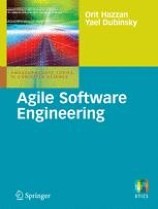
This textbook presents the crucial issues in software engineering using the agile approach to software development - one of the mainstream paradigms for the management of software projects and one that is being applied more and more extensively.

Supply Chain Event Management (SCEM)" is one of the major topics in application-oriented Supply Chain Management. However, many solutions lack conceptual precision and currently available client-server SCEM-systems are ill-suited for complex supply networks in today's business environment,In this book a thorough analysis of the event management problem domain is the starting point to develop a generic agent-based approach to Supply Network Event Management. The concept is illustrated with prototypical implementations and assessed in a multi-dimensional evaluation of potential benefits. The main focus lies on practical issues of event management (e.g. semantic interoperability) and economic benefits to be achieved with agent technology in this state-of-the-art problem domain.

Multi-agent systems are one of the most exciting research areas in Artificial Intelligence. This book reports on the results achieved in this area, discusses the benefits (and drawbacks) that agent-based systems may bring to medical domains and society.
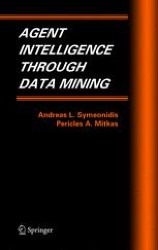
AGENT INTELLIGENCE THROUGH DATA MINING offers a self-contained overview of a relatively young but important area of research: the intersection of agent technology and data mining. This intersection leads to considerable advancements in the area of information technologies, drawing the increasing attention of both research and industrial communities. It can take two forms: a) the more mundane use of intelligent agents for improved data mining and; b) the use of data mining for smarter, more efficient agents. The second approach is the main focus of this volume. this book presents a methodology for developing multi-agent systems, describes available open-source tools to support this process, and demonstrates the application of the methodology on three different cases. AGENT INTELLIGENCE THROUGH DATA MINING is designed for a professional audience composed of researchers and practitioners in industry.
The automotive industry has made steady progress in technological innovations under the names of Connected Autonomous-Shared-Electric (CASE) and Mobility as a Service (MaaS). Needless to say, mathematics and informatics are important to support such innovations. As the concept of cars and movement itself is diversifying, they are indispensable for grasping the essence of the future mobility society and building the foundation for the next generation. This book contains three main contents. 1. Mathematical models of flow 2. Mathematical methodsfor huge data and network analysis 3. Algorithm for mobility society The first one discusses mathematical models of pedestrian and traffic flow, as they are important for preventing accidents and achieving efficient transportation.
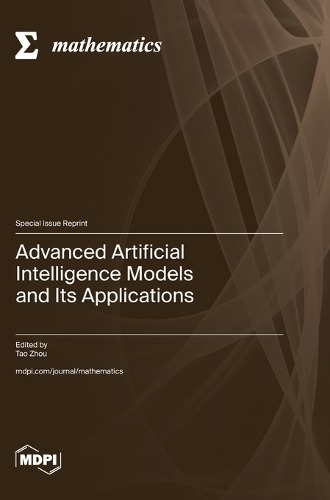
The field of artificial intelligence (AI) has undergone enormous expansion since its inception in the mid-20th century, as demonstrated by its application across an array of engineering and scientific challenges. Particularly in the last decade, AI has witnessed a significant breakthrough with the advent of deep learning, which has facilitated the employment of various AI models across a multitude of domains. This reprint features ten papers accepted for publication in the Special Issue titled "Advanced Artificial Intelligence Models and Their Applications," published in the MDPI Mathematics journal. These papers explore numerous facets of advanced artificial intelligence models and their applications, covering areas such as cybersecurity, image classification, logistics optimization, automatic music generation, human capital investment, writer recognition, remote sensing image indexing, target tracking, and more.
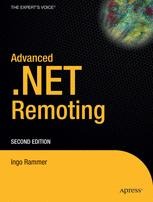
Surpassing any white papers, specialist documents and other documentationthis book features in-depth coverage of the .NET Remoting Framework. The text is organized into three main parts, and this revised, second edition features 150 pages of entirely new material! Part one includes a guide to the 1.1 framework and its capabilities in real-world applications. Part two presents .NET remoting internals, and provides real-world code and development strategies. Finally, part three looks at futuristic remoting tools and their present implementation in Visual Studio .NET 2005. You will come to see how remoting procedures will change within the new IDE and revised framework.
Explains the important concepts and principles of image processing to implement the algorithms and techniques to discover new problems and applications. It contains numerous fundamental and advanced image processing algorithms and pattern recognition techniques to illustrate the framework. It presents essential background theory, shape methods, texture about new methods, and techniques for image processing and pattern recognition. It maintains a good balance between a mathematical background and practical implementation. This book also contains the comparison table and images that are used to show the results of enhanced techniques. This book consists of novel concepts and hybrid methods for providing effective solutions for society. It also includes a detailed explanation of algorithms in various programming languages like MATLAB, Python, etc.
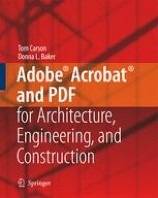
Adobe® Acrobat® and PDF for Architecture, Engineering, and Construction is designed to appeal to the engineering mind. The book is a practical guide focusing on the applications of PDF in the solution of "engineering" problems which may arise in a number of disciplines from architecture to construction. Using real-world examples, the authors follow a project from design through build and long-term maintenance. As the sample project evolves, suitable Acrobat® tools and techniques are identified and brought into play at each stage, showing readers how to personalize the context and processes to meet their own project development and management needs.
This book provides theoretical and practical knowledge for develop ment of algorithms that infer linear and nonlinear models. It offers a methodology for inductive learning of polynomial neural network mod els from data. The design of such tools contributes to better statistical data modelling when addressing tasks from various areas like system identification, chaotic time-series prediction, financial forecasting and data mining. The main claim is that the model identification process involves several equally important steps: finding the model structure, estimating the model weight parameters, and tuning these weights with respect to the adopted assumptions about the underlying data distrib ution. When the learning process is organized according to these steps, performed together one after the other or separately, one may expect to discover models that generalize well.

In the last years electronic markets, especially online auctions, have become very popular and received more and more attention in both, business (B2B) as well as in public practice (B2C and C2C). Science, however, is still far from having studied all phenomena and effects which can be observed on electronic markets. This book shows that and how software agents can be used to simulate bidding behaviour in electronic auctions. The main emphasis of this book is to apply computational economics to market theory. It summarizes the most common and up-to-date agent-based simulation methods and tools and develops the simulation software AMASE. On basis of the introduced methods a model is established to simulate bidding behaviour under uncertainty.
This book addresses action research (AR), one of the main research methodologies used for academia-industry research collaborations. It elaborates on how to find the right research activities and how to distinguish them from non-significant ones. Further, it details how to glean lessons from the research results, no matter whether they are positive or negative. Lastly, it shows how companies can evolve and build talents while expanding their product portfolio.
This book gives a comprehensive account of Maude, a language and system based on rewriting logic. Many examples are used throughout the book to illustrate the main ideas and features of Maude, and its many possible uses. Maude modules are rewrite theories. Computation with such modules is - cient deduction by rewriting. Because of its logical basis and its initial model semantics,aMaude module defines a precise mathematical model.This means that Maude and its formal tool environment can be used in three, mutually reinforcing ways: • as a declarative programming language; • as an executable formal specification language; and • as a formal verification system. Maude’s rewriting logic is simple, yet very expressive. This gives Maude good representational capabilities as a semantic framework to formally represent a wide range of systems, including models of concurrency, distributed al- rithms, network protocols, semantics of programming languages, and models of cell biology. Rewriting logic is also an expressive universal logic,making Maude a fiexible logical framework in which many difierent logics and - ference systems can be represented and mechanized. This makes Maude a useful metatool to build many other tools, including those in its own formal tool environment. Thanks to the logic’s simplicity and the use of advanced semi-compilation techniques, Maude has a high-performance implementation, making it competitive with other declarative programming languages.
A guide to the principles and methods of data analysis that does not require knowledge of statistics or programming. A guide to the reasoning behind data mining techniques. A unique illustrative example that extends throughout all the chapters. Exercises at the end of each chapter and larger projects at the end of each of the text’s two main parts

سوريا - اتستراد درعا - غباغب
+963-15 2050 - 15 860 380 /1/2/3 - 11 662 3900