


تحسين النتائح
ترتيب حسب
من
الى


This introductory chapter discusses such notions as determinism, chaos and randomness, p- dictibility and unpredictibility, some initial approaches to formalizing r- domness and it surveys certain problems that can be solved by probability theory. This will perhaps give one an idea to what extent the theory can - swer questions arising in speci?c random occurrences and the character of the answers provided by the theory. 1. 1 The Nature of Randomness The phrase “by chance” has no single meaning in ordinary language. For instance, it may mean unpremeditated, nonobligatory, unexpected, and so on. Its opposite sense is simpler: “not by chance” signi?es obliged to or bound to (happen). In philosophy, necessity counteracts randomness. Necessity signi?es conforming to law – it can be expressed by an exact law. The basic laws of mechanics, physics and astronomy can be formulated in terms of precise quantitativerelationswhichmustholdwithironcladnecessity.

Autonomy and Human Rights in Healthcare: An International Perspective is a group of essays published in memory of David Thomasma, one of the leading humanists in the field of bioethics during the twentieth century. A pioneer in the field of multidisciplinary research, having integrated major theological and philosophical traditions in the west with modern science, Thomasma was a role model to the authors who have devoted essays to his major avenues of inquiry. The authors represent many different countries and disciplines throughout the globe. The volume deals with the pressing issue of how to ground a universal bioethics in the context of the conflicted world of combative cultures and perspectives.
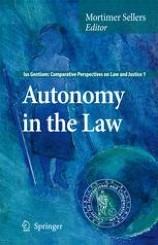
Autonomy in the Law considers one of the most important benefits of the rule of law. Juxtaposing European and American conceptions of autonomy in the law of families, capital punishment and, criminal trials reveals the common values that justify all legal systems. Law protects the autonomy of individuals and associations by defending the boundaries of their own self-rule. This book illuminates the fundamental purpose of law by examining how European and American lawyers, judges and citizens do and should apply legal autonomy to the practical circumstances of litigation, legislation and the law.
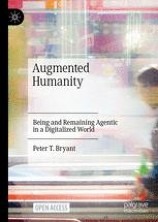
This book will examine the implications of digitalization for the understanding of humanity, conceived as a community of intelligent agency. It addresses important topics across a range of social and behavioral theories and identifies a range of novel mechanisms and their social behavioral effects. Across the book, the author highlights the expansion of intelligent processing capability brought about by digitalization and the challenges this exposes for integrating artificial and human capabilities

This volume of Topics in Current Chemistry presents an overview of atomistic theoreticalmethodsapplied tomolecular biologicalsystems. Itthus repesents abottom-upview of chemistryonbiologyfroma theoreticalperspective. The chapters arearrangedsuchthat important issuesareconsidered startingfrom a quantum mechanical perspective and proceeding to a molecular mechanics and molecular dynamics descriptiono fthemotionoftheelementaryparticles involved.which are responsible for the properties and function of biomolecules. Depending on the length and time scales relevant for a given phenomenon to be investigated, tailored theoretical methods are required to account for these. If one is interested in large scale motions of molecules, a molecul- mechnanics-based description willbeappropriate.

Thepastthree decadeshaveseenrapiddevelopmentin the areaofmodelpred- tive control with respect to both theoretical and application aspects. Over these 30 years, model predictive control for linear systems has been widely applied, especially in the area of process control. However, today’s applications often require driving the process over a wide region and close to the boundaries of - erability, while satisfying constraints and achieving near-optimal performance. Consequently, the application of linear control methods does not always lead to satisfactory performance, and here nonlinear methods must be employed. This is one of the reasons why nonlinear model predictive control (NMPC) has - joyed signi?cant attention over the past years,with a number of recent advances on both the theoretical and application frontier. Additionally, the widespread availability and steadily increasing power of today’s computers, as well as the development of specially tailored numerical solution methods for NMPC, bring thepracticalapplicabilityofNMPCwithinreachevenforveryfastsystems.This has led to a series of new, exciting developments, along with new challenges in the area of NMPC.
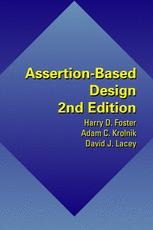
Chapter 3 Specifying RTL Properties 61 3. 3 Declarative versus procedural 67 3. 3 RTL assertion specification techniques 68 RTL invariant assertions 69 3. 2 Declaring properties with PSL 72 RTL cycle related assertions 73 3. 3 3. 1 Immediate assertions 84 3. 3 System functions 95 3. 3 Assertions across simulation time slots 111 4.

This collection of essays by some of the most prominent Catholic bioethicists addresses the Pope’s statements, the moral issues surrounding artificial feeding and hydration, the refusal of treatment, and the ethics of care for those at the end of life.
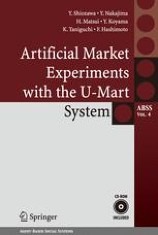
Economics went through great development in the 20th century. This development, which was based mainly on mathematical methods, is not an appropriate method of analyzing markets that change every hour and every day. In a stock market, prices constantly change depending on speculation. U-Mart, a manmade market, has been proposed in order to study such instantly moving markets. Although the U-Mart system is internationally acclaimed for being at the forefront of market research, its use is by no means limited to a small number of researchers on the fringe. The whole system, including its source code, is open and is distributed without charge, testifying to a philosophy of creating and providing a common testbed for research into financial markets.

In this volume the author further develops his philosophy of quantum interpolation between the real numbers and the p-adic numbers. The p-adic numbers contain the p-adic integers Zp which are the inverse limit of the finite rings Z/pn. This gives rise to a tree, and probability measures w on Zp correspond to Markov chains on this tree. From the tree structure one obtains special basis for the Hilbert space L2(Zp,w). The real analogue of the p-adic integers is the interval [-1,1], and a probability measure w on it gives rise to a special basis for L2([-1,1],w) - the orthogonal polynomials, and to a Markov chain on "finite approximations" of [-1,1]. For special (gamma and beta) measures there is a "quantum" or "q-analogue" Markov chain, and a special basis, that within certain limits yield the real and the p-adic theories. This idea can be generalized variously. In representation theory, it is the quantum general linear group GLn(q)that interpolates between the p-adic group GLn(Zp), and between its real (and complex) analogue -the orthogonal On (and unitary Un )groups. There is a similar quantum interpolation between the real and p-adic Fourier transform and between the real and p-adic (local unramified part of) Tate thesis, and Weil explicit sums.

In The Uses of Argument Stephen Toulmin proposed a new model for the layout of arguments, with six components: claim, data, warrant, qualifier, rebuttal, backing. Toulmin’s model has been appropriated, adapted and extended by researchers in the fields of speech communications, philosophy and artificial intelligence. The volume aims to bring together the best contemporary reflection in these fields on the Toulmin model and its current appropriation.
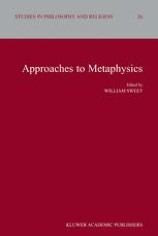
Today, when systematic philosophy - and reason itself - are challenged both outside of and within philosophy, is it still possible to do metaphysics? This volume provides a broad perspective on contemporary approaches to the nature and the fundamental questions of metaphysics. Drawing on scholars from continental Europe, Asia, Canada, the United States, and Great Britain, and representing a variety of philosophical cultures and traditions, this volume surveys and extends work in metaphysics and its implications for broader philosophical concerns (e.g., in ethics and social philosophy, in mathematics and logic, and in epistemology). It also addresses such questions as the role of history and historicity in undertaking metaphysics, the nature of metaphysics, the priority of metaphysics over epistemology, and the challenges of empiricism and postmodernism.

This book offers the first synoptic study of how the primary elements in knowledge structures were analysed in antiquity from Plato to late ancient commentaries, the main emphasis being on the Platonic-Aristotelian tradition. It argues that, in the Platonic-Aristotelian tradition, the question of starting points was treated from two distinct points of view: from the first perspective, as a question of how we acquire basic knowledge; and from the second perspective, as a question of the premises we may immediately accept in the line of argumentation. It was assumed that we acquire some general truths rather naturally and that these function as starting points for inquiry. In the Hellenistic period, an alternative approach was endorsed: the very possibility of knowledge became a central issue when sceptics began demanding that true claims should always be distinguishable from false ones.
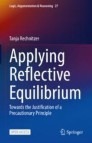
This book provides the first explicit case study for an application of the method of reflective equilibrium (RE), using it to develop and defend a precautionary principle. It thereby makes an important and original contribution to questions of philosophical method and methodology. The book shows step-by-step how RE is applied, and develops a methodological framework which will be useful for everyone who wishes to use reflective equilibrium. With respect to precautionary principles, the book demonstrates how a rights-based precautionary principle can be constructed and defended.

This book explores the social history of the anti-vivisection movement in Britain from its nineteenth-century beginnings until the 1960s. It discusses the ethical principles that inspired the movement and the socio-political background that explains its rise and fall. Opposition to vivisection began when medical practitioners complained it was contrary to the compassionate ethos of their profession. Christian anti-cruelty organizations took up the cause out of concern that callousness among the professional classes would have a demoralizing effect on the rest of society. As the nineteenth century drew to a close, the influence of transcendentalism, Eastern religions and the spiritual revival led new age social reformers to champion a more holistic approach to science, and dismiss reliance on vivisection as a materialistic oversimplification.

This book brings together authoritative voices in animal and environmental ethics, who address the many different facets of changing human-animal relationships in the Anthropocene. As we are living in complex times, the issue of how to establish meaningful relationships with other animals under Anthropocene conditions needs to be approached from a multitude of angles. This book offers the reader insight into the different discussions that exist around the topics of how we should understand animal agency, how we could take animal agency seriously in farms, urban areas and the wild, and what technologies are appropriate and morally desirable to use regarding animals. This book is of interest to both animal studies scholars and environmental ethics scholars, as well as to practitioners working with animals, such as wildlife managers, zookeepers, and conservation biologists.

The thesis of this book is that members of what I shall call the “animal welfare science community,”3 which includes both scientists and philosophers, have illegitimately appropriated the concept of animal welfare by claiming to have given a scientific account of it that is more objectively valid than the more sentimental” account given by animal liberationists.
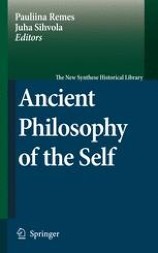
This volume explores the various ways in which selfhood was approached and conceptualised in antiquity. They also describe how the ancient philosophers understood human agents as capable of causing changes and being affected in and by the world. The themes of persistence, identity, self-examination and self-improvement recur in many of these essays. The articles of the collection combine systematic and historical approaches to ancient sources that range from Socrates to Plotinus and Augustine.

This book was assembled from numerous excerpts, notes, and fragments according to his initial plans. Zilberman’s legacy still awaits its true discovery and this book is a second installment to it after The Birth of Meaning in Hindu Thought (Kluwer, 1988). Zilberman’s treatment of analogy is unique in its approach, scope, and universality for Western philosophical thought.

This is an undergraduate textbook on the basic aspects of personal savings and investing with a balanced mix of mathematical rigor and economic intuition. It uses routine financial calculations as the motivation and basis for tools of elementary real analysis rather than taking the latter as given. Proofs using induction, recurrence relations and proofs by contradiction are covered. Inequalities such as the Arithmetic-Geometric Mean Inequality and the Cauchy-Schwarz Inequality are used. Basic topics in probability and statistics are presented.

سوريا - اتستراد درعا - غباغب
+963-15 2050 - 15 860 380 /1/2/3 - 11 662 3900