


تحسين النتائح
ترتيب حسب
من
الى


Examines the conditions where humans and martens are compatible and incompatible, and promotes land use practices that allow Martes to be representatively distributed and viable. All Martes have been documented to use forested habitats and 6 species (excluding the stone marten) are generally considered to require complex mid- to late-successional forests throughout much of their geographic ranges. All species in the genus require complex horizontal and vertical structure to provide escape cover protection from predators, habitat for their prey, access to food resources, and protection from the elements. Martens and the fisher have high metabolic rates, have large spatial requirements, have high surface area to volume ratios for animals that often inhabit high latitudes, and often require among the largest home range areas per unit body weight of any group of mammals. Resulting from these unique life history characteristics, this genus is particularly sensitive to human influences on their habitats, including habitat loss, stand-scale simplification of forest structure via some forms of logging, and landscape-scale effects of habitat fragmentation. Given their strong associations with structural complexity in forests, martens and the fisher are often considered as useful barometers of forest health and have been used as ecological indicators, flagship, and umbrella species in different parts of the world. Thus, efforts to successfully conserve and manage martens and fishers are associated with the ecological fates of other forest dependent species and can greatly influence ecosystem integrity within forests that are increasingly shared among wildlife and humans.We have made great strides in our fundamental understanding of how animals with these unique life history traits perceive and utilize habitats, respond to habitat change, and how their populations function and perform under different forms of human management and mismanagement.

This book is the first comprehensive overview of maritime spatial planning. Situated at the intersection between theory and practice, the volume draws together several strands of interdisciplinary research, reflecting on the history of MSP as well as examining current practice and looking towards the future. The authors and contributors examine MSP from disciplines as diverse as geography, urban planning, political science, natural science, sociology and education; reflecting the growing critical engagement with MSP in many academic fields. This innovative and pioneering volume will be of interest and value to students and scholars of maritime spatial planning, as well as planners and practitioners.

the history of mathematics there are many situations in which cal- lations were performed incorrectly for important practical applications. the history of computing the number began in Egypt and Babylon about 2000 years BC, since then many mathematicians have calculated (e. g. , Archimedes, Ptolemy, Vi` ete, etc. ). In modern mathematics there exist computers that can perform various mathematical operations for which humans are incapable. Therefore the computers can be used to verify the results obtained by humans, to discovery new results, to - prove the result sthatahumancanobtain without anytechnology

This book discusses the progress of science and the transfer of scientific knowledge to technological application. It also identifies the factors necessary to achieve this progress. Based on a case study of the physical chemist Fritz Haber's discovery of ammonia synthesis between 1903 and 1909, the book places Haber's work in historical and scientific (physicochemical) context. The scientific developments of the preceding century are framed in a way that emphasizes the confluence of knowledge needed for Haber's success. Against this background, Haber's work is presented in detail along with the indispensable contributions of his colleague, the physical chemist, Walter Nernst, and their assistants. The detailed accounts of scientific advancement remind us of the physical basis on which our scientific theories and ideas are built. Without this reminder we often forget how complex, and how beautiful achievements in science can be.

Gives an comprehensive account of magnetism, spanning the historical development, the physical foundations and the continuing research underlying the field, one of the oldest yet still vibrant field of physics. It covers both the classical and quantum mechanical aspects of magnetism and novel experimental techniques. Perhaps uniquely, it also discusses spin transport and magnetization dynamics phenomena associated with atomically and spin engineered nano-structures against the backdrop of spintronics and magnetic storage and memory applications.

Presents the main mathematical machines for drawing curves, for applying geometrical transformations or for making classical perspectives.The publication constitutes an example of how history of mathematics may be useful for teaching today’s mathematics.

Situated at the crossroads of nature and culture, physics and consciousness, cosmos and life, history – intimately conjoined with time – continues to puzzle the philosopher as well as the scientist. Does brute nature unfold a history? Does human history have a telos? Does human existence have a purpose, Phenomenology of life projects a new interrogative system for reexamining these questions.We are invited to follow the logos of life as it spins in innumerable ways the interplay of natural factors, human passions, social forces, science and experience – through interruptions and kairic moments of accomplishment .

Investigate the roots of Logical Empiricism in the context of the Life Reform and the German Youth Movements. Rudolf Carnap and Hans Reichenbach are the key protagonists; they both belonged to the German Youth Movement and developed their early philosophical views in this setting. By combining scholarly essays with unpublished and hard to access manuscripts, letters, and articles, this volume recasts our understanding of the early years of Logical Empiricism

The remote mountain loch of Lochnagar is one of the most studied freshwater bodies in Europe. This book brings together knowledge gained over two decades of multi-disciplinary scientific study, with the results of lake sediment research covering millennia, to show how the loch has developed both naturally and as a result of human impact
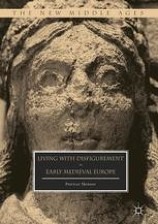
Examines social and medical responses to the disfigured face in early medieval Europe, arguing that the study of head and facial injuries can offer a new contribution to the history of early medieval medicine and culture, as well as exploring the language of violence and social interactions. Despite the prevalence of warfare and conflict in early medieval society, and a veritable industry of medieval historians studying it, there has in fact been very little attention paid to the subject of head wounds and facial damage in the course of war and/or punitive justice. The impact of acquired disfigurement —for the individual, and for her or his family and community—is barely registered, and only recently has there been any attempt to explore the question of how damaged tissue and bone might be treated medically or surgically..

It revolves around the following questions: What kinds of experiences have engendered national mobilization and feelings of national belonging? How have political and societal conflicts turned into new communities of experience and emotion? What kinds of experiences have been integrated into, or excluded from, the national context in different instances? How have people internalized or contested the nation as a context for their personal, family and minority-group experiences? In what ways has the nation entered and affected people’s intimate spheres of life? How have “national” experiences been transmitted to children in the renewal of the nation? This edited collection points to the histories of experience and emotions as a novel way of studying nations and nationalism. Building on current debates in nationalism studies, it offers a theoretical framework for analyzing the historical construction of “lived nations,” and introduces a number of new methodological approaches to understand the experiences of the nation, extending from the investigation of personal reminiscences and music records to the study of dreams and children’s drawings.

Documenting the extraordinary life of an aspiring woman scientist whose life was filled with adversity. Surviving both World Wars and gender discrimination, Meitner was a pioneer at the forefront of her discipline involving the study of radio-elements and nuclear fission.
In this book, experts in statistics and psychometrics describe classes of linkages, the history of score linkings, data collection designs, and methods used to achieve sound score linkages. They describe and critically discuss applications to a variety of domains including equating of achievement exams, linkages between computer-delivered exams and paper-and-pencil exams, concordances between the current version of the SAT® and its predecessor, concordances between the ACT® and the SAT®, vertical linkages of exams that span grade levels, and linkages of scales from high-stakes state assessments to the scales of the National Assessment of Educational Progress (NAEP).
Begins with a reflection on the history of test design--the core activity of all educational and psychological testing. It then presents a standard language for modeling test design problems as instances of multi-objective constrained optimization. The main portion of the book discusses test design models for a large variety of problems from the daily practice of testing, and illustrates their use with the help of numerous empirical examples. The presentation includes models for the assembly of tests to an absolute or relative target for their information functions, classical test assembly, test equating problems, item matching, test splitting, simultaneous assembly of multiple tests, tests with item sets, multidimensional tests, and adaptive test assembly. Two separate chapters are devoted to the questions of how to design item banks for optimal support of programs with fixed and adaptive tests. Linear Models for Optimal Test Design, which does not require any specific mathematical background, has been written to be a helpful resource on the desk of any test specialist.
A study of how a particular vision of the unity of mathematics, often called geometric function theory, was created in the 19th century. The central focus is on the convergence of three mathematical topics: the hypergeometric and related linear differential equations, group theory, and on-Euclidean geometry. The text for this second edition has been greatly expanded and revised, and the existing appendices enriched with historical accounts of the Riemann–Hilbert problem, the uniformization theorem, Picard–Vessiot theory, and the hypergeometric equation in higher dimensions. The exercises have been retained, making it possible to use the book as a companion to mathematics courses at the graduate level.

This award-winning book investigates the critique of psychoanalysis formulated by the psychiatrist and philosopher Karl Jaspers (1883-1969) over a period of five decades. His arguments against Freud and his followers are examined from systematic perspectives. The study traces the medico-historical roots of Jasper’s criticism of psychoanalysis and then places it within the framework of scientific theory before devoting itself extensively to medico-ethical aspects of the controversy, which are ultimately treated in terms of a history of mentalities. According to this view, Jasper’s student Hannah Arendt saw to it that the philosopher be made aware of the socio-cultural impact which psychoanalysis was beginning to have in the U.S.A.

A pioneer in meteorology and peace research and remains a towering presence in both fields. This edited volume reviews his work and assesses its influence in the social sciences, notably his work on arms races and their consequences, mathematical models, the size distribution of wars, and geographical features of conflict

Euler was not only by far the most productive mathematician in the history of mankind, but also one of the greatest scholars of all time. He attained, like only a few scholars, a degree of popularity and fame which may well be compared with that of Galilei, Newton, or Einstei .This book is based in part on unpublished sources and comes right out of the current research on Euler. It is entirely free of formulae as it has been written for a broad audience with interests in the history of culture and science.
this book offers the first account of the development of Huygens’ mathematical analysis of lenses and telescopes and its significance for the origin of the wave theory of light. As Huygens applied his mathematical proficiency to practical issues pertaining to telescopes – including trying to design a perfect telescope by means of mathematical theory – his dioptrics is significant for our understanding of seventeenth-century relations between theory and practice. With this full account of Huygens’ optics, this book sheds new light on the history of seventeenth-century optics and the rise of the new mathematical sciences, as well as Huygens’ oeuvre as a whole. Students of the history of optics, of early mathematical physics, and the Scientific Revolution, will find this book enlightening.

Leibniz’s metaphysics of space and time stands at the centre of his philosophy and is one of the high-water marks in the history of the philosophy of science. In this work, Futch provides the first systematic and comprehensive examination of Leibniz’s thought on this subject. In addition to elucidating the nature of Leibniz’s relationalism, the book fills a lacuna in existing scholarship by examining his views on the topological structure of space and time, including the unity and unboundedness of space and time. It is shown that, like many of his more recent counterparts, Leibniz adopts a causal theory of time where temporal facts are grounded on causal facts, and that his approach to time represents a precursor to non-tensed theories of time.

سوريا - اتستراد درعا - غباغب
+963-15 2050 - 15 860 380 /1/2/3 - 11 662 3900