



الصفحة 7
الصفحة 7

Fatigue Science for Human Health
Fatigue is quite a familiar sensation, one that everyone is likely to have experienced. Its molecular and neural mechanisms have not yet been elucidated, however, probably because of the complicated nature of its causes. To provide a broad forum for discussion, the International Conference on Fatigue Science was organized, the first being held in 2002 in Sandhamn, Sweden, and the second in 2005 in Karuizawa, Japan. Subsequently it was decided that the papers presented at the two conferences should be collected and incorporated in this pioneering work, Fatigue Science for Human Health. The book summarizes fatigue researchers' achievements, explains the status of the research on fatigue, and presents perspectives on remedies for chronic fatigue and chronic fatigue syndrome. The result is an authoritative guide to recent progress in the molecular and neural mechanisms of fatigue and in the development of the ways to prevent and overcome fatigue and chronic fatigue.

Failure rate modelling for reliability and risk
Failure Rate Modelling for Reliability and Risk focuses on reliability theory and, specifically, on the failure rate (the hazard rate, the force of mortality) modelling and its generalizations, on systems operating in a random environment and on repairable systems. The failure rate is one of the crucial probabilistic characteristics for a number of disciplines; including reliability, survival analysis, risk analysis and demography.
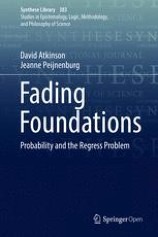
Fading Foundations : Probability and the Regress Problem
This book addresses the age-old problem of infinite regresses in epistemology. How can we ever come to know something if knowing requires having good reasons, and reasons can only be good if they are backed by good reasons in turn? The problem has puzzled philosophers ever since antiquity, giving rise to what is often called Agrippa's Trilemma. The current volume approaches the old problem in a provocative and thoroughly contemporary way. Taking seriously the idea that good reasons are typically probabilistic in character, it develops and defends a new solution that challenges venerable philosophical intuitions and explains why they were mistakenly held. Key to the new solution is the phenomenon of fading foundations, according to which distant reasons are less important than those that are nearby.

Extreme Value Theory : An Introduction
Extreme Value Theory offers a careful, coherent exposition of the subject starting from the probabilistic and mathematical foundations and proceeding to the statistical theory. The book covers both the classical one-dimensional case as well as finite- and infinite-dimensional settings. All the main topics at the heart of the subject are introduced in a systematic fashion so that in the final chapter even the most recent developments in the theory can be understood. The treatment is geared toward applications. The presentation concentrates on the probabilistic and statistical aspects of extreme values such as limiting results, domains of attraction and development of estimators without emphasizing related topics such as point processes, empirical distribution functions and Brownian motion.

Extreme Man-Made and Natural Hazards in Dynamics of Structures
The present threat of the terrorist attacks or accidental explosions, the climate change which brings strong stormy winds or yet the destructive earthquake motion that occurs in previously inactive regions or brings about tsunamis, are a few examples of the kind of applications we seek to address in this work.

Extreme Hydrological Events : New Concepts for Security
This proceedings contains the papers which were presented at the NATO Advanced Research Workshop (ARW) on Extreme Hydrological Events: New Concepts for Security, which was held in Novosibirsk, Russia, from July 11-15, 2005. The workshop fell within the NATO priority research topic on Environmental Security, Disaster Forecast and Prevention. At the present time, the necessity of considerable deepening of our understanding about the nature of extreme and catastrophic natural and man-induced events, in particular hydrologic ones, becomes very topical, as well as the development of advanced methods for their prediction, including estimating probability of their occurrence and a risk related to them.

Exploring Resilience : A Scientific Journey from Practice to Theory
Resilience has become an important topic on the safety research agenda and in organizational practice. Most empirical work on resilience has been descriptive, identifying characteristics of work and organizing activity which allow organizations to cope with unexpected situations. Fewer studies have developed testable models and theories that can be used to support interventions aiming to increase resilience and improve safety. In addition, the absent integration of different system levels from individuals, teams, organizations, regulatory bodies, and policy level in theory and practice imply that mechanisms through which resilience is linked across complex systems are not yet well understood. Scientific efforts have been made to develop constructs and models that present relationships; however, these cannot be characterized as sufficient for theory building. There is a need for taking a broader look at resilience practices as a foundation for developing a theoretical framework that can help improve safety in complex systems.

Exploring Probability in School : Challenges for Teaching and Learning
Exploring Probability in School provides a new perspective into research on the teaching and learning of probability. It creates this perspective by recognizing and analysing the special challenges faced by teachers and learners in contemporary classrooms where probability has recently become a mainstream part of the curriculum from early childhood through high school. The authors of the book discuss the nature of probability, look at the meaning of probabilistic literacy, and examine student access to powerful ideas in probability during the elementary, middle, and high school years. Moreover, they assemble and analyse research-based pedagogical knowledge for teachers that can enhance the learning of probability throughout these school years.

Evolutionary Genomics : Statistical and Computational Methods
This book addresses the challenge of analyzing and understanding the evolutionary dynamics of complex biological systems at the genomic level, and elaborates on some promising strategies that would bring us closer to uncovering of the vital relationships between genotype and phenotype. After a few educational primers, the book continues with sections on sequence homology and alignment, phylogenetic methods to study genome evolution, methodologies for evaluating selective pressures on genomic sequences as well as genomic evolution in light of protein domain architecture and transposable elements, population genomics and other omics, and discussions of current bottlenecks in handling and analyzing genomic data. Written for the highly successful Methods in Molecular Biology series, chapters include the kind of detail and expert implementation advice that lead to the best results.

Evolution Algebras and their Applications
Behind genetics and Markov chains, there is an intrinsic algebraic structure. It is defined as a type of new algebra: as evolution algebra. This concept lies between algebras and dynamical systems. Algebraically, evolution algebras are non-associative Banach algebras; dynamically, they represent discrete dynamical systems. Evolution algebras have many connections with other mathematical fields including graph theory, group theory, stochastic processes, dynamical systems, knot theory, 3-manifolds, and the study of the Ihara-Selberg zeta function. In this volume the foundation of evolution algebra theory and applications in non-Mendelian genetics and Markov chains is developed, with pointers to some further research topics.

Ethics for People Who Work in Tech
This book is for people who work in the tech industry—computer and data scientists, software developers and engineers, designers, and people in business, marketing or management roles. It is also for people who are involved in the procurement and deployment of advanced applications, algorithms, and AI systems, and in policy making. The book’s aim is to empower people to take responsibility, to ‘upgrade’ their skills for ethical reflection, inquiry, and deliberation.

Esercizi di finanza matematica = Mathematical finance exercises
This is a collection of exercises that illustrates some fundamental aspects of Mathematical Finance, in particular the valuation of derivatives. It is aimed at students of master's degree courses, but can also be successfully used in first level degree courses, by students who have adequate mathematical training (degree courses in mathematics, engineering). The resolution of the exercises is addressed with the use of methods of both Probability Theory (stochastic processes) and Mathematical Analysis (Partial Derivative Equations).

Environmental and Health Risk Assessment and Management : Principles and Practices
The book covers the essential aspects of environmental and health law, environmental economics, applied statistical and probabilistic methods, fundamental notions of applied epidemiology and toxicology, as well as decision analysis, to provide an integrated overview of how risk assessment and management combine to produce sound societal outcomes. Risk-based methods play a pivotal role in identifying and ranking alternative, sustainable choices, while accounting for uncertainty and variability. Specifically, most reductions in risks require a balancing of the costs and benefits associated with the action to reduce exposure to a hazard and thus risk. This balancing necessarily involves linking exposure and response through causation. Fundamentally, in risk assessment and management, science and law intersect through legal and scientific causation to the point that the failure to provide a sound causal argument can make an otherwise beneficial law or regulation invalid.
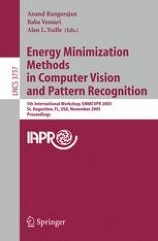
Energy minimization methods in computer vision and pattern recognition ; 5th International Workshop, EMMCVPR 2005, St. Augustine, FL, USA, November 9-11, 2005, Proceedings
Constitutes the refereed proceedings of the 5th International Workshop on Energy Minimization Methods in Computer Vision and Pattern Recognition, EMMCVPR 2005, in St Augustine, FL, USA, in November 2005. This book consists of 24 papers and 18 poster papers organized in topical sections on different approaches.

Endourooncology : New Horizons in Endourology
Recent research and clinical work have demonstrated that the rapid urologic innovation in minimally invasive treatment is creating exciting new horizons in endourology. This sixth volume in the series Recent Advances in Endourology brings that knowledge to a wider audience, focusing on the new concept of endourooncology, which is the merging of endourology and oncology. In the surgical treatment of urologic malignancies, bipolarization - that is, radical extended resection or organ-sparing surgery - is making remarkable advances. Further developments in sophisticated reconstructive surgery using robotic systems and image-guided ablation technology will allow surgeons to formulate minimally invasive, tailor-made procedures for each patient with urologic cancer. In this book, the current status and future prospects of these new technologies are reviewed, illuminating their roles in the future of endourooncology.

Embedded Systems Specification and Design Languages : Selected contributions from FDL’07
FDL is the most important European and, probably, worldwide forum to present research results, to exchange experiences, and to learn about new trends in the application of specification and design languages and the associated design and modeling methods and tools for complex, heterogeneous HW/SW embedded systems.

Embedded Java Security : Security for Mobile Devices
Whereas Java brings functionality and versatility to the world of mobile devices, at the same time it also introduces new security threats. The rapid growth of the number of mobile devices that support Java makes this a pressing issue. Embedded Java Security carefully examines the security aspects of Java and offers a security evaluation for the Java platform. After explaining background material on the architecture of embedded platforms and relating to its role in security, the book deconstructs the security model into its main components: It explains each component and relates it to the aim of securing the applications and the device. Toward this end, several implementations of the Java platform are examined and tested to relate the model to its actual implementation on devices. The security holes found are further used to clarify security issues and point out common errors. Finally, the book provides an evaluation of embedded Java security that includes security models and security tests performed on real-life implementations.

Elements of Robotics
Bridges the gap between playing with robots in school and studying robotics at the upper undergraduate and graduate levels to prepare for careers in industry and research. Robotic algorithms are presented formally, but using only mathematics known by high-school and first-year college students, such as calculus, matrices and probability. Concepts and algorithms are explained through detailed diagrams and calculations.

Elementi di Probabilità e Statistica
The authors' approach to Probability and Statistics is not based on measurement theory, but introduces the concept of probability and random number without using probability spaces. Trying to reduce formalism, the authors elaborate an introduction to probability more usable for students of computer science, engineering, statistics.

Elaborazione dei dati sperimentali
L'analisi statistica dei dati sperimentali, la loro elaborazione ed una corretta stima degli errori sono conoscenze necessarie agli studenti di fisica, biologia, chimica, ingegneria e dei corsi di specializzazione tecnico-scientifici in cui è richiesta pratica di laboratorio. Chi si occupa di problemi tecnici e di misure, per studio o per lavoro, deve possedere gli strumenti matematici di calcolo e di analisi necessari ad una corretta interpretazione dei dati sperimentali. Il testo fornisce in modo sintetico, chiaro ed esaustivo, tutte le nozioni e le conoscenze utili allo scopo. Gli argomenti sono esposti in modo rigoroso ma fluido e vengono introdotti con gradualità. Sono riportati i teoremi e le formule essenziali per una completa comprensione evitando, tuttavia, eccessivi appesantimenti matematici. Il libro è stato pensato per consentire ai docenti di scegliere autonomamente gli esperimenti per l'applicazione delle nozioni studiate.
