



الصفحة 68
الصفحة 68
Advanced Methods for Inconsistent Knowledge Management
This book presents a unified and systematic description of a wide class of miscellaneous problems of inconsistent knowledge management, analyzed by traditional mathematical methods using relational and logical representations.
Advanced memory optimization techniques for low-power embedded processors
this book explores a collaborative approach by proposing novel memory hierarchies and software optimization techniques for the optimal utilization of these memory hierarchies. Linking memory architecture design with memory-architecture aware compilation results in fast, energy-efficient and timing predictable memory accesses.The evaluation of the optimization techniques using real-life benchmarks for a single processor system, a multiprocessor system-on-chip (SoC) and for a digital signal processor system, reports significant reductions in the energy consumption and performance improvement of these systems. The book presents a wide range of optimizations, progressively increasing in the complexity of analysis and of memory hierarchies. The final chapter covers optimization techniques for applications consisting of multiple processes found in most modern embedded devices.
Advanced Man-Machine Interaction : Fundamentals and Implementation
Man-machine interaction is the gateway providing access to functions and services, which, due to the ever increasing complexity of smart systems, threatens to become a bottleneck. This book therefore introduces not only advanced interfacing concepts, but also gives insight into the related theoretical background.This refers mainly to the realization of video-based multimodal interaction via gesture, mimics, and speech, but also to interacting with virtual object in virtual environments, cooperating with local or remote robots, and user assistance. this book puts special emphasis on implementation aspects. To this end it is accompanied by software development environments for image processing, classification, and virtual environment implementation. In addition a test data base is included for gestures, head pose, facial expressions, full-body person recognition, and people tracking.

Advanced Intelligent Computing Theories and Applications. With Aspects of Theoretical and Methodological Issues ; 4th International Conference on Intelligent Computing, ICIC 2008 Shanghai, China, September 15-18, 2008 Proceedings
This book - in conjunction with the two volumes CCIS 0015 and LNAI 5226 - constitutes the refereed proceedings of the 4th International Conference on Intelligent Computing, ICIC 2008, held in Shanghai, China, in September 2008.

Advanced Intelligent Computing Theories and Applications. With Aspects of Theoretical and Methodological Issues ; 3rd International Conference on Intelligent Computing, ICIC 2007 Qingdao, China, August 21-24, 2007 Proceedings
Provides an annual forum dedicated to the emerging and challenging topics in artificial intelligence, machine learning, bioinformatics, and computational biology, etc. It aims to bring - gether researchers and practitioners from both academia and industry to share ideas, problems and solutions related to the multifaceted aspects of intelligent computing. This year, the conference concentrated mainly on the theories and methodologies as well as the emerging applications of intelligent computing. Its aim was to unify the picture of contemporary intelligent computing techniques as an integral concept that highlights the trends in advanced computational intelligence and bridges theoretical research with applications.
Advanced Concepts for Intelligent Vision Systems ; Vol. 4179 ; 8th International Conference, ACIVS 2006, Antwerp, Belgium, September 18-21, 2006, Proceedings
This book constitutes the refereed proceedings of the 8th International Conference on Advanced Concepts for Intelligent Vision Systems, ACIVS 2006, held in Antwerp, Belgium in September 2006. The 45 revised full papers and 65 revised poster papers presented were carefully reviewed and selected from around 242 submissions. The papers are organized in topical sections on noise reduction and restoration, segmentation, motion estimation and tracking, video processing and coding, camera calibration, image registration and stereo matching, biometrics and security, medical imaging, image retrieval and image understanding, as well as classification and recognition.
Advanced concepts for intelligent vision systems ; Vol. 3708 ; 7th International conference, ACIVS 2005, Antwerp, Belgium, September 20-23, 2005, Proceedings
"Thisvolumecollectsthepapersacceptedforpresentationatthe7thInternational Conferenceon Advanced Conceptsfor IntelligentVision Systems (ACIVS 2005). ThoughACIVS is a conference on all areas in image processing, one of its major domains is image and video compression. A third of the selected papers dealt with compression, motion estimation, moving object detection and other video applications. This year, topics related to clustering, pattern recognition and biometrics constituted another third of the conference. The last third was more related to the fundamentals of image processing, namely noise reduction, ?ltering, restorationandimagesegmentation.We wouldliketothankthe invited speakers Fernando Pereira"
Advanced computer simulation approaches for soft matter sciences I
Soft matter science is nowadays an acronym for an increasingly important class of materials, which ranges from polymers, liquid crystals, colloids up to complex macromolecular assemblies, covering sizes from the nanoscale up the microscale. Computer simulations have proven as an indispensable, if not the most powerful, tool to understand properties of these materials and link theoretical models to experiments. In this first volume of a small series recognized leaders of the field review advanced topics and provide critical insight into the state-of-the-art methods and scientific questions of this lively domain of soft condensed matter research.

Advanced ceramic materials
Examines exciting advancements in the field of ceramics, including nanotechnology, clean energy, and tribology as well as fundamental concepts like defects and structure. It is a comprehensive discussion on how today’s ceramics are processed and used in many of today’s critical technologies. It discusses current techniques for synthesizing durable and cost-effective ceramic components with biocompatibility, complexity, and high precision. This book is a comprehensive reference for researchers, engineers, dental clinicians, biologists, academics, and students interested in ceramics.
Advanced Autonomic Networking and Communication
This book presents a comprehensive reference of state-of-the-art efforts and early results in the area of autonomic networking and communication.
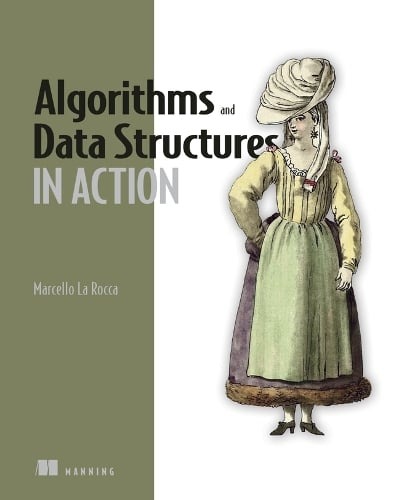
Advanced Algorithms and Data Structures
introduces a collection of algorithms for complex programming challenges in data analysis, machine learning, and graph computing. You’ll discover cutting-edge approaches to a variety of tricky scenarios. You’ll even learn to design your own data structures for projects that require a custom solution. What's inside Build on basic data structures you already know Profile your algorithms to speed up application Store and query strings efficiently Distribute clustering algorithms with MapReduce Solve logistics problems using graphs and optimization algorithms
Adaptive Machine Learning Algorithms with Python : Solve Data Analytics and Machine Learing Problems on Edge Devices
Learn to use adaptive algorithms to solve real-world streaming data problems. This book covers a multitude of data processing challenges, ranging from the simple to the complex. At each step, you will gain insight into real-world use cases, find solutions, explore code used to solve these problems, and create new algorithms for your own use. You will: Apply adaptive algorithms to practical applications and examples / Understand the relevant data representation features and computational models for time-varying multi-dimensional data / Derive adaptive algorithms for mean, median, covariance, eigenvectors (PCA) and generalized eigenvectors with experiments on real data / Speed up your algorithms and put them to use on real-world stationary and non-stationary data / Master the applications of adaptive algorithms on critical edge device computation applications
Adaptive Filtering : Algorithms and Practical Implementation
The book presents basic concepts of adaptive signal processing and filtering in a concise and straightforward manner. It concentrates on on-line algorithms whose adaptation occurs whenever a new sample of each environment signal is available. The material also illustrates block algorithms using a sub-band filtering framework whose adaptation occurs when a new block of data is available.
Adaptive dynamic programming for chemotherapy drug delivery
Focuses on the practical application of Adaptive Dynamic Programming (ADP) in chemotherapy drug delivery, taking into account clinical variables and real-time data. ADP's ability to adapt to changing conditions and make optimal decisions in complex and uncertain situations makes it a valuable tool in addressing pressing challenges in healthcare and other fields. As optimization technology evolves, we can expect to see even more sophisticated and powerful solutions emerge.
Adaptive Business Intelligence
In the modern information era, managers must recognize the competitive opportunities represented by decision-support tools. Adaptive business intelligence systems combine prediction and optimization techniques to assist decision makers in complex, rapidly changing environments. These systems address the fundamental questions: What is likely to happen in the future? And what is the best decision right now? Adaptive Business Intelligence includes elements of data mining, predictive modeling, forecasting, optimization, and adaptability.
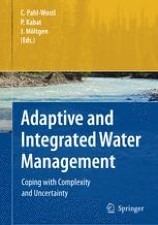
Adaptive and Integrated Water Management : Coping with Complexity and Uncertainty
Includes selected contributions on conceptual and methodological innovations and empirical insights from case studies on important themes such as multi-level governance, change management, vulnerability assessment, environmental flows, uncertainty analysis and the impacts of climate change. The book addresses a wide interdisciplinary audience of scientists and professionals from academia, industry, and involved in policy making.
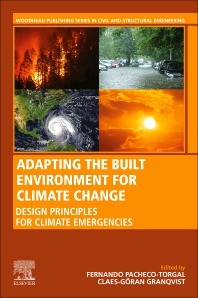
Adapting the built environment for climate change : Design principles for climate emergencies
Adapting the Built Environment for Climate Change: Design Principles for Climate Emergencies analyzes several scenarios and proposes various adaptation strategies for climate emergencies (heat waves, wildfires, floods, and storms). Divided into three themes, the book offers an organized vision of a complex and multi-factor challenge. It covers climatic resilience and building refurbishment, implications for service life prediction and maintainability, and climate adaptation in the maintenance and management of buildings. Sections cover infrastructure materials, climate emergency adaptation and building adaptation to heat waves, wildfires, floods and storms.

Adapting Proofs-as-Programs : The Curry--Howard Protocol
This book nuds new things to do with an old idea. The proofs-as-programs paradigm constitutes a set of approaches to developing programs from proofs in constructive logic. there is increasingly active research in applying constructive techniques to industrial-scale, complex software engineering problems. Thismonographdetailsseveralimportantadvancesinthisdirectionofpr- tical proofs-as-programs. One of the central themes of the book is a general, abstract framework for developing new systems of program synthesis by adapting proofs-as-programs to new contexts. Framework-oriented approaches that facilitate analogous - proaches to building systems for solving particular problems have been popular and successful. Thesemethodsarehelpful asthey providea formal toolbox that enablesa“roll-your-own”approachtodevelopingsolutions.Itishopedthatour framework will have a similar impact. The framework is demonstrated by example. We will give two novel - plications of proofs-as-programs to large-scale, coarse-grain software engine- ing problems: contractual imperative program synthesis and structured p- gram synthesis.
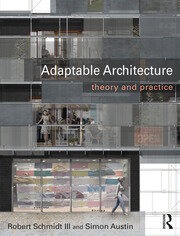
Adaptable Architecture : Theory and practice
provides thought-provoking and inquisitive insights into how we can prolong the useful life of buildings by designing them to be more adaptable, and hence create a more sustainable built environment. The book provides a theoretical foundation counterpointed by the experiences and ideas of those involved in the design and use of buildings. It explains many approaches to designing for change, with lessons from history, and case studies including The Cedar Rapids Public Library, Kentish Town Health Centre and Folkestone Performing Arts Centre, which stretch our thinking beyond the conventional notions of adaptability. The authors reveal the many conditions that make it a complex design phenomenon, by considering the purpose, design and business case of buildings as well as the physical product. Full of summaries, diagrams, reference charts, tables, and photos of exemplar solutions for use as conversational tools or working aids, this book is for any professional or student who wants to research, question, imagine, illustrate - and ultimately design for - adaptation.

Acute Endocrinology : From Cause to Consequence
The integration of endocrinology in critical care medicine has led to new experimental and clinical data on the complex endocrine and metabolic derangements accompanying non-endocrine severe illnesses. The joining of these two disciplines has generated important novel insights with significant clinical implications. Acute Endocrinology: From Cause to Consequence compiles these new findings into an important and highly relevant new resource.
