



الصفحة 61
الصفحة 61

Optical Networks and Technologies ; IFIP TC6 / WG6.10 First Optical Networks & Technologies Conference (OpNeTec), October 18-20, 2004, Pisa, Italy
This book is of interest to both academic and professional researchers working in the field of optical fiber communication. The focus is on engineering networks exploiting advanced optical technologies. Originally presented at OpNeTec 2004, the chapters cover optical network systems, transmission, and amplification; theoretical aspects; system implementation; and experimental test-beds.

Optical Near-Field Recording : Science and Technology
Written for all those wishing to understand the concepts behind modern optical recording. It also paves the way towards the future science and technology beyond the optical diffraction limit. The important keyword here is "near-field optics," a regime whose promising characteristics will open the door to a new information optics. This unique book will be useful for all graduate students, scientists and engineers seeking to advance our understanding of optical near-field recording.

Optical Interconnects : The Silicon Approach
Optical Interconnects provides a fascinating picture of the state of the art in optical interconnects and a perspective on what can be expected in the near future. It is composed of selected reviews authored by world leaders in the field, and these reviews are written from either an academic or industrial viewpoint. An in-depth discussion of the path towards fully-integrated optical interconnects in microelectronics is presented. This book will be useful not only to physicists, chemists, materials scientists, and engineers but also to graduate students who are interested in the fields of microelectronics and optoelectronics.

Optical Imaging Sensors and Systems for Homeland Security Applications
Presents original and significant technical contributions from leaders of industry, government, and academia in the field of optical and photonic sensors, systems and devices for detection, identification, prevention, sensing, security, verification and anti-counterfeiting. The chapters have recent and technically significant results, ample illustrations, figures, and key references. This book is intended for engineers and scientists in the relevant fields, graduate students, industry managers, university professors, government managers, and policy makers. Advanced Sciences and Technologies for Security Applications focuses on research monographs in the areas of : Recognition and identification (including optical imaging, biometrics, authentication, verification, and smart surveillance systems) / Biological and chemical threat detection (including biosensors, aerosols, materials detection and forensics), and / Secure information systems (including encryption, and optical and photonic systems). The series is intended to give an overview at the highest research level of the frontier of research in the physical sciences.

Optical Data Storage : Phase-change media and recording
Intro and 5 chapters give full good overview of optical data storage and plenty of experimental data.Book is very useful for students and engineers (optics, material sci., mechanics) and everybody who want to know how his/her DVD or CD is working.optical storage system stems from a small-scale product developed by Philips and commercially launched in 1978. This system was the result of the Videodisc project that was running at the Philips Research labs in Eindhoven, The Netherlands, through the 1970s. It was pioneering laser-based optical storage and was based on an analogue videodisc.

Optical Communication Theory and Techniques
Since the advent of optical communications, a greattechnological effort has been devoted to the exploitation of the huge bandwidth of optical fibers. Sta- ing from a few Mb/s single channel systems, a fast and constant technological development has led to the actual 10 Gb/s per channel dense wavelength - vision multiplexing (DWDM) systems, with dozens of channels on a single fiber. Transmitters and receivers are now ready for 40 Gb/s, whereas hundreds of channels can be simultaneously amplified by optical amplifiers. Nevertheless, despite such a pace in technological progress, optical c- munications are still in a primitive stage if compared, for instance, to radio communications: the widely spread on-off keying (OOK) modulation format is equivalent to the rough amplitude modulation (AM) format, whereas the DWDM technique is nothing more than the optical version of the frequency - vision multiplexing (FDM) technique. Moreover, adaptive equalization, ch- nel coding or maximum likelihood detection are still considered something “exotic” in the optical world. This is mainly due to the favourable char- teristics of the fiber optic channel (large bandwidth, low attenuation, channel stability, ...), which so far allowed us to use very simple transmission and detection techniques.

Optical Chemical Sensors
Chemical sensing using optics is under extensive research all over the world and many optical chemical sensors are finding increasing application in industry, environmental monitoring, medicine, biomedicine and chemical analysis. This is evidenced by an annual growth in the number of international scientific conferences in which advances in the field of optical chemical sensors are reported. These conferences, are, however, focused on disseminating the latest scientific results rather than providing in-depth education in the field of optical chemical sensors.

Optical Burst Switched Networks
Optical burst switching (OBS) is a promising new technique which attempts to address the problem of efficiently allocating resources for bursty traffic. In OBS, incoming data is assembled into bursts at the edges of the network, and when the burst is ready to be sent, resources in the network are reserved only for the duration of the burst. The reservation of resources is typically made by an out-of-band one-way control message which precedes the burst by some offset time. By reserving resources only for the duration of the burst, a greater degree of utilization may be achieved in the network. Provides an overview of optical burst switching. Design and research issues involved in the development of OBS networks are discussed, and approaches to providing QoS in OBS networks are presented. Topics include : Optical burst switching node and network architectures / Burst assembly / Signaling protocols / Contention resolution / Burst scheduling / Quality of service in OBS networks

Optical and Digital Techniques for Information Security
Optical and Digital Techniques for Information Security is the first book in a series focusing on Advanced Sciences and Technologies for Security Applications. This book encompases the results of research investigation and technologies used to secure, verify, recognize, track, and authenticate objects and information from theft, counterfeiting, and manipulation by unauthorized persons and agencies. This Information Security book will draw on the diverse expertise in optical sciences and engineering, digital image processing, imaging systems, information processing, computer based information systems, sensors, detectors, and biometrics to report innovative technologies that can be applied to information security issues.

Ophthalmic Medical Image Analysis ; 7th International Workshop, OMIA 2020, Held in Conjunction with MICCAI 2020, Lima, Peru, October 8, 2020, Proceedings
Constitutes the refereed proceedings of the 6th International Workshop on Ophthalmic Medical Image Analysis, OMIA 2020, held in conjunction with the 23rd International Conference on Medical Imaging and Computer-Assisted Intervention, MICCAI 2020, in Lima, Peru, in October 2020. The workshop was held virtually due to the COVID-19 crisis. The 21 papers presented at OMIA 2020 were carefully reviewed and selected from 34 submissions. The papers cover various topics in the field of ophthalmic medical image analysis and challenges in terms of reliability and validation, number and type of conditions considered, multi-modal analysis (e.g., fundus, optical coherence tomography, scanning laser ophthalmoscopy), novel imaging technologies, and the effective transfer of advanced computer vision and machine learning technologies.

Open source systems : Towards robust practices; 13th IFIP WG 2.13 International Conference, OSS 2017, Buenos Aires, Argentina, May 22-23, 2017, Proceedings
This book constitutes the refereed proceedings of the 13th IFIP WG 2.13 International Conference on Open Source Systems, OSS 2017, held in Buenos Aires, Argentina, in May 2017. The 16 revised full papers and 3 short papers presented were carefully reviewed and selected from 32 submissions. The papers cover a wide range of topics related to free, libre, and open source software (FLOSS), including: licensing, strategies, and practices; case studies; projects, communication, and participation; tools; and project management, development and evaluation.

Open Semantic Technologies for Intelligent System ; 10th International Conference, OSTIS 2020, Minsk, Belarus, February 19–22, 2020, Revised Selected Papers
Constitutes the refereed proceedings of the 10th International Conference on Open Semantic Technologies for Intelligent System, OSTIS 2020, held in Minsk, Belarus, in February 2020. The 14 revised full papers and 2 short papers were carefully reviewed and selected from 62 submissions. The papers mainly focus on standardization of intelligent systems and cover wide research fields including knowledge representation and reasoning, semantic networks, natural language processing, temporal reasoning, probabilistic reasoning, multi-agent systems, intelligent agents.
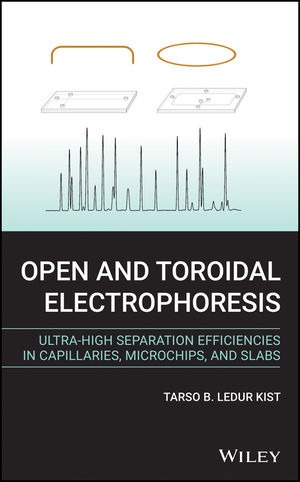
Open and Toroidal Electrophoresis : Ultra-High Separation Efficiencies in Capillaries, Microchips and Slabs
Written by one of the developers of Toroidal Capillary Electrophoresis (TCE), this book is the first to present this novel analytical technique, in detail, to the field of analytical chemistry. The exact expressions of separation efficiency, resolution, peak capacity, and many other performance indicators of the open and toroidal layouts are presented and compared.

Open and Closed Innovation : Different Cultures for Different Strategies
Open Innovation is a phenomenon in both research and management practice. Since radical innovation or new business development often require external technologies or ways of commercialization, many firms have shifted from a Closed to an Open Innovation model. However, firms often face difficulties during the implementation. While the implementation effort usually focuses on external ideas and technologies as well as the processes to identify them, cultural challenges are neglected. Philipp Herzog develops a theoretical framework arguing that Open Innovation and Closed Innovation cultures need to be different (e.g. regarding the not-invented-here (NIH) syndrome). Based on a multi-respondent survey among 120 R&D employees from three business units of a leading chemical firm, he provides empirical evidence for many of the hypothesized differences in innovation culture.

One-Dimensional Nanostructures
One-dimensional (1D) nanostructures, including nanowires, nanotubes and quantum wires, have been regarded as the most promising building blocks for nanoscale electronic and optoelectronic devices. Worldwide efforts in both the theory and the experimental investigation of growth, characterization and applications of 1D nanostructures have resulted in a mature, multidisciplinary field. In this book, a wealth of state-of-the-art information offers the opportunity to uncover the underlying science from diverse perspectives. Leading researchers elucidate the synthesis and properties of 1D nanostructures for various morphologies and compositions (semiconductor, metal, carbon, etc.) as well as their considerable impact on spintronics, information storage, and the design of field-effect transistors.

One Hundred Years of Chemical Warfare : Research, Deployment, Consequences
On April 22, 1915, the German military released 150 tons of chlorine gas at Ypres, Belgium. Carried by a long-awaited wind, the chlorine cloud passed within a few minutes through the British and French trenches, leaving behind at least 1,000 dead and 4,000 injured. This chemical attack, which amounted to the first use of a weapon of mass destruction, marks a turning point in world history. The preparation as well as the execution of the gas attack was orchestrated by Fritz Haber, the director of the Kaiser Wilhelm Institute for Physical Chemistry and Electrochemistry in Berlin-Dahlem. During World War I, Haber transformed his research institute into a center for the development of chemical weapons (and of the means of protection against them).

Oncologic and Cardiologic PET/CT-Diagnosis : An Interdisciplinary Atlas and Manual
Since 1999/2000 simultaneous imaging of anatomical features and metabolic activities using fused PET and CT images has complemented and in many cases even replaced what was originally done as separate analysis. – Is this a small revolution? – In fact, this new approach can be considered to be without a rival for imaging diagnosis. The complementary efforts of nuclear medicine physicians and radiologists have improved the diagnostic value of PET/CT scans. The successful use of PET/CT in the field of oncology has been documented world-wide, and in cardiology we can take advantage of the significant findings of PET diagnosis, particularly in the USA. New prospects are now available for paediatric oncology and molecular medicine.

Oncogenes Meet Metabolism : From Deregulated Genes to a Broader Understanding of Tumour Physiology
In 1920s, Otto Warburg described the phenomenon of ‘aerobic glycolysis’, the ability of tumour cells to convert glucose to lactate in the presence of normal oxygen conditions. Warburg’s hypothesis of an altered metabolism in cancer cells found no immediate acceptance, though it was latter confirmed for most human tumours. With the advent of molecular biology the focus in tumour research has shifted towards the search for oncogenes. However, the interest in cancer molecular profiling eventually led to a renaissance of the Warburg effect trying to combine genetic alterations with effects on metabolism with the help of modern analytic technologies to rapidly analyze broad varieties of metabolites in various tissues and bodyfluids (metabonomics).

Oncofertility : Fertility Preservation for Cancer Survivors
While cancer survival rates have increased steadily over the last several decades, particularly among younger patients, the more aggressive forms of treatment that have made this possible often compromise a cancer patient's ability to later have biological children. In the past, pregnancy after cancer was largely unheard of. Today it is increasingly a possibility due to high survivorship rates in general and emerging reproductive technologies that give patients and their families options at the time of diagnosis to ensure a patient's future fertility (cryopreservation of ovarian tissue).

On the move to meaningful internet systems 2006 : OTM 2006 Workshops ; Vol. 4277 ; OTM Confederated International Conferences and Posters, AWeSOMe, CAMS, COMINF, IS, KSinBIT, MIOS-CIAO, MONET, On To Content, ORM, PerSys, OTM Academy Doctoral Consortium, RDDS, SWWS, SeBGIS 2006, Montpellier, France, October 29 - November 3, 2006, Proceedings, Part I
This two-volume set LNCS 4277/4278 constitutes the refereed proceedings of 14 international workshops held as part of OTM 2006 in Montpellier, France in October/November 2006. The 191 revised full papers presented were carefully reviewed and selected from a total of 493 submissions to the workshops. The first volume begins with 26 additional revised short or poster papers of the OTM 2006 main conferences.
