



الصفحة 60
الصفحة 60

Component Deployment; 3rd International Working Conference, CD 2005, Grenoble, France, November 28-29, 2005, Proceedings
his volume of Lecture Notes in Computer Science contains the proceedings of the rd 3 Working Conference on Component Deployment (CD 2005), which took place 2005 in Grenoble, France, and co-located with Middleware 2005. CD 2005 is the third international conference in the series, the first two being held in Berlin and Edinburgh in 2002 and 2004, respectively. The proceedings of both these conferences were also published by Springer in the Lecture Notes in Computer Science series and may be found in volumes 2370 and 3083. Component deployment addresses the tasks that need to be performed after components have been developed and addresses questions such as: • What do we do with components after they have been built? • How do we deploy them into their execution environment? • How can we evolve them once they have been deployed?
Complex-valued neural networks
This book is the first monograph ever on complex-valued neural networks, which lends itself to graduate and undergraduate courses in electrical engineering, informatics, control engineering, mechanics, robotics, bioengineering, and other relevant fields. It is useful for those beginning their studies, for instance, adaptive signal processing for highly functional sensing and imaging, control in unknown and changing environment, brainlike information processing, robotics inspired by human neural systems, and interdisciplinary studies to realize comfortable society. It is also helpful to those who carry out research and development regarding new products and services at companies.
Complexity in landscape ecology
Interactions matter. To understand the distributions of plants and animals in a landscape you need to understand how they interact with each other, and with their environment. The resulting networks of interactions make ecosystems highly complex. Recent research on complexity and artificial life provides many new insights about patterns and processes in landscapes and ecosystems. This book provides the first overview of that work for general readers. It covers such topics as connectivity, criticality, feedback, and networks, as well as their impact on the stability and predictability of ecosystem dynamics. With over 60 years of research experience of both ecology and complexity, the authors are uniquely qualified to provide a new perspective on traditional ecology.
Complexity Explained
This book explains why complex systems research is important in understanding the structure, function and dynamics of complex natural and social phenomena. It illuminates how complex collective behavior emerges from the parts of a system, due to the interaction between the system and its environment.

Complex Effects in Large Eddy Simulations
This volume contains a collection of expert views on the state of the art in Large Eddy Simulation (LES) and its application to complex ?ows. Much of the material in this volume was inspired by contributions that were originally presented at the symposium on Complex E?ects in Large Eddy Simulation held in Lemesos (Limassol), Cyprus, between September 21st and 24th, 2005.
Complex decision making : Theory and practice
The increasingly complex environment of today's world, characterized by technological innovation and global communication, generates myriads of possible and actual interactions while limited physical and intellectual resources severely impinge on decision makers, be it in the public or private domains. At the core of the decision-making process is the need for quality information that allows the decision maker to better assess the impact of decisions in terms of outcomes, nonlinear feedback processes and time delays on the performance of the complex system invoked.
Complex Artificial Environments : Simulation, Cognition and VR in the Study and Planning of Cities
This book explores the possibilities of applying the theories of complexity and self-organization developed to account for various phenomena in the natural science to artifacts traditionally the realm of humanities and social sciences. The emphasis of this volume is on the development of cities and the impact of these methods on urban simulation methods.

Compiling ESTEREL
Esterel is based on the simple idea of providing a software language that has a synchronous model of time. That is, the execution of the program is divided into discrete instants, and statements are either guaranteed to execute in a single instant, or take multiple instants as requested by the programmer. Suitable for programming safety-critical real-time systems, Esterel and its model of computation have found use in industrial applications such as avionics, integrated circuit design, and other safety-critical environments. While Compiling Esterel does not assume prior knowledge of the Esterel language, readers will appreciate having prior knowledge of programming language semantics and compiler technology, along with some familiarity with synchronous digital hardware design.
Competitiveness in the Tourism Sector : A Comprehensive Approach from Economic and Management Points
International tourism is expected to be a major vehicle of economic development in industrializing countries in the 21st century, especially for Asia. To generate long-term growth, countries with tourism-based economies must develop strategies for employing their comparative advantages to achieve competitive advantages. However, competitiveness in the tourist industry is multi-dimensional and complex. This study evaluates the competitiveness of the Taiwanese tourism sector by a multi-dimensional framework. The theoretical model proposes that the competitiveness of tourist destinations should be composed of Ricardian comparative advantages (like the conditions of natural endowments and the degree of technological change); Porterian competitive advantages; tourism management, i.e., providing high quality education and job training, public goods, support services and reduced transaction costs to enhance comparative and competitive advantages; and environmental conditions.
Comparative Third Sector Governance in Asia : Structure, Process, and Political Economy
The book – the first of its kind – establishes new theory and knowledge in the area of third sector organizations (TSOs) in Asia. The main purpose of this book is to draw the attention of Asia's TSOs on the importance of good governance. It documents variety of approaches, and identifies socio-cultural, economic, and political dynamics and impacts of different models of TSO governance. The combined information from the contributions in this work will ensure the sustainability of TSOs throughout Asia.
Comparative risk assessment and environmental decision making
Decision making in environmental projects is typically a complex and confusing process characterized by trade-offs between socio-political, environmental, and economic impacts. Comparative Risk Assessment (CRA) is a methodology applied to facilitate decision making when various activities compete for limited resources. CRA has become an increasingly accepted research tool and has helped to characterize environmental profiles and priorities on the regional and national level. CRA may be considered as part of the more general but as yet quite academic field of multi-criteria decision analysis (MCDA). Considerable research in the area of MCDA has made available methods for applying scientific decision theoretical approaches to multi-criteria problems, but its applications, especially in environmental areas, are still limited. The papers show that the use of comparative risk assessment can provide the scientific basis for environmentally sound and cost-efficient policies, strategies, and solutions to our environmental challenges.
Comparative genomics ; RECOMB 2007, International Workshop, RECOMB-CG 2007, San Diego, CA, USA, September 16-18, 2007, Proceedings
This book provides an evolutionary conceptual framework for comparative genomics, with the ultimate objective of understanding the loss and gain of genes during evolution, the interactions among gene products, and the relationship between genotype, phenotype and the environment. The many examples in the book have been carefully chosen from primary research literature based on two criteria: their biological insight and their pedagogical merit. The phylogeny-based comparative methods, involving both continuous and discrete variables, often represent a stumbling block for many students entering the field of comparative genomics. They are numerically illustrated and explained in great detail.

Comparative Environmental Politics
The book explores five major topics: state-society relations; environmental non-governmental organizations (ENGOs); Green parties and environmental movements; institutions of government and policy-making; variations in the capacities of states to protect the environment; and national responses to global problems. It compares and contrasts rich and poor nations, large and small countries, liberal democracies and authoritarian states.
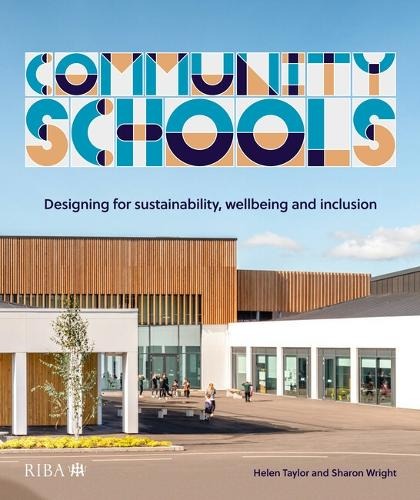
Community schools : Designing for sustainability, wellbeing and inclusion
Reconsiders what is required from physical school environments, building on the learning gathered from the sector over the past two decades. To meet the new social, environmental and economic challenges it advocates designing differently, both in terms of the form that buildings take and the evaluation of their impact and performance. By calling for a reframing of the way that schools are regarded as community-wide amenities, this book explores the potential for architects to deliver design in a manner that supports healthy lifestyles and promotes wellbeing. Through encouraging social connections, new possibilities open up for educational facilities to become open, welcoming and inclusive. Featuring: Over 12 international case studies from practices including: Architype, Argyll + Bute, Bogle Architects, DRMM, Revaerk, Scott Brownrigg and XDGA. Key themes of wellbeing, connectivity, inclusion, indicators and evaluation. Practical guidance and learning points throughout. A new design brief for community schools
Communicative figurations : Transforming communications in times of deep mediatization
This open access volume is about how to research the influence of our changing media environment. Today, there is not one single medium that is the driving force of change. With the spreading of various technical communication media such as mobile phone and internet platforms, we are confronted with a media manifold of deep mediatization. But how can we investigate its transformative capability? This book answers this question by taking a non-media-centric perspective, researching the various figurations of collectivities and organizations humans are involved in. The first part of the book outlines a fundamental understanding of the changing media environment of deep mediatization and its transformative capacity. The second part focuses on collectivities and movements: communities in the city, critical social movements, maker, online gaming groups and networked groups of young people. The third part moves institutions and organizations into the foreground, discussing the transformation of journalism, religion, politics, and education, whilst the fourth and final part is dedicated to methodologies and perspectives.
Communicating science and technology in society
Addresses the engagement between science and society from multiple viewpoints. At a time when trust in experts is being questioned, misinformation is rife and scientific and technological development show growing social impact, the volume examines the challenges in involving the public in scientific debates and decisions. It takes into account societal needs and concerns in research, and analyses the interface between the roles of institutions and individuals. From environmental challenges to science communication, participatory technological design to animal experimentation, and transdisciplinarity to norms and values in science, the volume brings together research on areas in which scientists and citizens interact, across diverse, often understudied, socio-cultural contexts in Europe.

Communicating European Research 2005 ; Proceedings of the Conference, Brussels, 14-15 November 2005
The book covers the main aspects of science and technology communication today and addresses topical questions such as: Is science journalism necessary at all? Should communication become one of the basic skills of scientists, as compulsory as thinking, testing and experimenting? Should our schools of the future put scientific literacy at the top of the science curriculum? Do we need science critics? Does the coverage of science in the media reflect the choice of the editors or does it accurately mirror the public’s interest? How does one capture the public’s attention when promoting science on local, commercial or entertainment radio? Why would we need standards in science communication? How can we remove any obstacles to communication among researchers and between researchers?

Common Chinese Materia Medica ; Vol.4
Describes 256 species of medicinal plants from 5 families, which are commonly used in Chinese medicine. The most important species are Agrimonia pilosa, Amygdalus persica, Armeniaca mume, Armeniaca vulgaris, Armeniaca sibirica, Chaenomeles sinensis, Eriobotrya japonica of Rosaceae; Chimonanthus praecox of Calycanthaceae;Albizia julibrissin, Archidendron clypearia, Entada phaseoloides, Bauhinia championii of Mimosoideae; Caesalpinia sappan, Cassia tora, Gleditsia sinensis of Caesalpiniaceae; Abrus cantoniensis, Astragalus membranaceus, Astragalus membranaceus, Dalbergia odorifera, Desmodium caudatum, Desmodium styracifolium, Erythrina variegata, Euchresta japonica, Flemingia prostrata, Glycyrrhiza uralensis, Glycyrrhiza inflata, Glycyrrhiza glabra, Lablab purpureus, Sophora japonica and Spatholobus suberectus of Butterflyaceae. In each specie, it introduces the scientific names, medicinal names, morphologies, habitats, distributions, acquisition and processing methods of these medicinal plants, the content of medicinal properties, therapeutic effects, usage and dosage of these medicinal plants, and attaches unedited color pictures and pictures of part herbal medicines of each species. This book series has 10 volumes in total, which covers over 2000 kinds of Chinese medicines that are commonly used. These volumes not only introduce the efficacy function and some prescriptions of the medicines, but also introduce the biological characteristics of them in detail with clear photos of the habitats, so that readers can identify them in the field. Apart from the growing environment, the books expound the distribution areas and other information to facilitate researches and other applications. The volumes are targeted at readers of general interests and it is also of high referential value for scientific researcher and teachers. It can be used as a guide to researchers, clinical doctors, and students in the department of pharmaceutics and traditional Chinese medicine.

Common Chinese materia medica ; Vol.2
Contains 231 species of 40 families of medicinal plants. The most important family of which are Magnoliaceae, such as Magnolia officinalis and Magnolia officinalis subsp. biloba; Schisandra chinensis of Schisandraceae; Cinnamomum aromaticum of Lauraceae, Coptis chinensis Franch., Coptis omeiensis and Coptis teeta of Berberidaceae; Isatis indigotica, Lepidium apetalum and Raphanus sativus of Cruciferae; Rheum palmatum, Rheum officinale and Rheum taguticum of Polygonaceae, etc. In each specie, it introduces the scientific names, herbal medicine names, characteristics, habitats, distributions, Acquisition and processing methods, medicinal traits, tastes, functions, use and dosages, and other information of medicinal plants, and attaches unedited color pictures and pictures of part herbal medicines for each species. This book series has totally 10 volumes, which covers 2000 kinds of Chinese medicines that are commonly seen or used. These volumes not only introduce the efficacy, function and some prescriptions of the medicines, but also introduce the biological characteristics of them in detail with clear photos of the habitats, so that readers can identify them in the field. Apart from the growing environment, the books expound the distribution areas and other information to facilitate researches and other applications. The volumes are targeted at readers of general interests and it is also of high referential value for scientific researcher and teachers. It can be used as a guide to researchers, clinical doctors, and students in the department of pharmaceutics and traditional Chinese medicine.
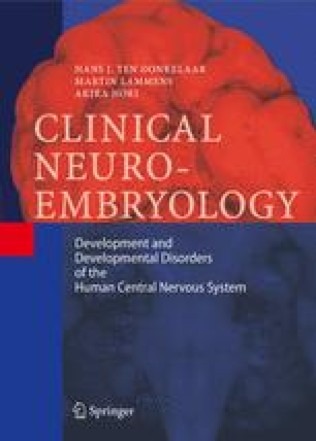
Clinical Neuroembryology : Development and Developmental Disorders of the Human Central Nervous System
Combines data from human embryology, animal research and developmental neuropathology. This book provides an overview of the development of the human Central Nervous System (CNS) in the context of its many developmental disorders due to genetic, environmental and hypoxic causes. It highlights numerous clinical cases and contains over 400 figures.
