



الصفحة 6
الصفحة 6

Numerical Continuation Methods for Dynamical Systems : Path following and boundary value problems
The book opens with a foreword by Herbert B. Keller and lecture notes by Sebius Doedel himself that introduce the basic concepts of numerical bifurcation analysis. The other chapters by leading experts discuss continuation for various types of systems and objects and showcase examples of how numerical bifurcation analysis can be used in concrete applications. Topics that are treated include: interactive continuation tools, higher-dimensional continuation, the computation of invariant manifolds, and continuation techniques for slow-fast systems, for symmetric Hamiltonian systems, for spatially extended systems and for systems with delay. Three chapters review physical applications: the dynamics of a SQUID, global bifurcations in laser systems, and dynamics and bifurcations in electronic circuits.

Numerical Approximation Methods for Elliptic Boundary Value Problems : Finite and Boundary Elements
Although the aim of this book is to give a unified introduction into finite and boundary element methods, the main focus is on the numerical analysis of boundary integral and boundary element methods. Starting from the variational formulation of elliptic boundary value problems boundary integral operators and associated boundary integral equations are introduced and analyzed. By using finite and boundary elements corresponding numerical approximation schemes are considered.

Numeri e Crittografia
Number Theory is one of the most classic fields of Mathematics. The numbers he deals with are those that are called natural 0, 1, 2, ... and that we use since childhood to count. Seemingly simple and harmless, they nevertheless hide some of the most difficult and exciting mysteries of the whole of mathematics. Cryptography, on the other hand, is concerned with hiding the content of confidential communications from prying eyes and corresponds to widespread needs in our society. The Theory of Numbers can help Cryptography in these needs, thanks to the mysteries that still surround it. The text gives an account of this link. It first introduces Modern Cryptography, its goals and priorities. He then goes on to expose arguments of Number Theory, with particular reference to the two problems of recognizing prime numbers, and of decomposing a natural into its prime factors; for each of the two issues it provides a vast panorama of the algorithms that deal with it and try to solve it as effectively as possible. In particular, it presents the very recent AKS procedure for recognizing prime numbers. The book then returns to Cryptography and shows how ideas and methods of Number Theory apply to the construction of reliable procedures for the secure transmission of confidential information.

Number Theory and the Periodicity of Matter
The book launch was held at the University of Pretoria (UP) on 26 March 2008. … It’s a fascinating and original concept and I hope you all get the opportunity to read it. It will challenge your current views of numbers. … If there is a link between numbers and the Periodic Table this will of course have major implications as to the ‘meaning’ on the Periodic Table. It’s great to have original thinkers in our midst

Number Theory ; Vol. II : Analytic and Modern Tools
The central theme of this graduate-level number theory textbook is the solution of Diophantine equations, i.e., equations or systems of polynomial equations which must be solved in integers, rational numbers or more generally in algebraic numbers. This theme, in particular, is the central motivation for the modern theory of arithmetic algebraic geometry. In this text, this is considered through three aspects.
Number Theory ; Vol. I : Tools and Diophantine Equations
The central theme of this graduate-level number theory textbook is the solution of Diophantine equations, i.e., equations or systems of polynomial equations which must be solved in integers, rational numbers or more generally in algebraic numbers. This theme, in particular, is the central motivation for the modern theory of arithmetic algebraic geometry. In this text, this is considered through three aspects.
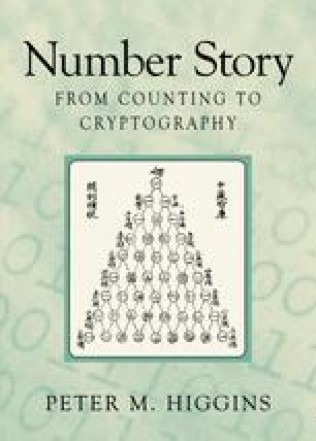
Number Story : From Counting to Cryptography
Numbers have fascinated people for centuries. They are familiar to everyone, forming a central pillar of our understanding of the world, yet the number system was not presented to us "gift-wrapped" but, rather, was developed over millennia. Today, despite all this development, it remains true that a child may ask a question about numbers that no one can answer. Many unsolved problems surrounding number matters appear as quirky oddities of little account while others are holding up fundamental progress in mainstream mathematics.

Number Fields and Function Fields – Two Parallel Worlds
These invited articles by leading researchers in the field explore various aspects of the parallel worlds of function fields and number fields. Topics range from Arakelov geometry, the search for a theory of varieties over the field with one element, via Eisenstein series to Drinfeld modules, and t-motives.
Nuclear Science and Safety in Europe
Recent results on the nature of low-, intermediate- and high-energy nuclear forces as well as on the internal structure of nucleons and atomic nuclei are presented. This book Prospects to find a new state of the nuclear matter at extreme conditions that existed in the early Universe and the utilisation of the nuclear energy are discussed.

Nuclear Medicine Technology : Review Questions for the Board Examinations
Nuclear medicine technology has been a fascinating subject ever since the early rectilinear scanner produced images, and is becoming ever more interesting (and demanding) with the growth of positron emission tomography and other molecular imaging. Taking and passing the exam offered by the Nuclear Medicine Technology Certi? cation Board (NMTCB), or that offered by the American Registry of Radiologic Techno- gists (ARRT), is the ? nal step in reaching the status of Nuclear M edicine Technologist. These exams are both challenging and the breadth of knowledge that they cover mean that a th- ough review is in order before attempting either exam. This book was created to assist in preparation for those exams. In addition to recalling information, the questions require application of information, and analysis of situations.

Nuclear Law : The Global Debate
This open access book traces the journey of nuclear law: its origins, how it has developed, where it is now, and where it is headed. As a discipline, this highly specialized body of law makes it possible for us to benefit from the life-saving applications of nuclear science and technology, including diagnosing cancer as well as avoiding and mitigating the effects of climate change. This book seeks to give readers a glimpse into the future of nuclear law, science and technology. It intends to provoke thought and discussion about how we can maximize the benefits and minimize the risks inherent in nuclear science and technology. This compilation of essays presents a global view in discipline as well as in geography.
Nuclear Fission and Cluster Radioactivity : An Energy-Density Functional Approach
It is the first application to nuclear physics from energy-density functional method, for which Professor Walter Kohn received the Nobel Prize in Chemistry. The book presents a comprehensive extension of the Bohr-Wheeler theory with the present knowledge of nuclear density distribution function.

Nuclear Energy : Principles, Practices, and Prospects
The world faces serious difficulties in obtaining the energy that will be needed in coming decades for a growing population, especially given the problem of climate change caused by fossil fuel use. This book presents a view of nuclear energy as an important carbon-free energy option. It discusses the nuclear fuel cycle, the types of reactors used today and proposed for the future, nuclear waste disposal, reactor accidents and reactor safety, nuclear weapon proliferation, and the cost of electric power. To provide background for these discussions, the book begins with chapters on the history of the development and use of nuclear energy, the health effects of ionizing radiation, and the basic physics principles of reactor operation. The text has been rewritten and substantially expanded for this edition, to reflect changes that have taken place in the eight years since the publication of the first edition and to provide greater coverage of key topics. These include the Yucca Mountain repository plans, designs for next-generation reactors, weapons proliferation and terrorism threats, the potential of alternatives to nuclear energy, and controversies about low-level radiation.

Nuclear back-end and transmutation technology for waste disposal : Beyond the Fukushima accident
Covers essential aspects of transmutation technologies, highlighting especially the advances in Japan. The accident at the Fukushima Daiichi Nuclear Power Plant (NPP) has caused us to focus attention on a large amount of spent nuclear fuels stored in NPPs. In addition, public anxiety regarding the treatment and disposal of high-level radioactive wastes that require long-term control is growing. The Japanese policy on the back-end of the nuclear fuel cycle is still unpredictable in the aftermath of the accident. Therefore, research and development for enhancing the safety of various processes involved in nuclear energy production are being actively pursued worldwide.

Nuclear and Radiological Emergencies in Animal Production Systems, Preparedness, Response and Recovery
This volume explains how major nuclear and radiological emergencies (NREs) can have implications at local, national and international level. The response to NREs requires a competent decision-making structure, clear communication and effective information exchange. National veterinary services have the responsibility to plan, design and manage animal production system in their countries. These activities cover animal health, animal movement control, production control and improvement, and control of the products of animal origin before their placement on the market.
NPY Family of Peptides in Neurobiology, Cardiovascular and Metabolic Disorders : from Genes to Therapeutics
The NPY-family of peptides encompasses several groups of neurotransmitters and hormones, which exert diverse biological and pathological actions that bear on all major vital systems. This book is a unique compilation of the most recent breakthroughs in NPY/PYY neurobiology, cardiovascular and metabolic disorders. The identification of multiple receptors for the members of the NPY and PYY family of peptides provides new opportunities for discovery of specific NPY antagonists and agonists that have vast clinical potential. The recognition of the role of NPY in stimulation of food intake has already resulted in discovery of potent and selective NPY receptor Y-5 antagonists, which are in clinical development for obesity. NPY Y1 receptor antagonists are targeted for cardiovascular indications. Research into the multiple functions of NPY and its receptors in neurological and affective disorders is also actively pursued. The chapters in this book are written by internationally renowned experts with the objective to synthesize leading concepts and data in support for translational medicine.

Novepernove : Sudoku : segreti e strategie di gioco = Novepernove : Sudoku : game secrets and strategies
The game of Sudoku has exploded in the Western world since 2005 and has since continued to expand, to gather new followers, to proliferate specialized magazines on newsstands and dedicated sites on the Internet. Sudoku success shows no signs of slowing down. All the major newspapers offer daily some patterns to be solved; associations and federations were born; local tournaments, various national championships and even an annual world championship are organized; the proposals for variants of the classic Sudoku multiply; many university professors have launched graduate theses on the subject; various software products have been written on PCs, on dedicated hardware and on the main interactive game consoles.

Novel Plant Imaging and Analysis : Water, Elements and Gas, Utilizing Radiation and Radioisotopes
This book is only an introduction to show that radiation and radioisotopes (RI) are premier tools to study living plant physiology which leads to new findings. Who had ever imagined that we could see water in a plant? Who had ever imagined that we could see ions moving toward roots in solution? Who had ever imagined that we could see invisible gas (CO2) fixation and movement in a plant? These studies demonstrated for the first time that water, ions and gas can be visualized in living plants, which could be hardly seen by anyone before. This publication summarizes the results obtained by Nakanishi’s lab in The Univ. of Tokyo, based on her original concept and her original tools or systems. It is useful for professional scientists, plant physiologist, and those studying plant imaging.
Novel Optical Resolution Technologies
After theend ofthe 20th century, the science ofcrystallizationreached a truly exciting stage where new opportunities emerged in both theory and expe- ment. Variousphysical methodsare capable of resolving the surface as wellas the insid estructure of crystalsat the atomiclevel while newhigh-performance computing resourcesafford thecapability of modeling the complexlarge-scale alignments necessary to simulatecrystallizationinrealsystems. Asaresult, the science of crystallization has shifted gradually fromstatic to dynamic science and considerable progress now underlies the complex but beautiful cryst- lization process.The vastpotential ofcrystallizationasan- portant feld ofscience isfar beyondthesimple technologyofpharmaceutical industries during the 20th century.
Novel NMR and EPR Techniques
This book delivers a survey of recent research in the fields of condensed matter physics and chemistry based on novel NMR and ESR techniques. Applications include quantum computing, metal nanoparticles, low dimensional magnets, fullerenes as atomic cages, superconductors, porous media, and laser assisted studies. The book is dedicated to Professor Robert Blinc, on the occasion of his seventieth birthday, in appreciation of his remarkable scientific accomplishments in the NMR of condensed matter.
