



الصفحة 6
الصفحة 6
Asymmetric organo-metal catalysis : Concepts, principles, and applications
In Asymmetric Organo-Metal Catalysis: Concepts, Principles, and Applications, accomplished chemist Liu-Zhu Gong delivers a comprehensive discussion of how to design efficient organo/metal combined catalyst systems, new cooperatively catalyzed asymmetric reactions, relay catalytic cascades, and multicomponent reactions. The distinguished author covers critical topics, like the combined catalysis of chiral phase transfer catalysts, enamine, iminium, nucleophilic Lewis base, or Bronsted acids with metal complexes, while also covering the cooperative catalysis of photocatalysts and organocatalysts.
Asymmetric metal catalysis in Enantioselective Domino reactions
Collects the major progress in the field of enantioselective one-, two-, and multicomponent domino reactions promoted by chiral metal catalysts. It clearly illustrates how enantioselective metal-catalyzed processes constitute outstanding tools for the development of a wide variety of fascinating one-pot asymmetric domino reactions, thereby allowing many complex products to be easily generated from simple materials in one step. The book also strictly follows the definition of domino reactions by Tietze as single-, two-, as well as multicomponent transformations.
Asymmetric hydrogenation and transfer hydrogenation
Details its complex subject matter clearly and plainly and covers everything from catalyst development and reactions to mechanisms and applications in academia and industry. The papers included within come from many of the leading voices in their respective fields and represent the newest and best research available today.
Applied pharmacology for the dental hygienist ; 9th ed.
Provides an in-depth understanding of the pharmacologic principles needed for safe and effective dental treatment and oral health care. It discusses drug properties and mechanisms of action, dosages, intended effects, interactions, and adverse reactions — both for the medications a patient may already be taking and for the drugs prescribed by the dentist.
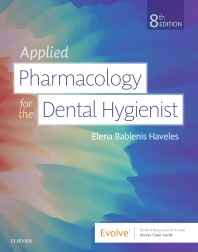
Applied pharmacology for the dental hygienist ; 8th ed.
Provides you with an in-depth understanding of the pharmacologic principles needed for safe and effective dental treatment and oral health care. It discusses drug properties and mechanisms of action, dosages, intended effects, interactions, and adverse reactions - both for the medications a patient may already be taking and for the drugs prescribed by the dentist. This new edition has been updated throughout to give you a firm foundation in pharmacology in order to assess and educate patients so they can maintain optimal oral health!

Apitherapy and therapeutic properties
Apitherapy is an alternate therapy that relies on the usage of honeybee products, most importantly bee venom for the treatment of many human diseases. Bee venom contains several active molecules such as peptides and enzymes that have advantageous potential in treating inflammation and central nervous system diseases, such as Parkinson’s disease, and Alzheimer’s disease and autoimmume diseases like reumatic and atherosclerosis .Bee venom (BV) is usually associated with pain since, when humans are stung by bees,local inflammation and even an allergic reaction can be produced. It also consists of a mixture of proteins and peptides, including enzymes such as Melittin and phospholipase A2 (PLA2) are the most abundant and studied compounds of BV Stings of hymenoptera can induce IgE-mediated hypersensitivity reactions in venom-allergic patients, ranging from local up to severe systemic reactions and even fatal anaphylaxis. skin is larger than any other organ in humans.

Another side of drugs
Drug interactions remain an important consequence of pharmacologic intervention. It is clear that the pharmacologic response of a drug can be markedly influenced by concurrent administration of another therapeutic agent or food. These interactions may result in a decreased therapeutic effect or in an increase in the amount and extent of untoward reactions. Despite the well-described and real clinical consequences of certain drug interactions, this aspect of patient care often continues to be overlooked.
Analysis and Control of Ultrafast Photoinduced Reactions
The present monograph summarizes, in a comprehensive way, several years of joint experimental and theoretical frontier research on ultrafast laser-induced molecular dynamics and its control. Emphasis is set on the characterization of the nuclear dynamics within molecular systems in various environments (gas phase, surfaces, solids, solution, strong fields) triggered by optical excitations spanning from the infrared to the ultraviolet. Building on the converged analysis between experiment and theory, control of chemical reactions is established by means of optimally shaped laser pulses. This paves the road toward new applications and future challenges in this rapidly developing research field.
Allergy in Practice
This book reflects the rich personal experience of a German allergist with international training and reputation, who is active in immunology and allergy research and practice for almost 30 years. In this book, not only IgE-mediated allergic reactions are covered but all other kinds of allergies such as atopic eczema, contact dermatitis, drug eruptions, anaphylaxis and food allergies are equally represented as well as psychosomatic aspects and problems of environmental intolerances.

Adverse Food Reaction
Adverse food reaction is a broad term indicating a link between an ingestion of a food and an abnormal response. Adverse reactions to foods, aside from those considered toxic, are caused by a particular individual intolerance towards commonly tolerated foods. Intolerance derived from an immunological mechanism is referred to as Food Allergy, the non-immunological form is called Food Intolerance. IgE-mediated food allergy is the most common and dangerous type of adverse food reaction. It is initiated by an impairment of normal Oral Tolerance to food in predisposed individuals (atopic). Food allergy produces respiratory, gastrointestinal, cutaneous and cardiovascular symptoms but often generalized, life-threatening symptoms manifest at a rapid rate-anaphylactic shock.
Advances in Bioactivation Research
This volume provides researchers with recent information on bioactivation reactions of drugs and toxicants. In other sections, focus is on recent applications of bioactivation research in pharmacology, toxicology, and environmental health sciences, where contributors demonstrate the integration of bioactivation research.
Advanced organic chemistry ; Part B : Reaction and synthesis
Since its original appearance in 1977, Advanced Organic Chemistry has maintained its place as the premier textbook in the field, offering broad coverage of the structure, reactivity and synthesis of organic compounds. As in the earlier editions, the text contains extensive references to both the primary and review literature and provides examples of data and reactions that illustrate and document the generalizations. While the text assumes completion of an introductory course in organic chemistry, it reviews the fundamental concepts for each topic that is discussed.
Addition Reactions with Unsaturated Hydrocarbons
Addition Reactions with Unsaturated Hydrocarbons presents an up-to-date overview of modern methods that utilize reactions of unsaturated hydrocarbons as building blocks of organic synthesis, covering the conceptual and practical knowledge required for designing atom-efficient reactions to synthesize functionalized molecules. This authoritative volume discusses homo-dimerization and cross-dimerization of alkynes and/or alkenes, synthesis of carbonyl compounds from the hydration of alkynes, cycloadditions of alkynes and alkenes for the synthesis of carbocycles and heterocycles.
