



الصفحة 6
الصفحة 6

Coding Theory and Applications ; 2nd International Castle Meeting, ICMCTA 2008, Castillo de la Mota, Medina del Campo, Spain, September 15-19, 2008. Proceedings
This book constitutes the refereed proceedings of the 2nd International Castle Meeting, ISMCTA 2008. The papers cover network coding, quantum codes, group codes, codes and combinatorial structures, agebraic-geometry codes, as well as codes and applications.

CMOS single chip fast frequency hopping synthesizers for Wireless multi-gigahertz applications : Design methodology, analysis, and implementation
Describes an efficient design and characterization methodology that has been developed to study loop trade-offs in both open and close loop modelling techniques. This is based on a simulation platform that incorporates both behavioral models and measured/simulated sub-blocks of the chosen frequency synthesizer. The platform predicts accurately the phase noise, spurious and switching performance of the final design. Therefore excellent phase noise and spurious performance can be achieved while meeting all the specified requirements. The design methodology reduces the need for silicon re-spin enabling circuit designers to directly meet cost, performance and schedule milestones. The developed knowledge and techniques have been used in the successful design and implementation of two high speed multi-mode fractional-N frequency synthesizers for the IEEE 801.11a/b/g standards. Both synthesizer designs are described in details.

Matematica e cultura 2008 = mathematics and culture 2008
In this new book, the tenth of the series that began in Venice with the meetings "Mathematics and culture" that many have tried to imitate, we talk about all this and among others Simon Singh (author of the best seller "The last theorem di Fermat "), in her third presence in Venice, and Siobhan Roberts (author of" The king of infinite space. History of the man who saved geometry "). Venice bridge between mathematics and culture.

Managing Large-Scale Service Deployment ; 19th IFIP/IEEE International Workshop on Distributed Systems : Operations and Management, DSOM 2008, Samos Island, Greece, September 22-26, 2008. Proceedings
Contains all papers accepted for presentation at the 19th IFIP/IEEE International Workshop on Distributed Systems: Operations and Management (DSOM 2008),which was held September 25-26, 2008 on the island of Samos, Greece. DSOM 2008 was the 19th event in a series of annual workshops. It followed in the footsteps of previous s- cessful meetings, the most recent of which were held in San Jos´ e, California, USA (DSOM 2007), Dublin, Ireland (DSOM 2006), Barcelona, Spain (DSOM 2005), Davis, California, USA (DSOM 2004), Heidelberg, Germany (DSOM 2003), and Montreal, Canada (DSOM 2002).
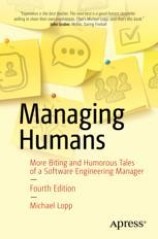
Managing Humans : More Biting and Humorous Tales of a Software Engineering Manage
Expands on the previous editions’ explorations of management essentials including handling stress, building diverse teams, running inclusive meetings, and how to lead in times of crisis. The education of a great leader never stops, and Lopp applies crucial insights to help continue your never-ending leadership education. Whether it is approaching a myriad of engineering personalities or handling unexpected conflict, you will come away with the wisdom to handle any team situation.

Machine Learning for Multimodal Interaction ; Vol.4299 ; 3rd International Workshop, MLMI 2006, Bethesda, MD, USA, May 1-4, 2006, Revised Selected Papers
This book contains a selection of refereed papers presented at the 3rd Workshop on Machine Learning for Multimodal Interaction (MLMI 2006), held in Bethesda MD, USA during May 1–4, 2006.

Machine Learning for Multimodal Interaction ; Vol.3869 ; 2nd International Workshop, MLMI 2005, Edinburgh, UK, July 11-13, 2005, Revised Selected Papers
The papers are organized in topical sections on multimodal processing, HCI and applications, discourse and dialogue, emotion, visual processing, speech and audio processing, and NIST meeting recognition evaluation

Machine Learning for Multimodal Interaction ; Vol.3361 : 1st International Workshop, MLMI 2004, Martigny, Switzerland, June 21-23, 2004, Revised Selected Papers
his book contains a selection of refereed papers presented at the 1st Wo- shop on Machine Learning for Multimodal Interaction (MLMI 2004), held at the “Centre du Parc,” Martigny, Switzerland, during June 21–23, 2004. The workshop was organized and sponsored jointly by three European projects, – AMI, Augmented Multiparty Interaction, http://www.amiproject.org – PASCAL, Pattern Analysis, Statistical Modeling and Computational Learning, http://www.pascal-network.org – M4, Multi-modal Meeting Manager, http://www.m4project.org as well as the Swiss National Centre of Competence in Research (NCCR): – IM2: Interactive Multimodal Information Management, http://www.im2.ch MLMI 2004 was thus sponsored by the European Commission and the Swiss National Science Foundation.

Machine Learning for Multimodal Interaction ; 5th International Workshop, MLMI 2008, Utrecht, The Netherlands, September 8-10, 2008. Proceedings
The 12 revised full papers and 15 revised poster papers presented together with 5 papers of a special session on user requirements and evaluation of multimodal meeting browsers/assistants were carefully reviewed and selected from 47 submissions. The papers cover a wide range of topics related to human-human communication modeling and processing, as well as to human-computer interaction, using several communication modalities. Special focus is given to the analysis of non-verbal communication cues and social signal processing, the analysis of communicative content, audio-visual scene analysis, speech processing, interactive systems and applications.

Machine Learning and Data Mining in Pattern Recognition ; 5th International Conference, MLDM 2007, Leipzig, Germany, July 18-20, 2007, Proceedings
MLDM / ICDM Medaillie Meissner Porcellan, the “White Gold” of King August the Strongest of Saxonia Gottfried Wilhelm von Leibniz. This was the fifth MLDM in Pattern Recognition event held in Leipzig (www.mldm.de). This meeting from the very first event has focused on aspects of machine learning and data mining in pattern recognition problems.

Machine Learning and Data Mining in Pattern Recognition ; 4th International Conference, MLDM 2005, Leipzig, Germany, July 9-11, 2005, Proceedings
Today, artificial intelligence deals with large amounts of data and knowledge and finds new information using machine learning and data mining. Machine learning and data mining are irreplaceable subjects and tools for the theory of pattern recognition and in applications of pattern recognition such as bioinformatics and data retrieval. This was the fourth edition of MLDM in Pattern Recognition which is the main event of Technical Committee 17 of the International Association for Pattern Recognition; it started out as a workshop and continued as a conference in 2003. Today, there are many international meetings which are titled “machine learning” and “data mining”, whose topics are text mining, knowledge discovery, and applications. This meeting from the first focused on aspects of machine learning and data mining in pattern recognition problems. We planned to reorganize classical and well-established pattern recognition paradigms from the viewpoints of machine learning and data mining. Though it was a challenging program in the late 1990s, the idea has inspired new starting points in pattern recognition and effects in other areas such as cognitive computer vision.

Logic, language, information and computation ; 14th International Workshop, WoLLIC 2007, Rio de Janeiro, Brazil, July 2-5, 2007, Proceedings
The Workshop on Logic, Language, Information and Computation (WoLLIC) is an annual international forum on inter-disciplinary research involving formal logic, computing and programming theory, and natural language and reasoning. The WoLLIC meetings alternate between Brazil (and Latin America) and other countries, with the aim of fostering interest in applied logic among Latin Am- ican scientists and students, and facilitating their interaction with the international - plied logic community.

Logic for Programming, Artificial Intelligence, and Reasoning ; Vol. 3452 : 11th International Workshop, LPAR 2004, Montevideo, Uruguay, March 14-18, 2005, Proceedings
Contains the papers presented at the 11th International Conference on Logic for Programming, Arti'cial Intelligence, and Reasoning (LPAR), held from March 14 to 18, 2005, in Montevideo, Uruguay, together with the 5th - ternational Workshop on the Implementation of Logics (organized by Stephan Schulz and Boris Konev) and the Workshop on Analytic Proof Systems (or- nized by Matthias Baaz). The call for papers attracted 77 paper submissions, each of which was - viewed by at least three expert reviewers. The ?nal decisions on the papers were taken during an electronic Program Committee meeting held on the Internet. The Internet-based submission, reviewing, and discussion software EasyChair, provided by the second PC co-chair, supported each stage of the reviewing p- cess.

Legitimacy In European Nature Conservation Policy : Case Studies In Multilevel Governance
Focuses on the issue of legitimacy in the context of European nature conservation policy. It provides insights in the way in which democratic legitimacy is being ‘produced’ at different levels of governance. Building forth upon recent developments in democracy theory that have identified multiple forms of legitimacy, the volume observes a EU-wide shift from output legitimacy to input and throughput legitimacy. Top down policy making is increasingly meeting

Late Effects of Cancer Treatment on Normal Tissues
Based on the LENT V NCI-sponsored meeting held in May 2004 and the CURED I conference held in 2006. It addresses a number of critical topics relating to late effects, such as mechanisms of injury, the role of screening, options for interventions, second malignancies, and prevention.

Large scale management of distributed systems ; 17th IFIP/IEEE International Workshop on distributed systems: operations and management, DSOM 2006, Dublin, Ireland, October 23-25, 2006, Proceedings
Presents the proceedings of the 17 IFIP/IEEE International Workshop on Distributed Systems : Operations and Management (DSOM 2006), which was held rd th in Dublin, Ireland during October 23 to 25 , 2006. In line with its reputation as one of the pre-eminent fora for the discussion and debate of advances of distributed systems management, the 2006 iteration of DSOM brought together an international audience of researchers and practitioners from both industry and academia. th DSOM 2006 was the 17 in a series of annual workshops, and it followed the footsteps of highly successful previous meetings, the most recent of which were held in Barcelona, Spain (DSOM 2005), Davis, USA (DSOM 2004), Heidelberg, Germany (DSOM 2003), Montreal, Canada (DSOM 2002) and Nancy, France (DSOM 2001). The goal of the DSOM workshops is to bring together researchers in the areas of networks, systems and services management, from both industry and academia, to discuss recent advances and foster future growth in these ?elds. In contrast to the larger management symposia, such as Integrated Management (IM) and Network Operations and Management (NOMS), the DSOM workshops are organised as sing- track programmes in order to stimulate interaction among participants.

Languages and Compilers for Parallel Computing ; Vol. 2481 : 15th Workshop, LCPC 2002, College Park, MD, USA, July 25-27, 2002, Revised Papers
LCPC 2002 brought together over 60 researchers from academia and research institutions from many countries. The program of 26 papers was selected from 32 submissions. Each paper was reviewed by at least three Program Committee members and sometimes by additional reviewers. Prior to the workshop, revised versions of accepted papers were informally published on the workshop’s website and in a paper proceedings that was distributed at the meeting. This year, the workshopwas organizedinto sessions of papers on related topics, and each session consisted of two to three 30-minute presentations.Based on feedback from the workshop,the papers were revised and submitted for inclusion in the formal proceedings published in this volume. Two papers were presented at the workshop but later withdrawn from the ?nal proceedings by their authors. We were very lucky to have Bill Carlson from the Department of Defense give the LCPC 2002 keynote speech on “UPC: A C Language for Shared M- ory Parallel Programming.” Bill gave an excellent overview of the features and programming model of the UPC parallel programming language.

Issues of Decapod Crustacean Biology
This volume presents the proceedings of the eighth Colloquium Crustacea Decapoda Mediterranea, which was held at the Ionian University on Corfu Island, Greece, from 2 to 6 September 2002, and reflects recent advancements in decapod crustacean research. The meeting is the oldest European carcinological event, organized regularly at 3-year intervals since 1972. Although focused on the Mediterranean Sea, worldwide contributions provided a forum for fruitful contact and scientific exchange. The book covers up-to-date issues in decapod crustacean research, including genetics, morphology, reproduction, ecology, behaviour and fisheries, and it is primarily aimed at scientists interested in decapod crustacean research, but other scientists and decision-makers working on marine ecology and fisheries will also find up-to-date information on relevant issues.

Computational and Ambient Intelligence ; 9th International Work-Conference on Artificial Neural Networks, IWANN 2007, San Sebastián, Spain, June 20-22, 2007, Proceedings
This biennial meeting focuses on the foundations, theory, models and applications of systems inspired by nature (neural networks, fuzzy logic and evo- tionary systems).These new computational techniques are used in applications that try to bring a new situation of well-being to the user. The conjunction of a more and more miniaturized hardware together with the growing computational intelligence embodied in this hardware leads us towards fully integrated embedded systems-on- chip and opens the door for truly ubiquitous electronics.

COMPSTAT 2006 - Proceedings in Computational Statistics ; 17th Symposium Held in Rome, Italy, 2006
International Association for Statistical Computing The International Association for Statistical Computing (IASC) is a Section of the International Statistical Institute.The objectives of the Association are to foster world-wide interest in effective statistical computing and to - change technical knowledge through international contacts and meetings - tween statisticians, computing professionals, organizations, institutions, g- ernments and the general public.
